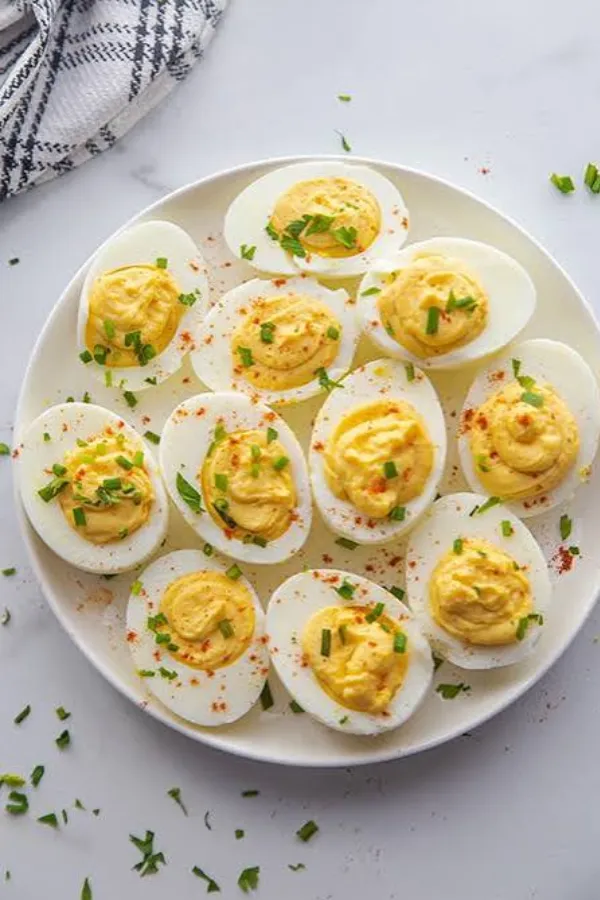

Deviled eggs can look polished and neat, but small mistakes can leave you with torn whites, gray yolks, or a filling that will not hold its shape. The good news is that none of those problems needs special cooking skill. You need the right timing, cold water, and a filling mixed in the correct order.
This recipe walks you through the full process, from placing raw eggs in the pot to adding the last dusting of paprika. You will learn how to cook the yolks until firm without turning them green, cool the eggs fast, and peel them with less damage. You will also make a smooth, creamy filling with mayonnaise, mustard, vinegar, salt, and pepper.
The recipe makes 24 deviled egg halves and takes about 35 minutes, including cooling time. The work itself is light, so it is a good choice for a first-time cook. Prepare them for holidays, potlucks, picnics, or a quick party plate. By the end, you will have creamy deviled eggs with firm whites, smooth filling, and a clean finish.
Gather the ingredients and tools
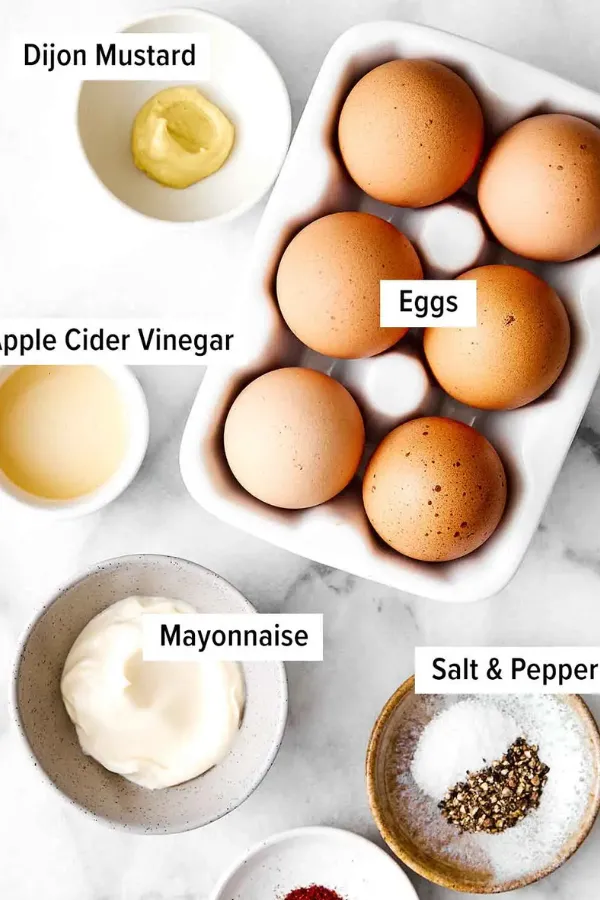
Place all ingredients beside your stove before you start. Measure the mayonnaise, mustard, vinegar, salt, and pepper into separate small dishes so you do not need to stop with wet hands later. Fill a large bowl halfway with ice and cold water, then set it near the sink. Keep the saucepan, lid, slotted spoon, knife, fork, and serving plate within reach.
Cover the eggs with cold water
Arrange 12 large eggs in one layer across the bottom of a medium saucepan. Avoid stacking them because the top eggs may cook at a different rate. Pour in enough cold tap water to sit about 1 inch above the eggs. Starting with cold water lets the eggs heat at a steady pace and lowers the chance of shells cracking from a sudden temperature change.
Bring the water to a full boil
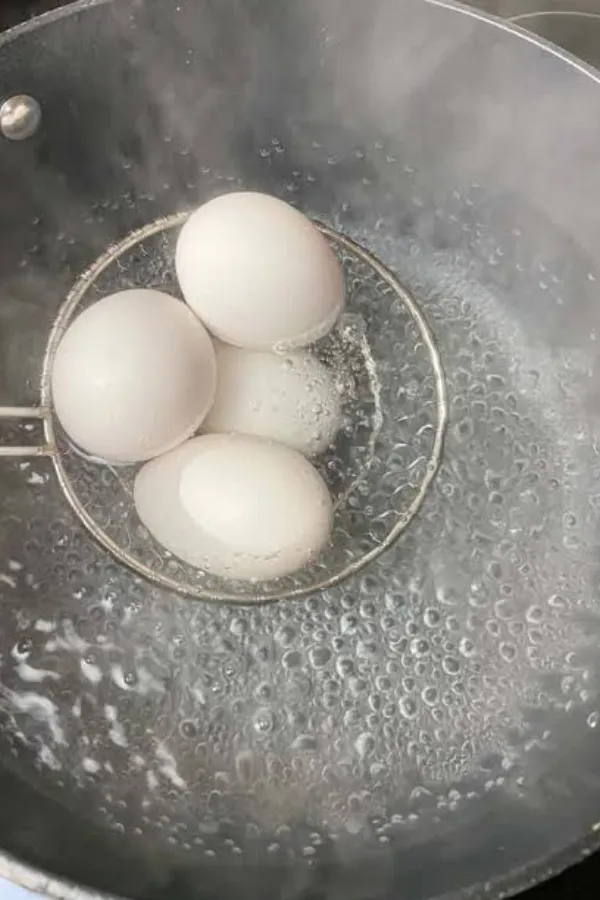
Set the uncovered saucepan over high heat. Watch for large bubbles rising across the whole surface, not a few small bubbles around the edge. This usually takes 8 to 10 minutes, depending on the pan and stove. Once the water reaches a full rolling boil, remove the pan from the heat at once. Leaving it boiling for several extra minutes can make the whites firm and rubbery.
Rest the eggs off the heat
Cover the saucepan with a tight lid as soon as you remove it from the burner. Leave the eggs in the hot water for 12 minutes. The trapped heat cooks the yolks through without keeping the pan over a hard boil. Set a timer because a longer rest can give the yolks a dry texture and a gray-green ring.
Chill the eggs in an ice bath
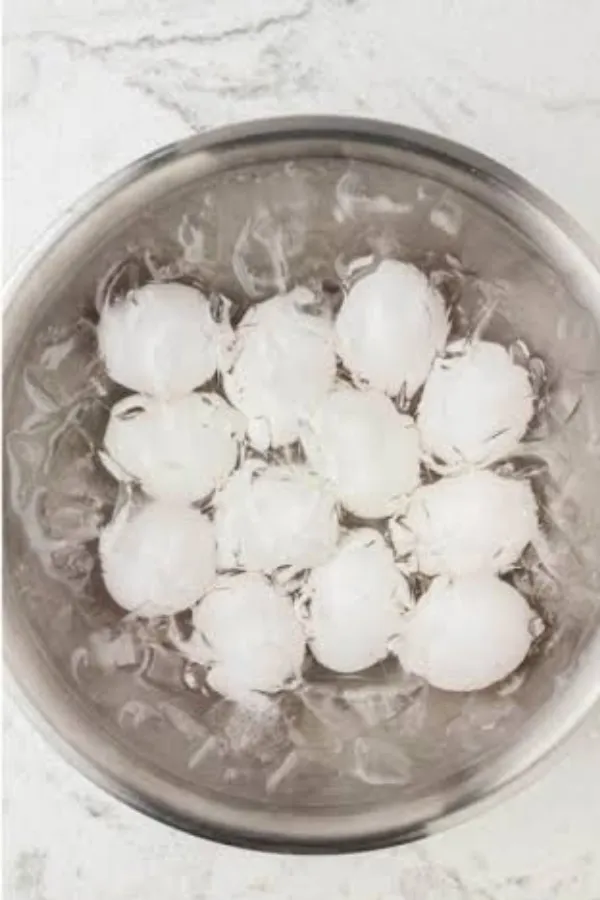
When the timer rings, move each egg into the ice water with a slotted spoon or kitchen tongs. Let the eggs sit for at least 10 minutes, adding more ice if the water starts to feel warm. Fast cooling stops the yolks from cooking further and helps the egg pull away from the shell. The eggs should feel cold all the way around before you begin peeling them.
Peel the eggs without tearing the whites
Tap one cooled egg gently on the counter until small cracks cover the shell. Roll it under your palm with light pressure, then begin peeling from the wider end, where a small air pocket often forms. Work under a thin stream of cold water if bits of shell stick to the white. The water can slip beneath the membrane and loosen it. Place each peeled egg on a clean towel and check for any shell pieces before moving on.
Slice the eggs into even halves
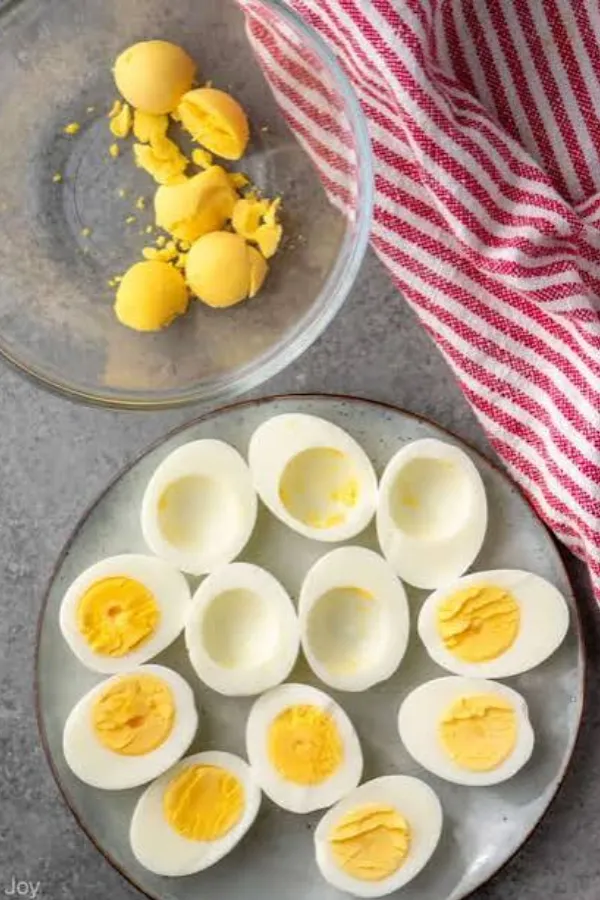
Dry each peeled egg so it does not slide under the knife. Place it on its side and cut lengthwise from the narrow end to the wide end. Wipe the blade with a damp paper towel after every few cuts to keep yolk crumbs from marking the next egg white. Arrange the halves cut-side up on a plate or tray.
Remove the yolks from the whites
Turn one egg half over a small mixing bowl and press the back gently with your thumb. The yolk should drop out in one piece. Use a small spoon to loosen any yolk that stays attached, taking care not to tear the white. Repeat with all 24 halves, then place the empty whites on the serving plate with the hollow sides facing up.
Mash the yolks until fine
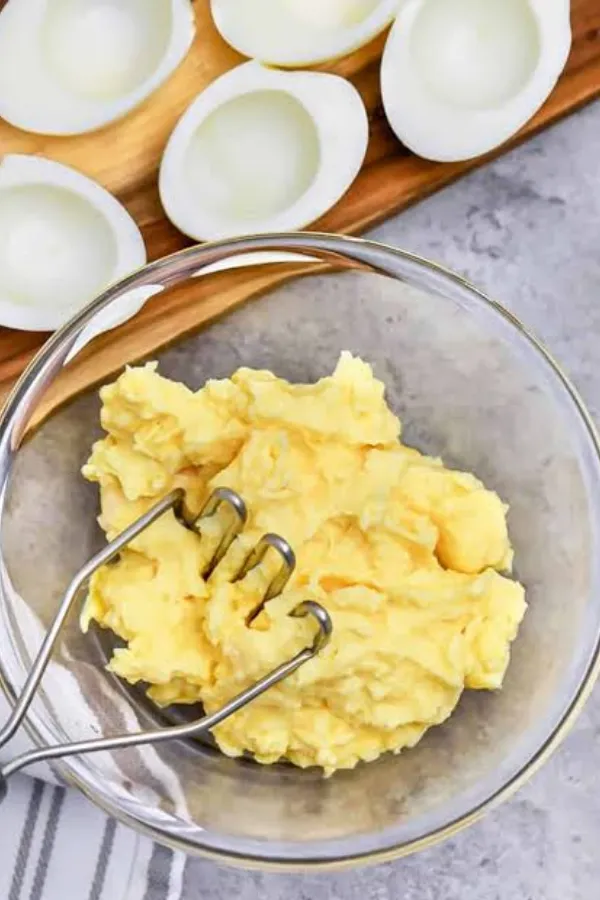
A smooth filling starts before the mayonnaise goes in. Press the yolks against the side of the bowl with the back of a fork until no large pieces remain. Scrape the bowl once or twice so dry crumbs do not hide around the edges. Spend about 1 to 2 minutes on this step. Fine yolk crumbs blend faster and help prevent small lumps from blocking a piping-bag opening.
Mix the creamy deviled egg filling
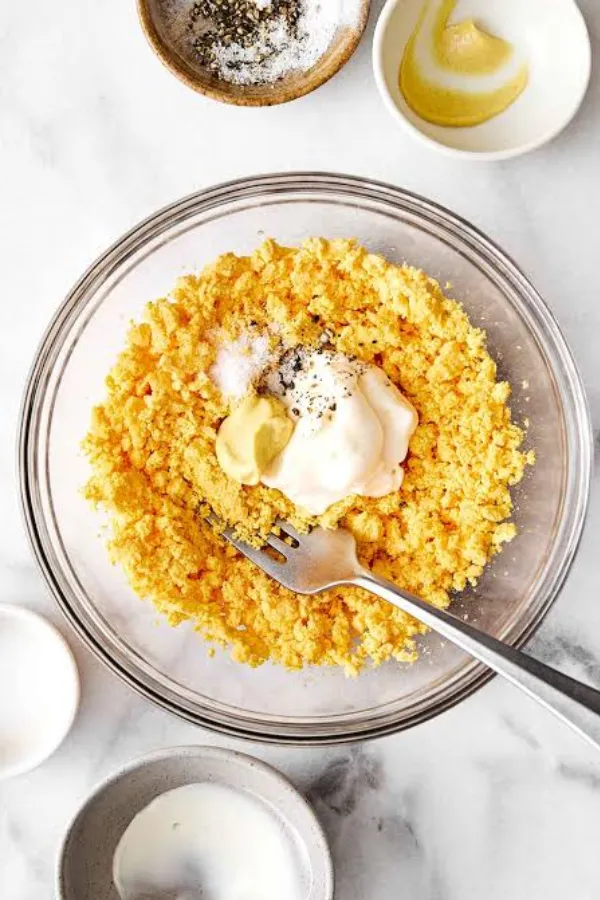
Begin with ⅓ cup mayonnaise, 2 teaspoons yellow mustard, 1 teaspoon white vinegar, ¼ teaspoon fine salt, and ⅛ teaspoon black pepper. Add them to the mashed yolks and stir for about 1 minute, scraping the sides and bottom of the bowl. The mixture should look smooth and hold a soft peak when lifted with a spoon. Taste a small amount and add another pinch of salt only if needed.
Fill the deviled eggs evenly
For a neat finish, place the filling in a piping bag fitted with a wide star or round tip. Pipe from the center of each hollow, building upward until all 24 egg halves contain an even amount. A teaspoon also works: scoop up the filling, lower it into the hollow, and shape the top with the back of the spoon.
Garnish the eggs lightly
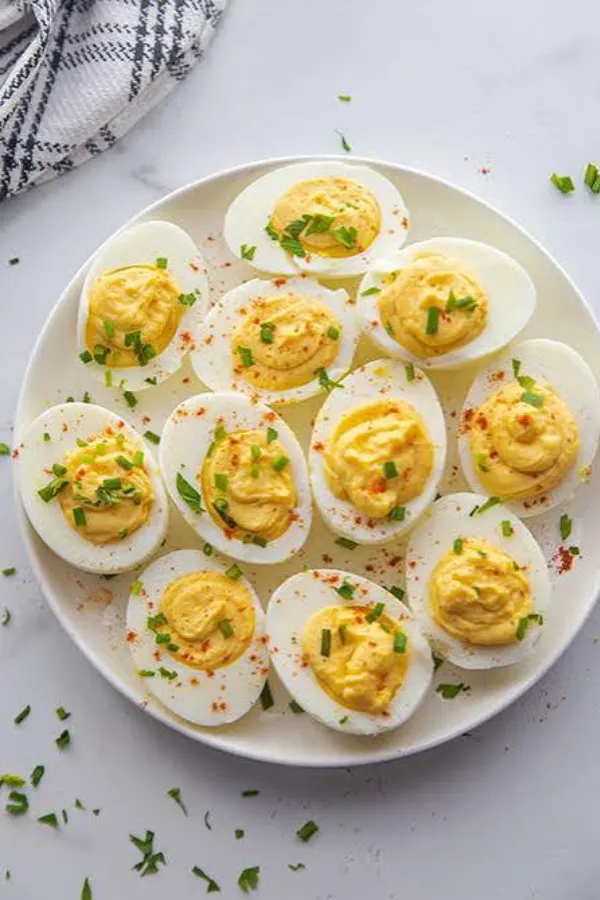
A small amount of garnish gives the eggs color without covering the creamy filling. Hold the paprika several inches above the plate and add a light dusting to each half. Sprinkle finely chopped chives over the tops if desired. Check the plate for loose filling or spice marks, then wipe the edges with a damp paper towel. Keep the eggs in a single layer so the decorated tops remain intact.
Chill the eggs before serving
Cover the finished eggs loosely with plastic wrap or place them in a covered container. Refrigerate them for at least 30 minutes so the filling firms up and the flavors settle. Keep them cold until serving, especially at a warm party or picnic. Do not leave deviled eggs at room temperature for more than 2 hours, or more than 1 hour when the temperature is above 90°F.
Enjoy Your Homemade Deviled Eggs
You now have a plate of creamy Deviled Eggs with firm whites, smooth filling, and a light paprika finish. The careful cooking and ice bath help prevent rubbery whites, dark yolk rings, and damaged shells.
Serve them cold at a party, family meal, picnic, or holiday table. For your next batch, try adding pickle juice, fresh herbs, or a pinch of smoked paprika.
Save this recipe to Pinterest so the cooking times and filling measurements are ready when you need them.
Classic Creamy Deviled Eggs
Ingredients
Equipment
Method
- Arrange the eggs
- Cover with cold water
- Bring to a boil
- Rest the eggs
- Chill the eggs
- Peel the eggs
- Cut the eggs
- Remove the yolks
- Mash the yolks
- Prepare the filling
- Fill the eggs
- Garnish the eggs
- Chill before serving
Notes
- Eggs that have been refrigerated for several days often peel more cleanly than very fresh eggs.
- Do not cook the eggs for longer than directed. Overcooking can create a gray-green ring around the yolks.
- Add extra mayonnaise only 1 teaspoon at a time. Too much mayonnaise can make the filling runny.
- A teaspoon or zip-top bag with one corner cut off can replace a piping bag.
- Dijon mustard can replace yellow mustard in the same amount.
- Apple cider vinegar, pickle juice, or lemon juice can replace white vinegar.
- Prepare the eggs up to 1 day before serving and keep them covered in the refrigerator.
- For the best taste and texture, eat refrigerated leftovers within 2 days.
- Do not leave deviled eggs at room temperature for more than 2 hours, or more than 1 hour in temperatures above 90°F.