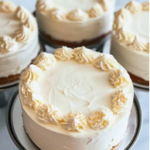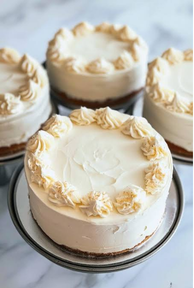
A White Almond Cake with Silky Buttercream Frosting should be soft, pale, and moist with a light almond flavor that does not overpower the vanilla. The part that trips up many first-time bakers is texture. Too much mixing can make the crumb firm, while warm cake layers can turn smooth buttercream into a sliding mess.
This method keeps each part manageable. You will build air into the butter and sugar, use egg whites to keep the crumb light in color, and add the dry ingredients gradually so the batter stays tender. The finished cake has two soft 8-inch layers with enough buttercream for filling, a crumb coat, and a smooth outer finish.
Plan for about 50 minutes of active work, plus baking and cooling time. Most of the recipe uses standard baking tools, and you do not need professional cake-decorating gear. Read through the ingredient list before starting, bring the butter, egg whites, and milk to room temperature, and give the cake layers enough time to cool before frosting.
What You Need
For the White Almond Cake
- 2 3/4 cups cake flour
- 2 1/2 teaspoons baking powder
- 1/2 teaspoon fine salt
- 3/4 cup unsalted butter, softened
- 1 3/4 cups granulated sugar
- 5 large egg whites, room temperature
- 1 teaspoon vanilla extract
- 1 1/2 teaspoons almond extract
- 1 cup whole milk, room temperature
For the Silky Buttercream
- 1 1/2 cups unsalted butter, softened
- 5 cups powdered sugar, sifted if lumpy
- 3–5 tablespoons heavy cream or whole milk
- 1 1/2 teaspoons vanilla extract
- 1/2 teaspoon almond extract
- 1/4 teaspoon fine salt
Equipment
- Two 8-inch round cake pans
- Parchment paper
- Large mixing bowl
- Medium mixing bowl
- Electric hand or stand mixer
- Whisk
- Rubber spatula
- Measuring cups and spoons
- Cooling rack
- Serrated knife
- Offset spatula or flat knife
At a Glance
- Preheat the oven and prepare the cake pans.
- Measure the dry ingredients accurately.
- Whisk the dry ingredients together.
- Cream the butter and sugar until fluffy.
- Add the egg whites gradually.
- Blend in the almond and vanilla extracts.
- Mix the dry ingredients and milk into the batter.
- Divide the batter evenly between the pans.
- Bake the cake layers until set.
- Cool the cake layers completely.
- Beat the butter until smooth.
- Add the powdered sugar gradually.
- Blend the cream and flavorings into the buttercream.
- Level the cooled cake layers.
- Fill and stack the cake layers.
- Apply a thin crumb coat.
- Chill the crumb-coated cake.
- Frost the cake with silky buttercream.
- Smooth and finish the frosted cake.
- Slice and serve the cake.
Prepare the Cake Pans and Preheat the Oven
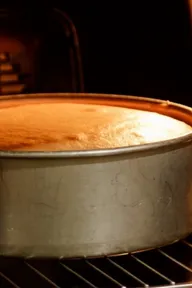
Set the oven to 350°F (175°C) so it is fully heated before the batter goes in. Grease two 8-inch round cake pans, place a parchment circle in the bottom of each, then lightly grease the parchment. This extra layer makes the soft cake easier to release without tearing. Keep both pans on a flat counter while you make the batter so they are ready when you need them.
Whisk the Dry Ingredients Together
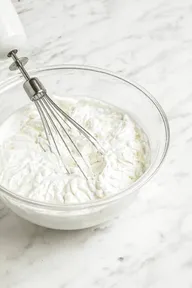
Measure 2 3/4 cups cake flour, 2 1/2 teaspoons baking powder, and 1/2 teaspoon fine salt into a medium bowl. Whisk for about 20 seconds, reaching around the edges and across the bottom of the bowl. Even distribution matters because small pockets of baking powder can create uneven holes or bitter spots in the finished crumb. If your flour looks packed down, fluff it before measuring and level the cup without pressing.
Cream the Butter and Sugar Until Fluffy

Use an electric mixer to beat 3/4 cup softened unsalted butter with 1 3/4 cups granulated sugar on medium-high speed for 3 to 4 minutes. Stop once or twice to scrape the bowl. The mixture should look noticeably paler and fuller than when you started. This stage traps tiny pockets of air that help give the cake a lighter crumb, so do not stop while the mixture still looks dense or greasy
Pattern Check Before This Batch
The first three steps leaned toward medium-length instructional paragraphs and often opened with direct setup or measurement details. This batch varies the rhythm with observation-led and condition-led openings, while keeping each step focused on one main action.
Beat in the Egg Whites and Flavorings
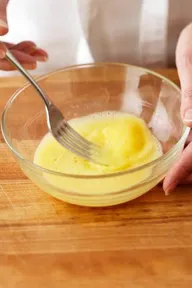
The butter mixture should still look pale and fluffy before the eggs go in. Add 5 room-temperature egg whites in 3 additions, beating on medium speed for about 20 seconds after each addition. Scrape down the bowl as needed. Once the whites are blended in, beat in 2 teaspoons vanilla extract and 1 teaspoon almond extract for another 15 seconds. The batter may look slightly loose at this point, which is normal.
Mix in the Dry Ingredients and Milk
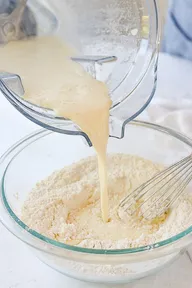
Combine 1 cup whole milk with 1/2 cup sour cream in a small bowl until smooth. With the mixer on low speed, add the flour mixture in 3 portions, alternating with the milk mixture in 2 portions. Start and finish with the flour. Mix only until each addition disappears into the batter. Long mixing at this stage builds too much gluten and can make the finished cake firm instead of soft.
Divide the Batter Between the Cake Pans
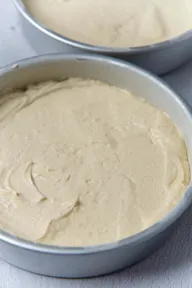
For layers that finish baking at the same time, split the batter as evenly as you can between the two prepared 8-inch pans. If you have a kitchen scale, weigh the filled pans and adjust the batter until they are close to equal. Without a scale, use a measuring cup to portion the batter back and forth. Smooth each surface lightly with a spatula, especially around the edges, without pressing the batter down.
Pattern Check Before This Batch
The previous batch used one observation-led opener, one ingredient-led setup, and one precision-focused opener. This batch shifts toward visual doneness cues, timing, and texture checks so the instructions do not fall into a repeated rhythm.
Bake the White Almond Cake Layers
Place both pans on the center oven rack and bake at 350°F (175°C) for 25 to 30 minutes. Start checking at 25 minutes. The tops should look set, and a toothpick pushed into the center should come out clean or with a few moist crumbs. Avoid opening the oven during the first 20 minutes, since an early temperature drop can cause the centers to sink. Remove the pans once both layers pass the doneness test.
Cool the Cake Layers Completely
Leave the cakes in their pans for 10 minutes so the soft crumb has time to firm up. Run a thin knife around each edge, turn the layers onto a cooling rack, and peel away the parchment. Let them cool for at least 60 minutes, or until no warmth remains in the centers. A warm layer can soften the frosting on contact and make the finished cake unstable.
Whip the Silky Buttercream Frosting

Your butter should feel soft enough to dent with a fingertip but should not look melted. Beat 1 1/2 cups softened unsalted butter on medium-high speed for 3 minutes until pale and creamy. Reduce the mixer to low and gradually add 5 cups sifted powdered sugar. Pour in 1/4 cup heavy cream, 2 teaspoons vanilla extract, 1/2 teaspoon almond extract, and 1/4 teaspoon fine salt. Beat for another 2 to 3 minutes until light, smooth, and spreadable.
Pattern Check Before This Batch
The last batch focused on baking cues, cooling time, and frosting texture. These final three steps shift tinner-friendly.
oward assembly and finishing, with shorter visual checkpoints so the decorating process stays be
Level and Layer the Cakes
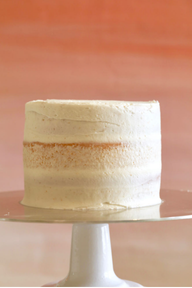
If either cake has a rounded top, trim only the raised portion with a long serrated knife so the layers sit flat. Place the first layer on a cake plate and spread about 3/4 cup buttercream over the top, stopping about 1/4 inch from the edge. Set the second layer on top with the flat side facing upward. Press down very lightly so the filling settles without squeezing out the sides.
Apply a Thin Crumb Coat
Spread a very thin layer of buttercream over the top and sides of the cake, using only enough to trap loose crumbs. You should still be able to see parts of the cake through this first coat. Smooth away thick patches, then refrigerate the cake for 20 to 30 minutes until the frosting feels firm to a light touch. Chilling this layer keeps crumbs out of the final coat.
Frost and Finish the White Almond Cake
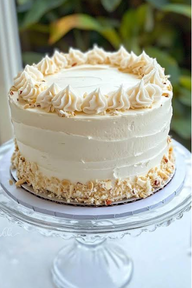
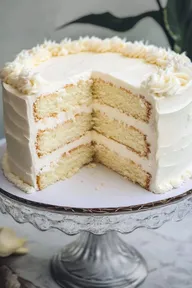
Once the crumb coat is cold and firm, spread the remaining buttercream over the top and sides in a thicker, even layer. Use an offset spatula or the back of a large spoon to smooth the surface, working in broad strokes rather than repeatedly scraping the same spot. For cleaner slices, refrigerate the finished White Almond Cake with Silky Buttercream Frosting for about 20 minutes, then let it sit at room temperature for 15 to 20 minutes before serving.
Quick Reference CardSlice and serve the cake
Let the cake sit at room temperature for about 20–30 minutes before serving if it has been chilled. Buttercream tastes smoother and the cake crumb feels softer when it is not refrigerator-cold. Cut slices with a sharp knife, wiping the blade clean between cuts for neat layers. Store leftovers covered at room temperature for up to 1 day, or refrigerate them for up to 4 days. Bring refrigerated slices back toward room temperature before eating for the best texture.
Troubleshooting Your White Almond Cake
| If This Happens | Try This |
|---|---|
| The cake turns out dry | Measure the cake flour with the spoon-and-level method and begin checking the layers at 25 minutes. Baking longer than needed removes moisture quickly from white cake. |
| The cake feels dense or heavy | Cream the butter and sugar for the full 3–4 minutes, and keep mixing to a minimum after the flour goes into the batter. |
| The centers sink after baking | Avoid opening the oven during the first 20 minutes. Check that the center springs back and a toothpick has no wet batter before removing the pans. |
| The cake sticks to the pans | Grease the pans and line the bottoms with parchment. Let the cakes cool in the pans for about 10 minutes before turning them out. |
| The buttercream is too stiff | Beat in heavy cream or milk 1 tablespoon at a time until the frosting spreads without pulling at the cake. |
| The buttercream is too soft | Chill it for about 10–15 minutes, then stir or beat briefly before frosting. Avoid adding extra liquid until you have checked the texture again. |
| The frosting looks grainy | Use powdered sugar without hard lumps and beat the softened butter until completely smooth before adding the sugar. |
| Crumbs appear in the final frosting | Keep the crumb coat thin, chill it for 20–30 minutes, and use clean buttercream for the final coat instead of frosting that has picked up cake crumbs. |
White Almond Cake FAQ
Can I use all-purpose flour instead of cake flour?
Cake flour gives this recipe its softer, finer crumb. All-purpose flour can make the layers slightly firmer, so cake flour is the better choice when possible.
Can I reduce the almond extract?
Yes. Almond extract has a strong flavor. Use 1/2 to 1 teaspoon in the cake if you prefer a lighter almond taste, while keeping the vanilla in place.
Why does this cake use only egg whites?
Egg whites help keep the crumb pale and support the classic white-cake look. Using whole eggs would give the cake a more yellow color.
Can I bake the cake layers ahead of time?
Yes. Cool them completely, wrap each layer tightly, and keep them at room temperature for up to 1 day. For longer storage, refrigerate or freeze them well wrapped.
Can I freeze the cake layers?
Yes. Wrap cooled layers tightly in plastic wrap, then place them in a freezer-safe bag or container. Freeze for up to 2 months and thaw while still wrapped so condensation stays on the wrapping instead of the cake.
How do I know when the buttercream is ready to spread?
It should hold a soft peak but move easily under an offset spatula. If it tears at the cake, add a little cream. If it slides or droops, chill it briefly before trying again.
Steps at a Glance
- Preheat the oven and prepare the pans.
- Measure and whisk the dry ingredients.
- Cream the butter and sugar until fluffy.
- Add the egg whites and flavorings.
- Alternate the dry ingredients with the milk.
- Divide the batter between the pans.
- Bake until the centers are set.
- Cool the cake layers completely.
- Beat the butter and powdered sugar for the frosting.
- Add cream and flavorings until silky.
- Level, fill, and stack the cake layers.
- Apply and chill the crumb coat.
- Cover the cake with the final buttercream layer.
- Smooth, chill if needed, then slice and serve.