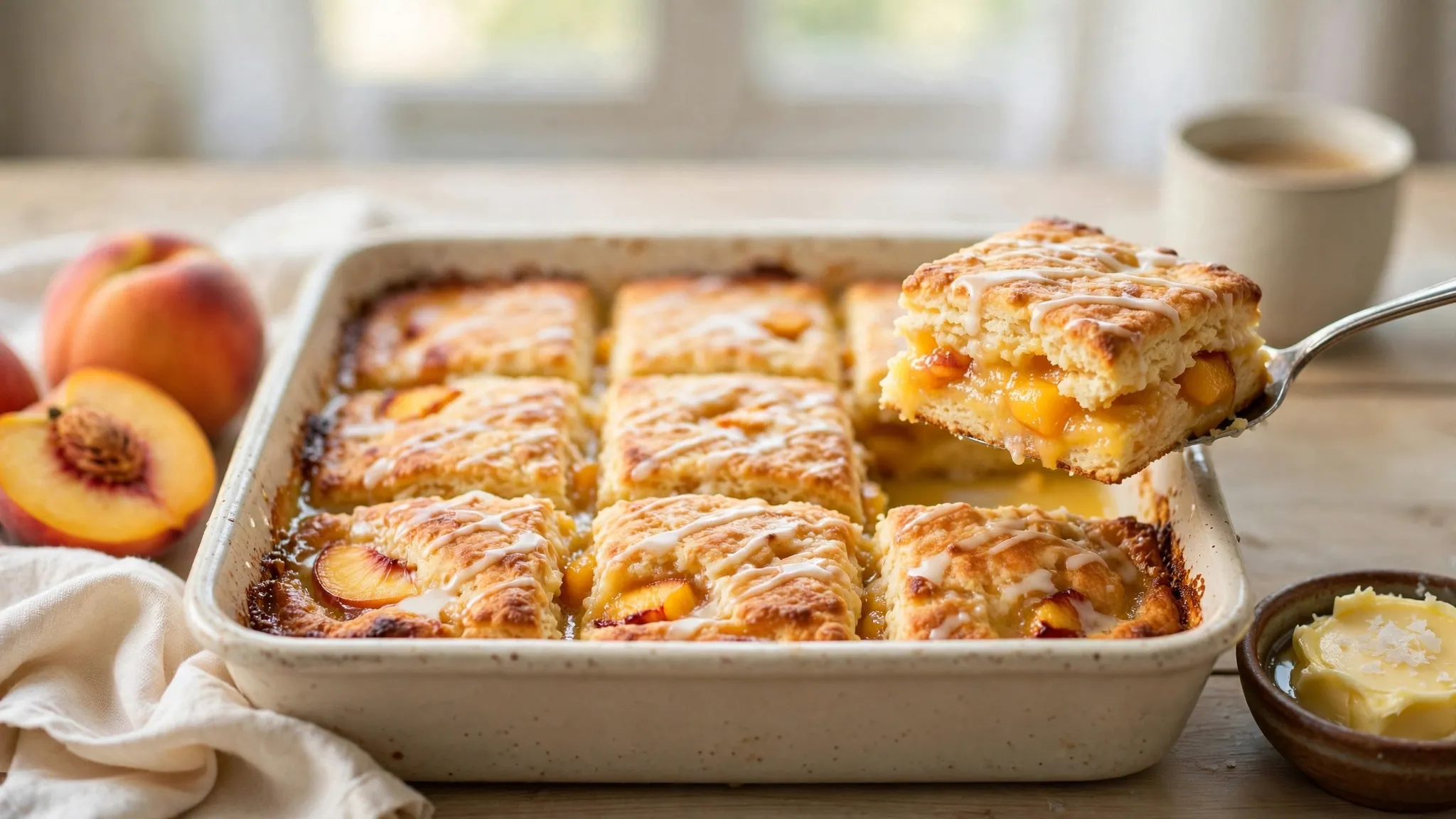

The pan comes out of the oven with butter bubbling around the edges, but the middle still looks pale and a little wet. That is the tricky part of baking with peaches. Their juice gives the biscuits a soft, fruity center, yet too much moisture can leave the dough heavy instead of tender.
Peach Butter Swim Biscuits work well because they do not need rolling, cutting, or careful shaping. The dough goes straight into a dish of melted butter, where the bottom and sides turn golden as they bake. Add peaches, though, and a few small choices start to matter.
How you drain the fruit, cut the pieces, mix the dough, and spread it in the pan all affect the final texture. These details are simple, but they can separate a light biscuit with crisp edges from one that feels gummy in the center.
The ideas below cover the small steps that make peach biscuits easier to bake, slice, and serve without losing the buttery texture that makes them worth making.
1. Drain the Peaches So the Biscuit Centers Stay Fluffy
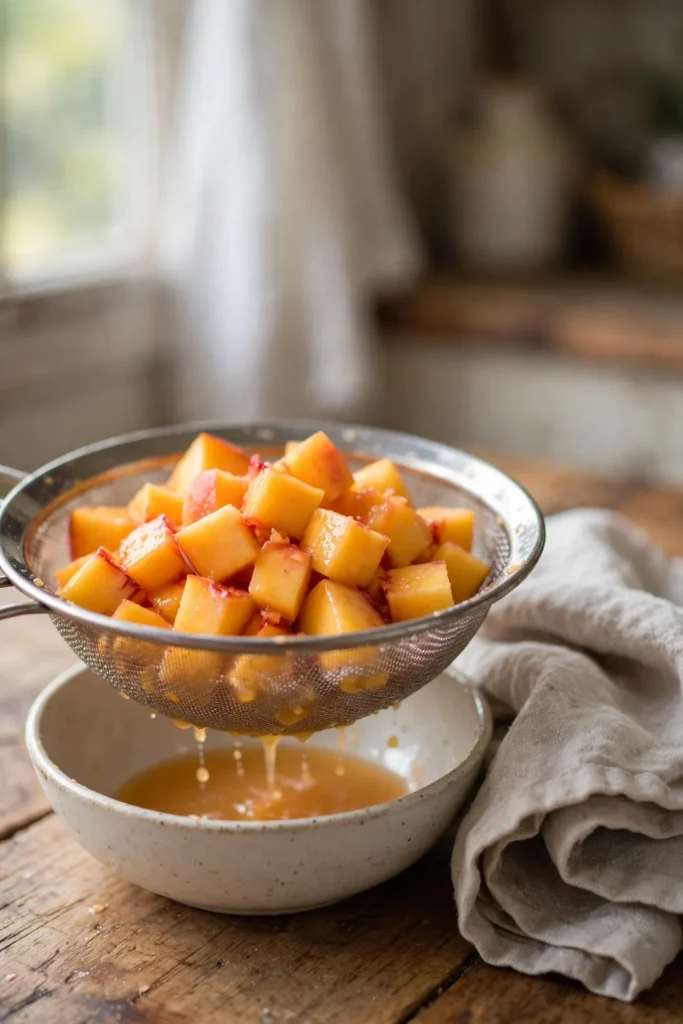
Peaches often hold more liquid than they appear to, especially after sitting in a bowl. That extra juice mixes with the dough and can leave the middle soft long after the edges have browned.
Use these quick prep moves:
- Place canned peaches in a strainer, then let them sit while you mix the dry ingredients.
- Pat thawed frozen peaches with a clean kitchen towel.
- Set very ripe fresh peaches on a paper towel after cutting them.
The fruit should still feel juicy, not dry. You are only removing the loose liquid that would otherwise collect at the bottom of the baking dish.
2. Cut the Peaches Small Enough for Clean, Tender Slices
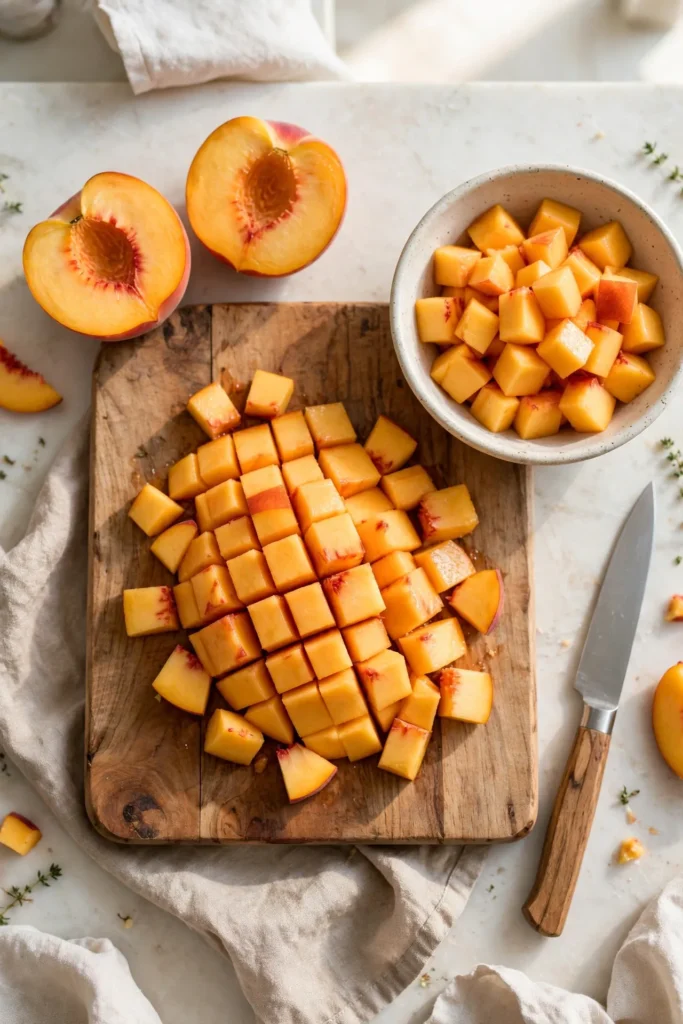
Large peach chunks may look generous, but they can create wet pockets that pull the biscuit apart when you lift a serving from the pan. Smaller pieces spread the flavor through more of the dough.
Aim for pieces about the size of a blueberry or small grape. They do not need to match exactly.
Before folding them in, check that:
- No long peach slices remain.
- Thick pieces have been cut through the middle.
- The fruit is cool or at room temperature.
- Loose juice is left behind in the bowl.
A small dice also makes the biscuits easier to serve at brunch, where neat squares are less likely to collapse on the plate.
Peach prep check
3. Mix the Dough Just Until the Dry Flour Disappears
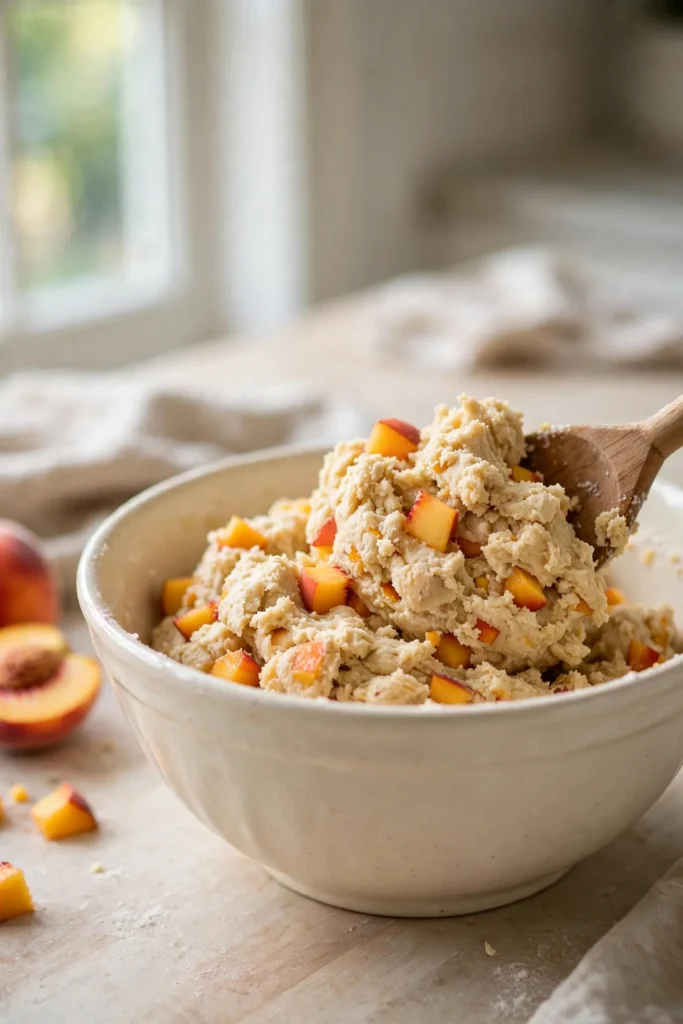
Overmixed biscuit dough often bakes up firm instead of soft. The problem usually starts when someone keeps stirring to remove every small lump.
A few uneven spots are fine. Stir slowly, scrape the bottom of the bowl, and stop once you no longer see dry pockets of flour. Fold the peaches in with only a few gentle turns.
Keep the spoon moving through the center and around the edge rather than beating the mixture in circles. The dough may look thick and slightly rough. That is normal.
The less you fuss with it, the easier it is for the center to stay tender while the butter builds a crisp edge around the pan.
Stir until the visible dry flour is gone.
Fold in the peaches with slow, broad turns.
Do not beat the dough until it looks smooth.
Do not keep stirring after the fruit is spread through the bowl.
4. Pour the Butter Into the Pan Before Adding the Dough
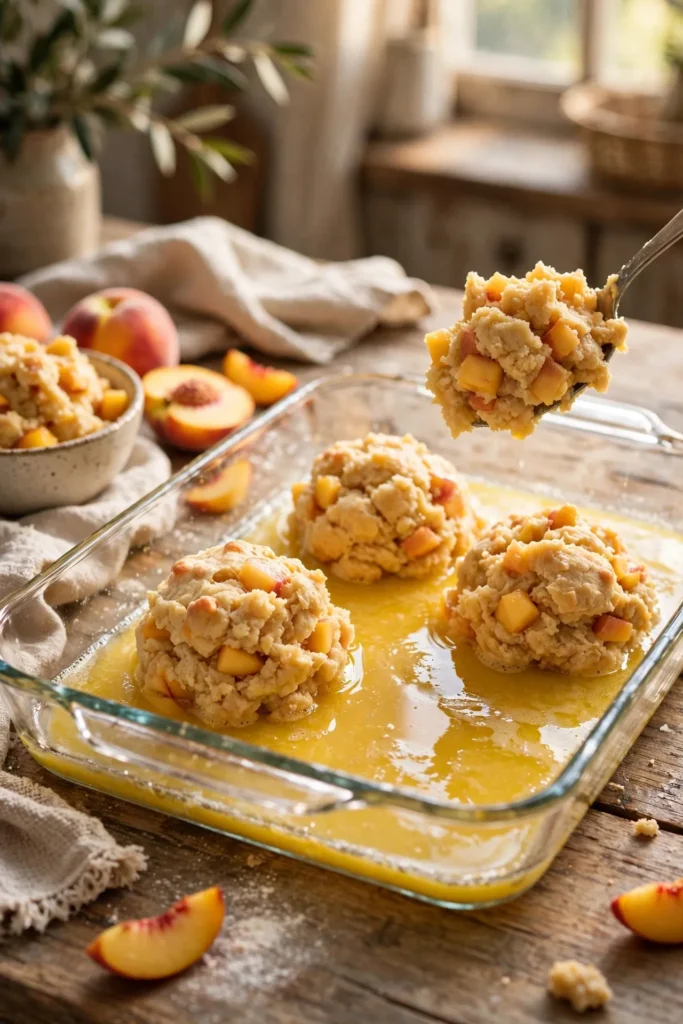
The order matters here. Melted butter belongs in the baking dish first, not stirred into the bowl of dough.
Once the butter covers the bottom, spoon the peach dough over it in several small mounds. This helps distribute the dough without pushing all the butter toward one corner.
Work in this order:
- Add the melted butter to the dish.
- Spoon the dough across the surface.
- Spread the mounds together gently.
- Leave the butter that rises around the edges alone.
Some butter may appear on top as the dough settles. Do not mix it back in. That exposed butter helps the top brown and gives the corners their rich, crisp texture.
Pour the melted butter directly into the baking dish.
Drop the dough in separate mounds across the pan.
Join the mounds with light strokes without stirring the layers together.
5. Spread the Dough Without Stirring Away the Butter Layer
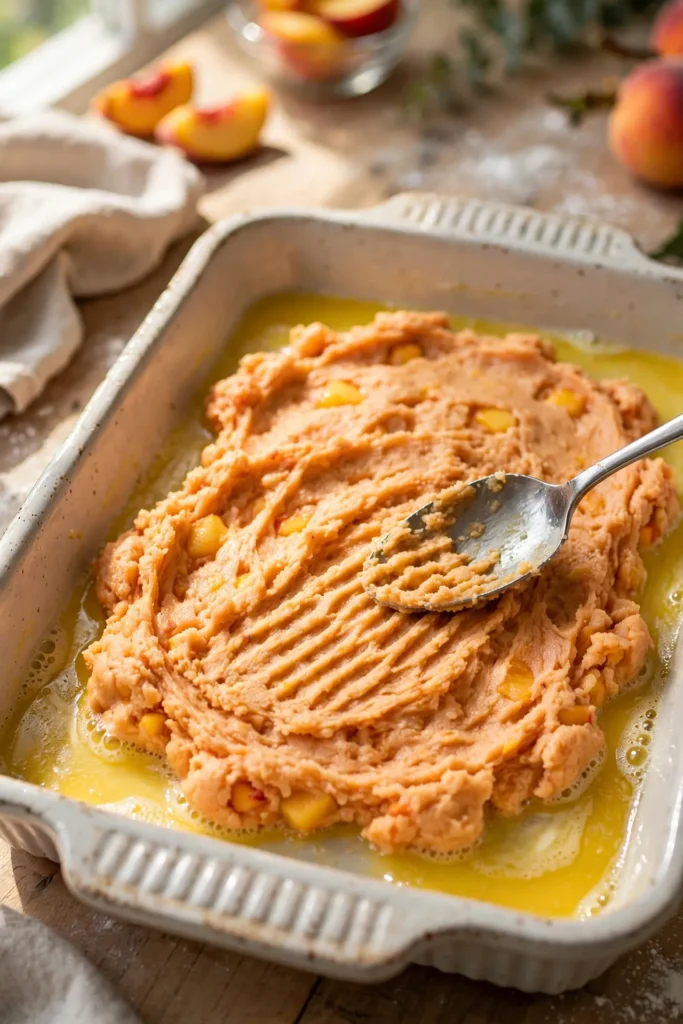
A thick biscuit dough does not slide easily across the pan, so it is tempting to press and stir until the surface looks smooth. That can pull the butter into the dough and leave bare spots on the bottom.
Use the back of a spoon or a small spatula. Press the dough outward with short strokes, starting near the center and working toward the corners.
Two details help:
- Keep the tool near the surface instead of scraping the bottom.
- Stop once the dough reaches most of the pan.
The top can stay uneven. Those small ridges catch butter as the biscuits bake, creating darker golden spots and crisp little edges.
The dough is stirred across the bottom, pushing butter into one corner and thinning the center.
The dough is gently pressed outward, leaving butter beneath it and a slightly ridged top.
6. Add Cinnamon Without Covering Up the Fresh Peach Flavor
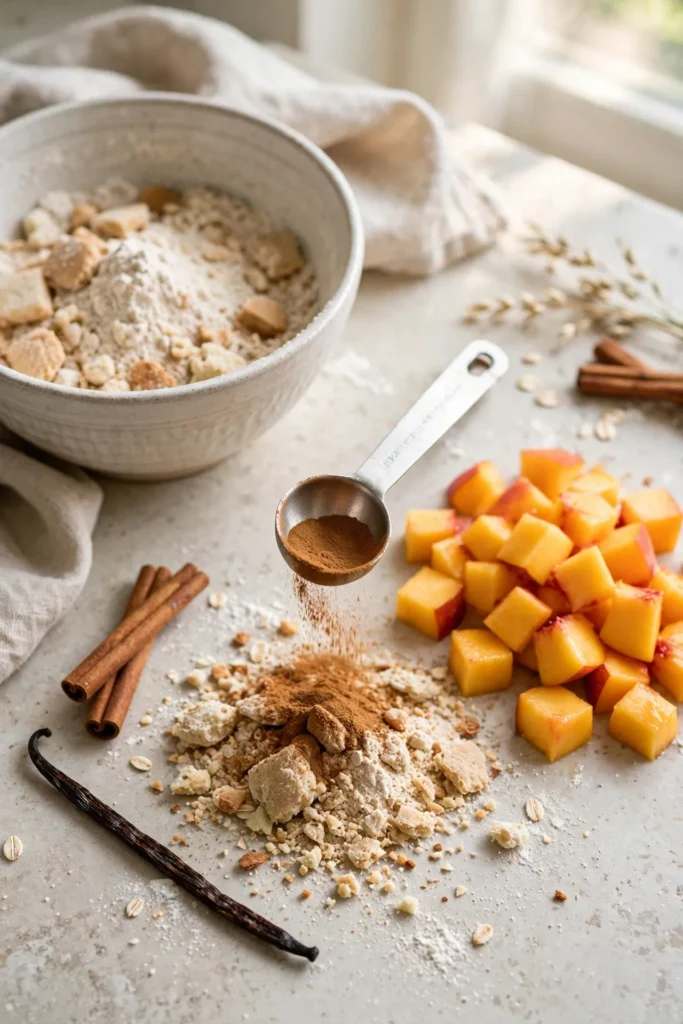
Cinnamon can warm up the peaches, but a heavy hand makes every bite taste more like spice than fruit. Start with a light amount and let the peaches stay in front.
A simple way to keep the flavor balanced:
- Mix cinnamon into the dry ingredients so it spreads evenly.
- Use vanilla to soften the sharper spice notes.
- Skip extra spice on top until you taste the first batch.
Nutmeg and cloves are much stronger than cinnamon. Add them only in a very small amount, if at all. The goal is a biscuit that smells warm when the pan opens, while the sweet peach flavor still comes through clearly.
💡 Quick Tip
Smell the mixed dough before adding more spice. If cinnamon is the first thing you notice, the peaches may struggle to stand out after baking.
7. Use Brown Sugar for Deeper, Caramel-Like Edges
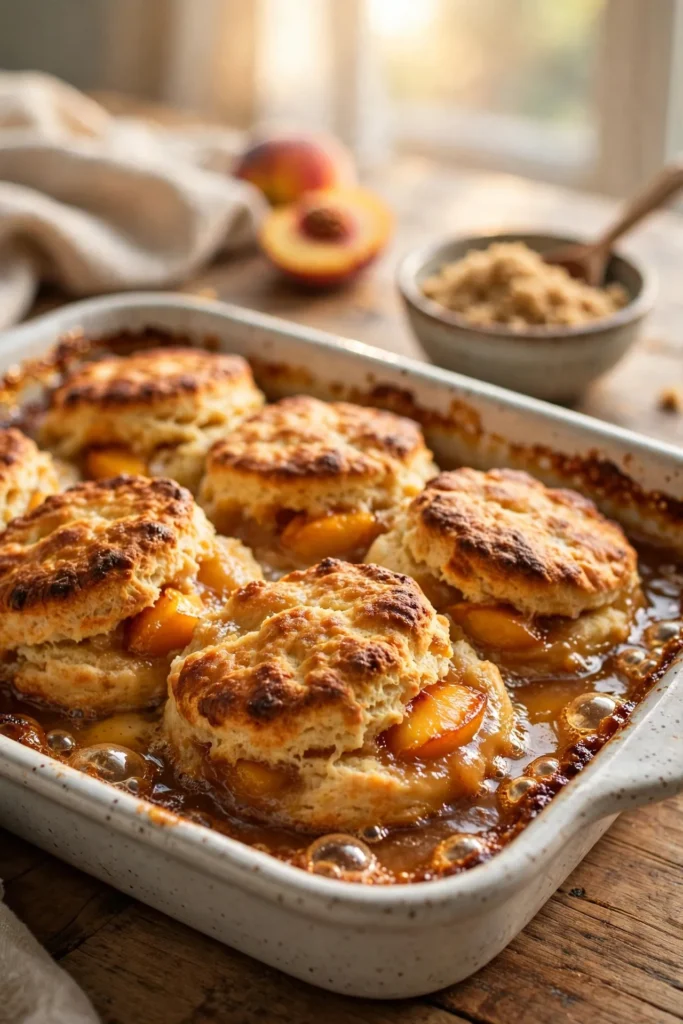
Brown sugar brings a deeper sweetness than plain white sugar. Near the buttered sides of the pan, it can help create darker edges with a light caramel note.
It works best as part of the sweetener rather than the only sugar in the dough. Too much can make the biscuits feel heavy and hide the bright peach taste.
Look for three changes:
- A warmer golden color around the corners.
- A slightly softer center.
- A richer flavor where the fruit touches the buttery crust.
Break up any hard sugar lumps before mixing. A packed clump may melt into one sticky pocket instead of spreading through the biscuits.
8. Choose Between Fresh, Frozen, and Canned Peaches
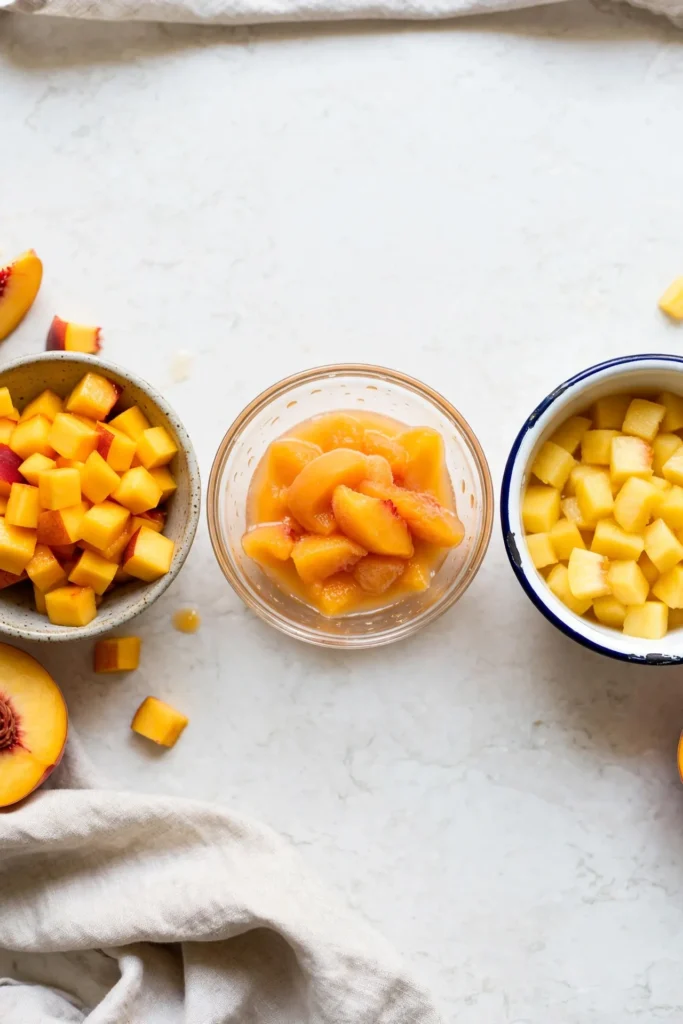
The best peach choice often depends on what is already in the kitchen. Each type can work, but the prep is different.
Fresh peaches give you control over ripeness and piece size. Frozen fruit is useful outside peach season, though it releases plenty of liquid as it thaws. Canned peaches are quick and consistent, but syrup must be drained well.
Use this rule:
- Choose fresh for a firmer fruit texture.
- Choose frozen for convenience outside summer.
- Choose canned when speed matters most.
Do not mix frozen peaches into the dough while they are still icy. The cold pieces can slow the center while the outer edges continue to brown.
| Peach Type | Best Prep | Expected Texture |
|---|---|---|
| Fresh | Peel if needed, dice, then blot ripe fruit | Firm and clearly defined |
| Frozen | Thaw fully, drain, and pat dry | Soft and juicy |
| Canned | Drain well and cut large slices | Tender and even |
9. Add Vanilla Glaze Only After the Biscuits Cool Slightly
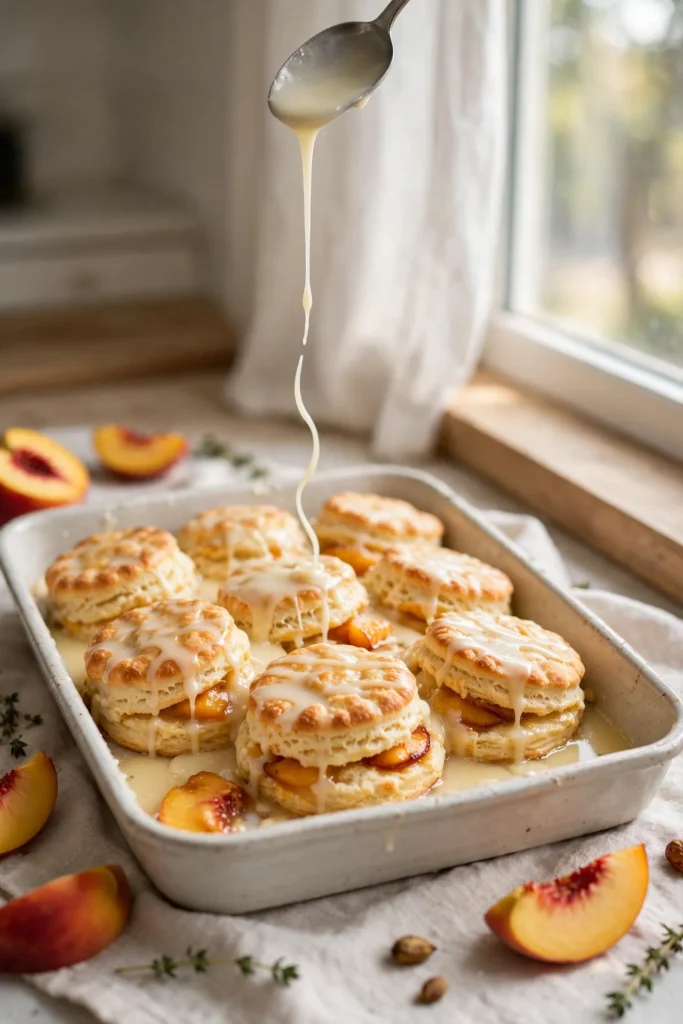
Glaze poured onto a pan that is still bubbling will melt into the butter and disappear. Waiting a little gives it time to sit on the ridges instead of running straight to the bottom.
The biscuits should still be warm, but the surface should no longer look wet from steam. Drizzle the glaze in thin lines rather than covering every inch.
For a clean finish:
- Keep the glaze thick enough to fall slowly from a spoon.
- Add a small amount first.
- Leave some golden crust visible.
- Serve extra glaze at the table for anyone who wants more.
A light drizzle adds sweetness without turning the soft center into a sugary pudding.
Glaze warm biscuits after the surface has settled, not while butter and steam are still bubbling across the top.
10. Pair the Biscuits With Salted Honey Butter
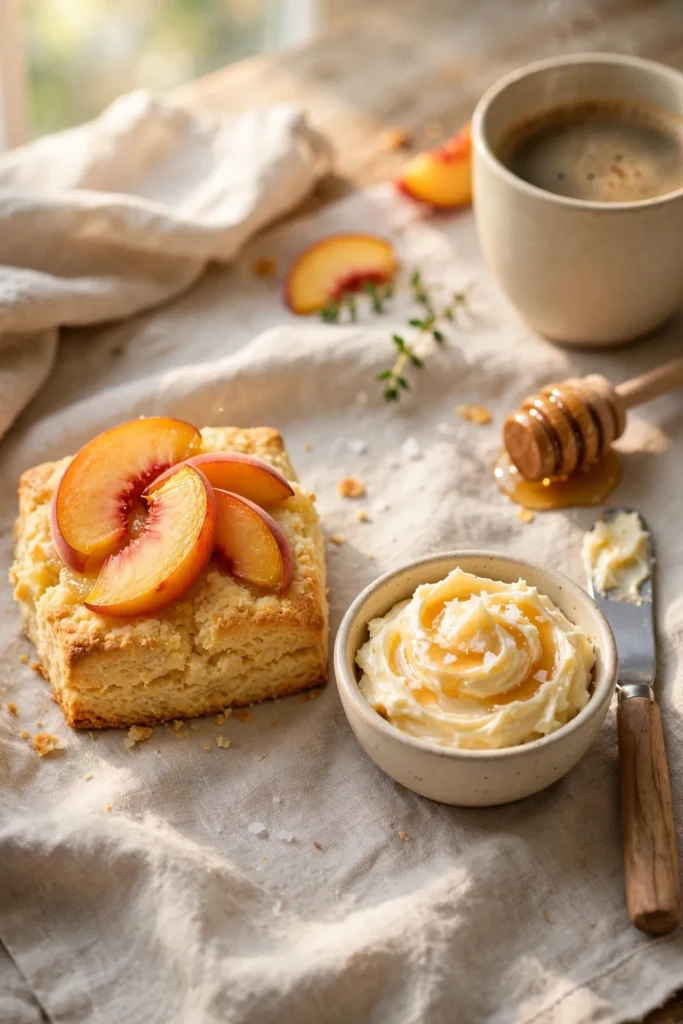
Peach biscuits are already rich, so the best spread needs contrast. Salted honey butter brings sweetness, but the salt keeps each bite from tasting flat.
Stir softened butter until smooth, then mix in a little honey and a small pinch of salt. Taste before adding more. The spread should taste buttery first, with honey in the background.
Serve it in a small bowl beside the pan rather than spreading it over every biscuit. This lets each person control the richness.
Good pairings include:
- Hot coffee with little or no sugar.
- Scrambled eggs with black pepper.
- Crisp bacon or a salty breakfast sausage.
- Fresh berries for a cooler, lighter bite.
- ▸For brunch: serve with eggs and a salty breakfast meat.
- ▸For afternoon coffee: use a thin layer of honey butter.
- ▸For sweeter biscuits: increase the salt slightly instead of adding more honey.
11. Turn Peach Butter Swim Biscuits Into a Brunch Centerpiece

A warm pan of peach biscuits can carry most of a brunch table, especially when the rest of the food is simple and salty.
Place the baking dish near the center, then build the meal around contrast:
- Soft scrambled eggs add protein without competing with the peaches.
- Crisp bacon or sausage cuts through the buttery dough.
- Fresh berries keep the plate from feeling too heavy.
- Plain coffee or unsweetened tea balances the sweet fruit.
Serve the biscuits in the same dish they baked in. The browned corners and peach pieces look more inviting than neatly stacked squares on a plain plate. Add a wide serving spoon so guests can lift the soft center without breaking it apart.
12. Serve Warm Biscuits With Ice Cream for an Easy Dessert
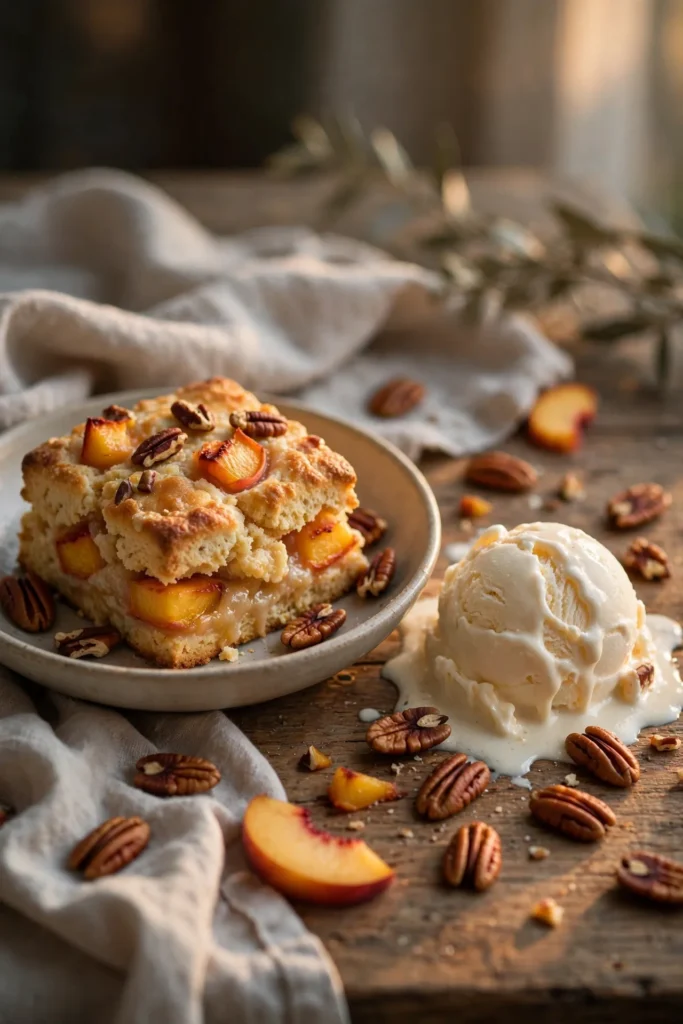
The crisp edges and soft peach center make these biscuits easy to turn into dessert without adding another baked layer.
Let the pan rest until the butter stops bubbling, then spoon a warm square into a shallow bowl. Add a small scoop of vanilla ice cream beside it instead of directly on top. This keeps part of the crust crisp while the melting ice cream runs into the peach filling.
A few finishing options work well:
- Toasted chopped pecans for crunch.
- A spoonful of plain whipped cream.
- A light dusting of cinnamon.
- Fresh peach slices when they are in season.
Keep the toppings simple. Too many sweet extras can hide the buttery biscuit flavor.
Dessert serving check
13. Avoid the Three Mistakes That Cause Soggy Biscuits
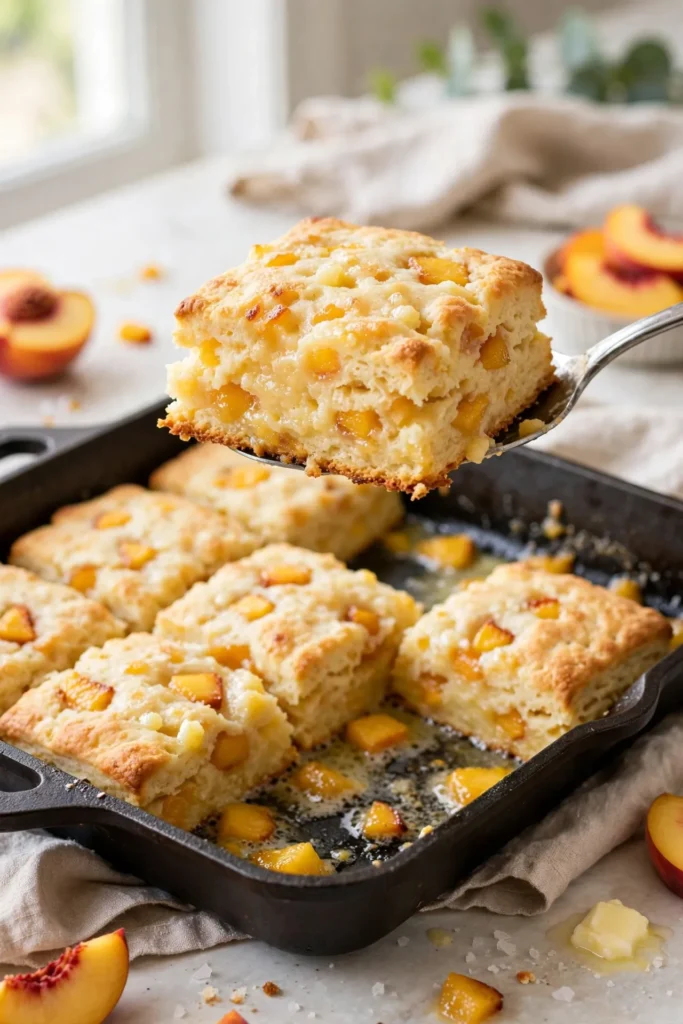
A wet middle is not always a sign that the biscuits simply need more oven time. The problem may have started before the pan went in.
Three common causes are easy to spot:
- Peaches went into the dough with syrup or thawing liquid still clinging to them.
- Large fruit chunks created heavy, wet pockets.
- The biscuits were cut while steam was still trapped in the center.
Drain and dice the fruit before mixing, then give the baked pan a short rest before serving. The center should feel tender, but it should hold together when lifted.
More baking cannot always fix too much fruit liquid. Good prep matters first.
Drain and blot the peaches before measuring.
Cut the fruit into small, even pieces.
Rest the baked pan before slicing.
Do not pour leftover peach juice into the dough.
Do not leave thick peach wedges whole.
Do not cut the biscuits while the center is steaming heavily.
14. Reheat Leftovers Without Drying the Peach Filling
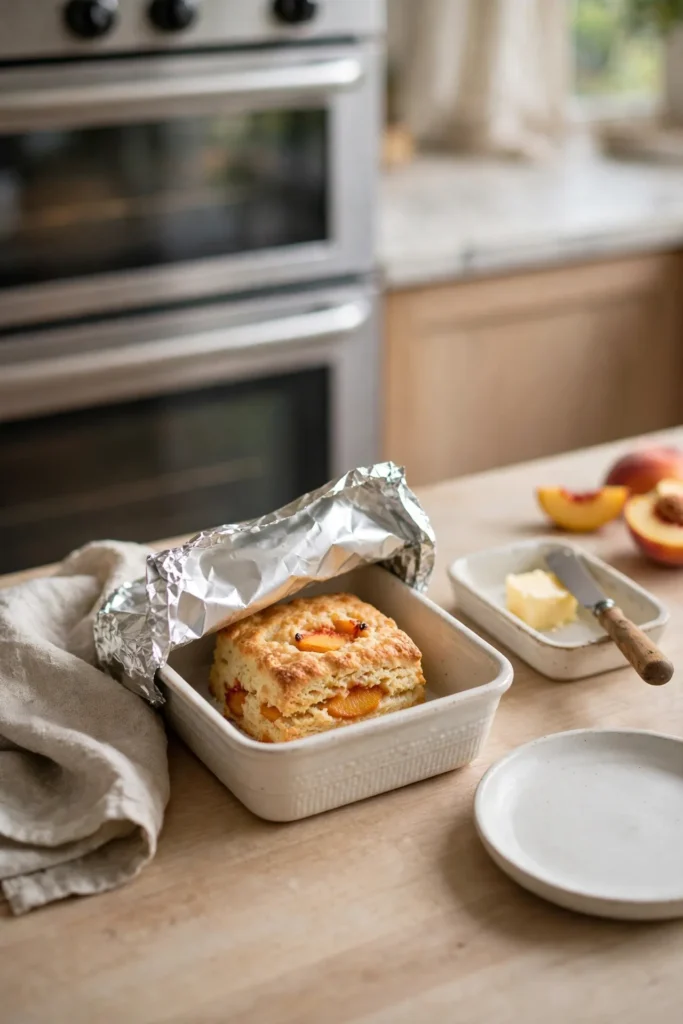
Leftover biscuits can lose their soft center if they are heated too quickly. The outside gets hot first, while the peach pieces and middle continue to dry.
Use a gentle approach:
- Place the biscuit in a small baking dish or on a covered tray.
- Add only a light cover so moisture stays near the center.
- Warm until the butter softens and the middle is heated through.
- Uncover briefly if the top needs a little crispness.
Avoid reheating the full pan again and again. Warm only the amount you plan to eat.
A small spoonful of honey butter served afterward can bring back richness without soaking the crust during reheating.
Reheat only the serving you need rather than warming the whole pan.
Cover lightly so the peach center stays soft while it warms.
Uncover near the end only when the top needs a crisper finish.
15. Watch the Edges and Center Instead of Relying Only on the Clock
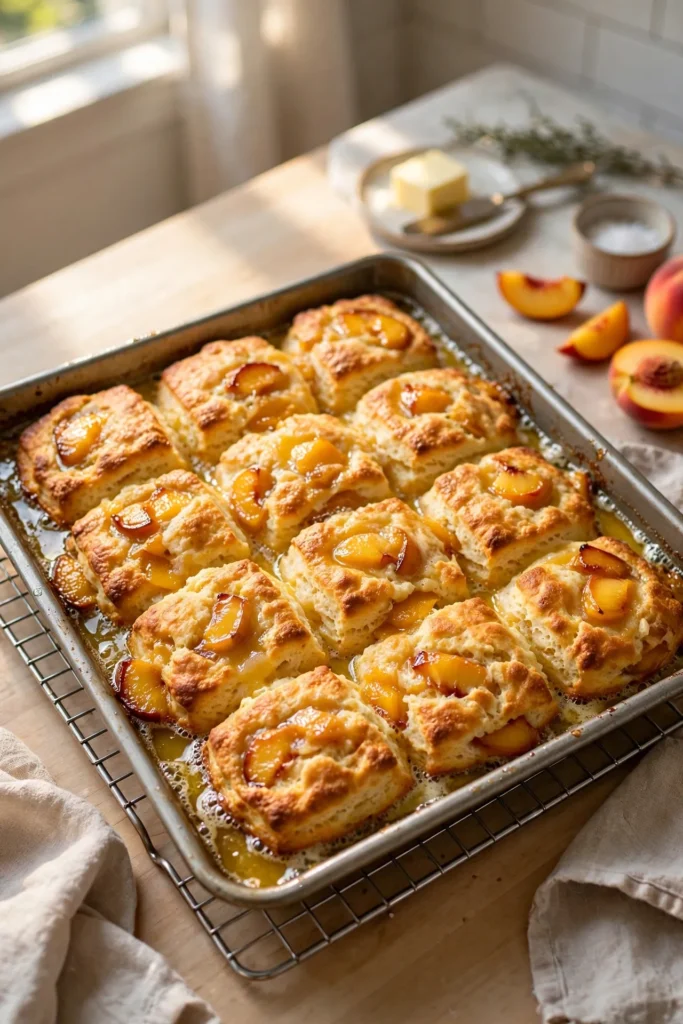
Ovens and baking dishes do not all behave the same way. A glass dish may brown differently from a dark metal pan, so the clock should be a guide rather than the only test.
Look at the whole pan:
- The outer edges should be deep golden.
- Butter should no longer look raw or milky around the sides.
- The center should appear set rather than shiny.
- A spoon pressed lightly into the middle should meet soft resistance.
Do not wait for the peach pieces to look dry. They should remain moist.
If the edges are dark but the center is loose, protect the outer area and allow the middle more time to set.
The center looks shiny, loose dough moves under the spoon, and pale butter pools near the middle.
The edges are golden, the center is set, and the peach pieces still look soft and juicy.
Conclusion
Peach Butter Swim Biscuits do not need fancy shaping or hard-to-find ingredients. The best results come from small choices, such as draining the peaches well, mixing the dough gently, and watching the center instead of relying only on the clock.
Once you learn those details, it is easy to adjust the biscuits for brunch, dessert, or a quiet weekend breakfast. Serve them warm, leave a few golden edges exposed, and let the peach flavor do most of the work.
Save this Butter Swim Biscuits list to Pinterest so the tips are close by the next time peaches are waiting on your counter or in the freezer.