


Saturday morning feels different when breakfast is already waiting in the fridge. The kitchen is still quiet, the coffee has just started, and nobody wants to stand at the stove flipping pancakes in small batches.
A Blueberry Croissant Breakfast bake gives you that slow weekend feeling without a complicated morning. But there is a small catch. Croissants soak up custard quickly, blueberries release juice, and a deep dish can leave the middle wet while the top turns dark. A few smart choices make the difference between a soft, flaky bake and a heavy pan of soggy bread.
The ideas below cover the details that matter most, including which croissants to buy, how to place the berries, how long to soak the mixture, and how to tell when the center is ready. You will also find easy ways to adjust the sweetness, add cream cheese, prepare the dish the night before, and serve it as part of a balanced brunch.
Start with the croissants. Their texture sets up everything that comes next.
1. Choose Day-Old Butter Croissants for a Better Bake

Good texture begins before the custard is mixed. Croissants that are one day old feel a little dry on the surface, which helps them soak up the egg mixture without collapsing.
Look for:
- Croissants with clear flaky layers
- A light, crisp shell rather than a soft bread-like crust
- Medium or large croissants that can be torn into thick pieces
Very fresh croissants can become too soft after a long soak. If yours are fresh, tear them up and leave the pieces uncovered for an hour or two. Skip croissants filled with chocolate or almond paste, since they can make the finished dish overly sweet and heavy.
2. Tear the Croissants into Large, Uneven Pieces

Put the knife away for this step. Tearing the croissants by hand creates rough edges that brown well and catch small pockets of custard.
Keep the pieces uneven on purpose.
Use larger pieces near the top of the dish, where they can stay flaky. Place smaller pieces near the bottom, where they will absorb more custard and form a soft base. Do not press everything into a tight, flat layer. A little space between the pieces lets the custard move through the dish.
Pieces around two inches wide are easy to serve and less likely to dissolve during an overnight soak.
Split each croissant along its natural layers instead of cutting straight cubes.
Place smaller pieces on the bottom so they can hold the softer custard layer.
Set the largest flaky pieces on top and leave their pointed edges exposed.
3. Layer the Blueberries Instead of Dropping Them All on Top

Blueberries tend to roll into the corners or collect on the surface. That leaves some servings full of fruit and others with barely any.
Divide the berries into three small portions:
- Scatter one portion across the bottom
- Add the second between the croissant pieces
- Save the final portion for the top
Tuck a few berries into open gaps with your fingers rather than pressing them deep into the bread. This spreads the fruit through the bake while keeping some bright berries visible after baking. It also stops the top from becoming wet under one thick pile of berry juice.
All the berries sit on top, where they release juice into one wet layer and slide away when the bake is cut.
Berries appear at the bottom, through the center, and across the top, giving each scoop a more even mix.
4. Whisk a Vanilla Lemon Custard That Cuts Through the Richness

Croissants already bring plenty of butter, so the custard needs fresh flavor rather than extra heaviness. Vanilla gives the bake a warm than extra heaviness. bakery smell, while lemon zest keeps each bite from feeling flat.
Whisk the eggs first until the whites and yolks are fully blended. Then add the milk, a small amount of sugar, vanilla, lemon zest, and a pinch of salt.
Use zest, not a large pour of lemon juice.
Too much juice can make the dairy mixture look split. Rub the zest into the sugar before whisking if you want the lemon scent to spread more evenly through the dish.
Custard whisking order
5. Keep Frozen Blueberries from Making the Center Watery
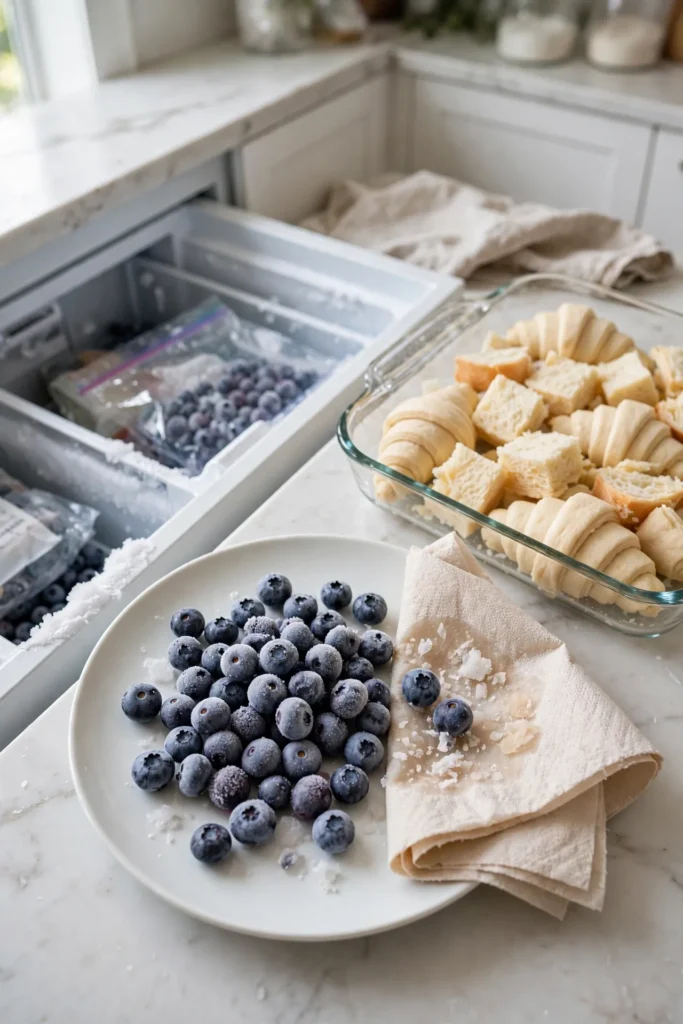
Frozen blueberries do not need to be thawed before they go into the baking dish. Thawing makes them release juice early, which can stain the custard and create wet pockets around the fruit.
Spread the frozen berries on a plate and remove any loose ice crystals. Add them to the dish straight from the freezer, working quickly.
For a cleaner result:
- Use berries that are loose, not frozen into one block.
- Fold them between the croissants instead of stirring them into the custard.
- Allow a little extra baking time if the center still moves like liquid.
Check the custard, not just the color of the top.
Shake off loose frost before adding the berries.
Place the fruit between croissant layers while it is still frozen.
Do not thaw the berries in a bowl before assembly.
Do not pour melted berry liquid into the custard mixture.
6. Sweeten Each Layer Without Turning the Bake Sugary

Too much sugar can hide the buttery croissant flavor and make the blueberries taste flat. The easiest fix is to decide where the sweetness should come from before assembling the dish.
Use this simple order:
- Keep the custard lightly sweet
- Let ripe blueberries provide most of the fruit flavor
- Add a thin crumb topping only if you want extra texture
- Wait until serving before deciding on syrup or powdered sugar
If the bake includes sweetened cream cheese or a sugary almond topping, reduce the sugar in the custard. Guests can always add a drizzle at the table, but sweetness cannot be removed once it is baked in.
💡 Quick Tip
Choose one main sweet finish. Use a crumb topping, powdered sugar, or maple syrup rather than adding all three.
7. Give the Croissants a Short Soak for a Crisp Top

A longer soak does not always make a better breakfast bake. Croissants absorb liquid faster than thick sandwich bread, especially when their cut sides are exposed.
For a same-morning bake, pour the custard slowly and give the lower pieces time to drink it in. Leave a few flaky tips above the liquid.
An overnight rest can work well, but the dish should not look flooded before it goes into the fridge. Press the bread gently once, then stop. Repeated pressing flattens the layers and pushes too much custard into the top pieces.
The goal is a softly set center with crisp, golden ridges.
8. Add Cream Cheese in Small Pockets, Not One Heavy Layer

A thick cream cheese layer can block the custard from reaching the croissants underneath. It may also leave a dense strip through the middle of each serving.
Small pockets work better.
Soften the cream cheese enough to scoop, then place little spoonfuls between the croissant pieces and blueberries. Keep some spaces free so the custard can flow through the dish. For extra flavor, mix the cream cheese with a little vanilla or lemon zest before adding it.
Avoid spreading it across the bottom like frosting. That method makes the base heavy and can cause the top layer to slide when served.
| Small Pockets | One Thick Layer |
|---|---|
| Leaves paths for the custard | Can block liquid from lower pieces |
| Creates creamy bites throughout | Creates one dense middle strip |
| Keeps each scoop varied | May slide when portions are lifted |
9. Add an Almond Crumb Topping for Crunch
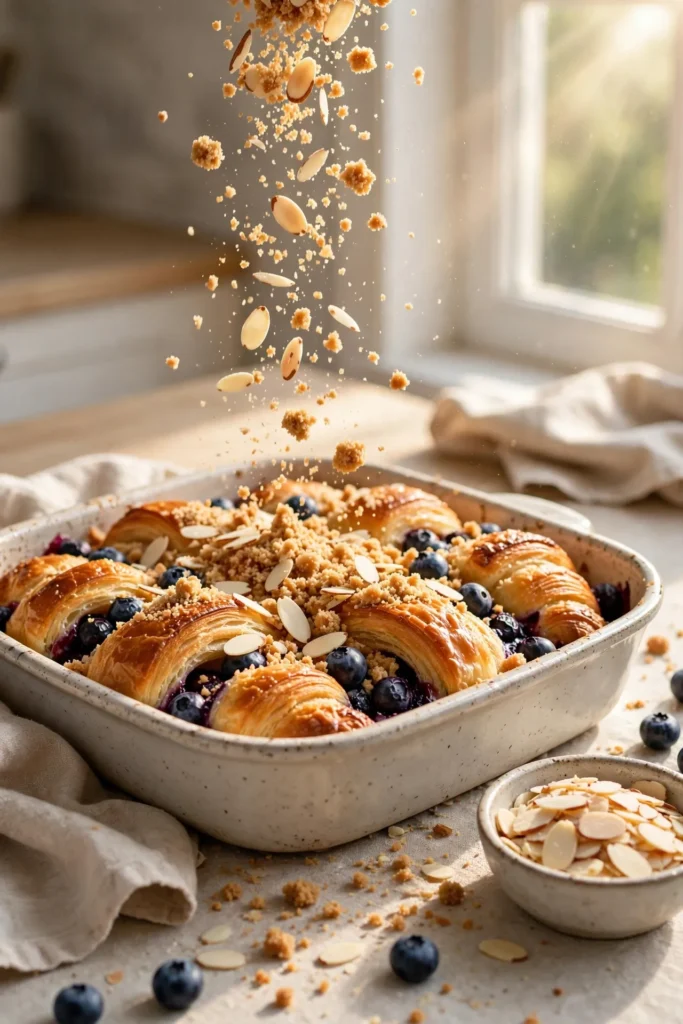
The soft center needs one crisp detail, and a thin almond topping does the job without covering the blueberries.
Mix sliced almonds with a little flour, brown sugar, and softened butter. The mixture should feel crumbly rather than greasy. Scatter it lightly over the highest croissant pieces just before baking.
For cleaner texture:
- Keep the topping away from any visible pools of custard.
- Break large butter clumps into smaller crumbs.
- Add the almonds last so they stay near the surface.
Check the top near the end of baking. If the nuts darken before the center sets, cover the dish loosely while the custard finishes.
Keep the crumb layer thin enough that blueberries and flaky croissant edges remain visible.
10. Use a Shallow Baking Dish for More Golden Edges

A wide, shallow dish exposes more croissant pieces to the oven heat. That means more browned tips, crisp edges, and fewer servings taken from a wet middle.
A deep casserole can still work, but it needs careful layering. Do not pack the croissants tightly or fill the dish to the rim.
Before adding the custard, check that:
- The bread sits in a loose layer
- Several croissant points rise above the sides
- The berries are spread across the full dish
- There is room for the custard to puff slightly
Set the dish on a baking tray if it looks close to full. This catches small drips and makes the hot dish easier to move.
- ▸More surface area: more flaky pieces can brown.
- ▸Loose arrangement: custard moves between the layers.
- ▸Open headroom: the bake can puff without spilling.
- ▸Best texture: golden edges with a softly set center.
11. Check Three Doneness Cues Before Taking It Out

A dark golden top does not always mean the center is ready. Croissant tips brown quickly, especially when sugar or almonds sit on the surface.
Check three areas before removing the dish:
- The outer edges should look puffed and set
- The middle should move slightly, but it should not slosh
- A knife placed near the center should come out without raw, milky custard
If the top is ready first, cover it loosely and keep baking. Do not press down on the center to test it, since that can squeeze out the soft custard and flatten the flaky layers.
12. Let the Bake Rest Before Cutting the First Slice
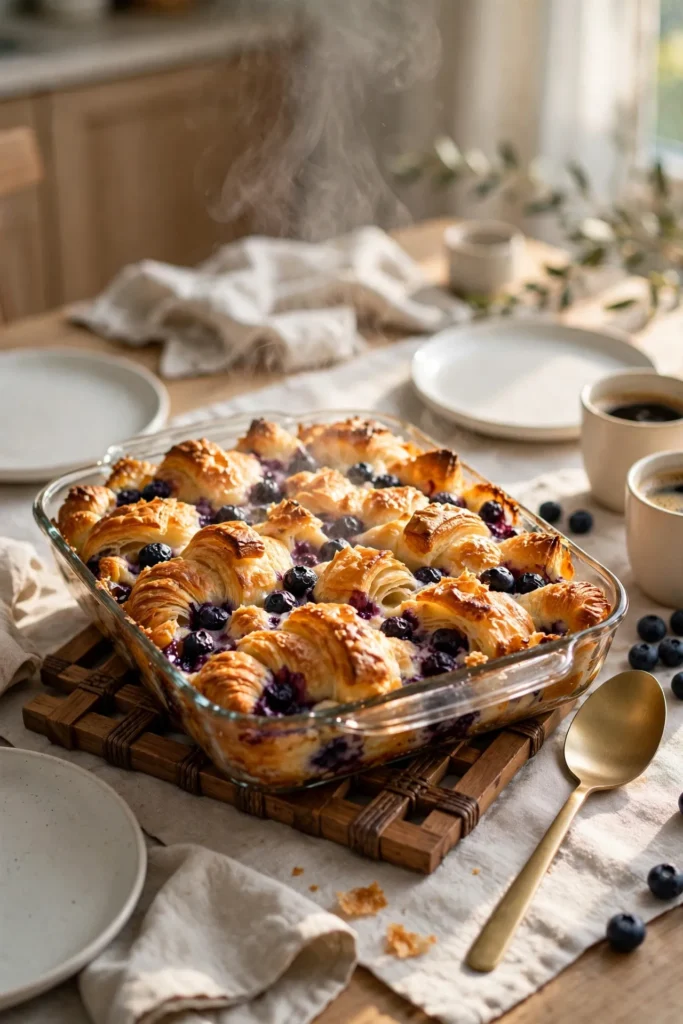
The first scoop often falls apart because the dish is served straight from the oven. A brief rest gives the custard time to settle around the croissant pieces.
Leave the bake uncovered at first so steam can escape. This helps the top stay crisp instead of turning damp under foil.
While it rests, set out the fruit, yogurt, syrup, or savory sides. Use a wide serving spoon rather than a narrow spatula, especially if you want each portion to include a crisp top and a soft center.
The bake should still be warm when served, but it will hold its shape much better.
Remove the dish when the center is set and the edges are puffed.
Let it rest uncovered so extra steam does not soften the top.
Scoop through every layer with a wide spoon and serve while warm.
13. Serve It with Tart Fruit and a Salty Side

A plate filled only with croissant bake, syrup, and sweet fruit can feel heavy after a few bites. One fresh side and one salty side make the meal more balanced.
Good pairings include:
- Orange or grapefruit segments
- Plain yogurt with lemon zest
- Crisp bacon or breakfast sausage
- Lightly dressed greens for a later brunch
Keep the side portions simple. The blueberry bake should still be the center of the plate.
For drinks, coffee and unsweetened tea work better than another rich or sugary choice. A small bowl of extra berries also adds color without repeating the custard texture.
A large serving with syrup, sweet yogurt, pastries, and juice repeats the same rich and sugary notes.
A moderate scoop with tart fruit and a salty side keeps the blueberry and butter flavors clear.
14. Assemble It Ahead Without Losing the Flaky Top
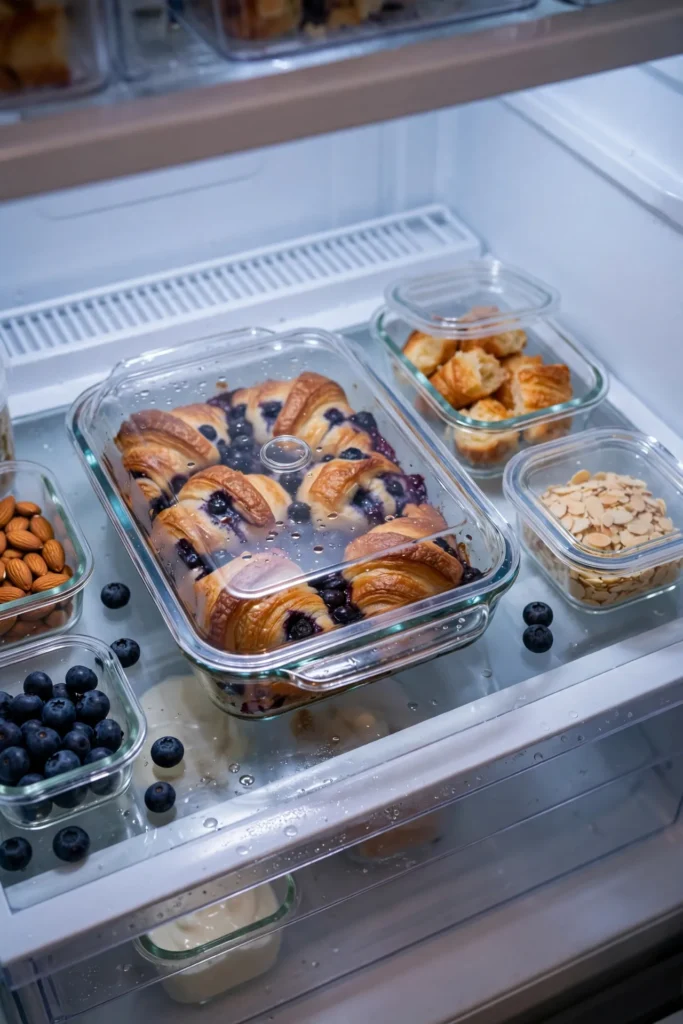
Night-before prep should make the morning easier, not leave every croissant piece soaked through.
Build the lower layers with croissants, blueberries, and cream cheese, then pour the custard slowly. Keep a few large croissant pieces aside for the top if you want stronger crunch. Cover and refrigerate the main dish.
In the morning, add the reserved pieces and any almond crumb topping before baking. Let a very cold glass or ceramic dish sit briefly while the oven heats, rather than moving it directly from a cold refrigerator into intense heat.
This method protects the top texture while keeping most of the work out of your morning.
Make-ahead checklist
15. Chill, Portion, and Reheat Leftovers for Crisp Edges
Large leftovers cool slowly in a deep baking dish. Divide the remaining bake into smaller portions once it has cooled, then place them in a covered container in the refrigerator.
Reheat only what you plan to eat.
An oven or air fryer helps the croissant edges regain some crispness. Place the portion in a small oven-safe dish and heat it until the center is hot. A microwave is useful when speed matters, but it tends to leave the surface soft.
For a better microwave result, use short heating bursts and let the portion stand briefly before checking the middle.
Store the cooled bake in individual or small portions.
Use an oven or air fryer when crisp edges matter.
Do not reheat the full dish when you need one serving.
Do not judge the center by the hot edges alone.
Conclusion
A good Blueberry Croissant Breakfast bake should feel rich without becoming heavy, soft without turning soggy, and special without keeping you in the kitchen all morning. The small details matter most. Start with slightly dry croissants, layer the berries, keep the custard balanced, and give the dish time to rest before serving.
You can keep the base simple or add cream cheese, lemon zest, almonds, or a savory side to match your brunch plans. Once you know how to control the moisture and sweetness, this becomes an easy recipe to make your own.
Save this list on Pinterest for your next slow weekend breakfast or make-ahead brunch.