
17 Stuffing Recipes
Ask anyone at the holiday table which dish they would fight for, and stuffing wins nearly every time. These stuffing recipes cover the whole range: the classic herb version your grandmother made, smoky sausage and cornbread styles from the South, elegant mushroom and chestnut pans, and a slow cooker method that frees up precious oven space. Every one bakes up moist in the middle with those crispy golden edges everyone loves.
The secret to great stuffing is not complicated. It starts with properly dried bread, plenty of butter, and the right amount of broth so the cubes stay tender instead of soggy. Pick your favorite style below, read the tips before you start, and get ready for the pan that always empties first.
Why You’ll Love These Stuffing Recipes
- Every style covered: classic herb, sausage, cornbread, sourdough, wild rice, and more
- Make ahead friendly: most assemble a day early and bake when you need them
- Crispy edges guaranteed: simple tricks for golden tops and tender centers
- Feeds a crowd: one pan easily serves 10 to 12 hungry guests
- Slow cooker options: free up the oven for the turkey and pies
1. Classic Herb Stuffing
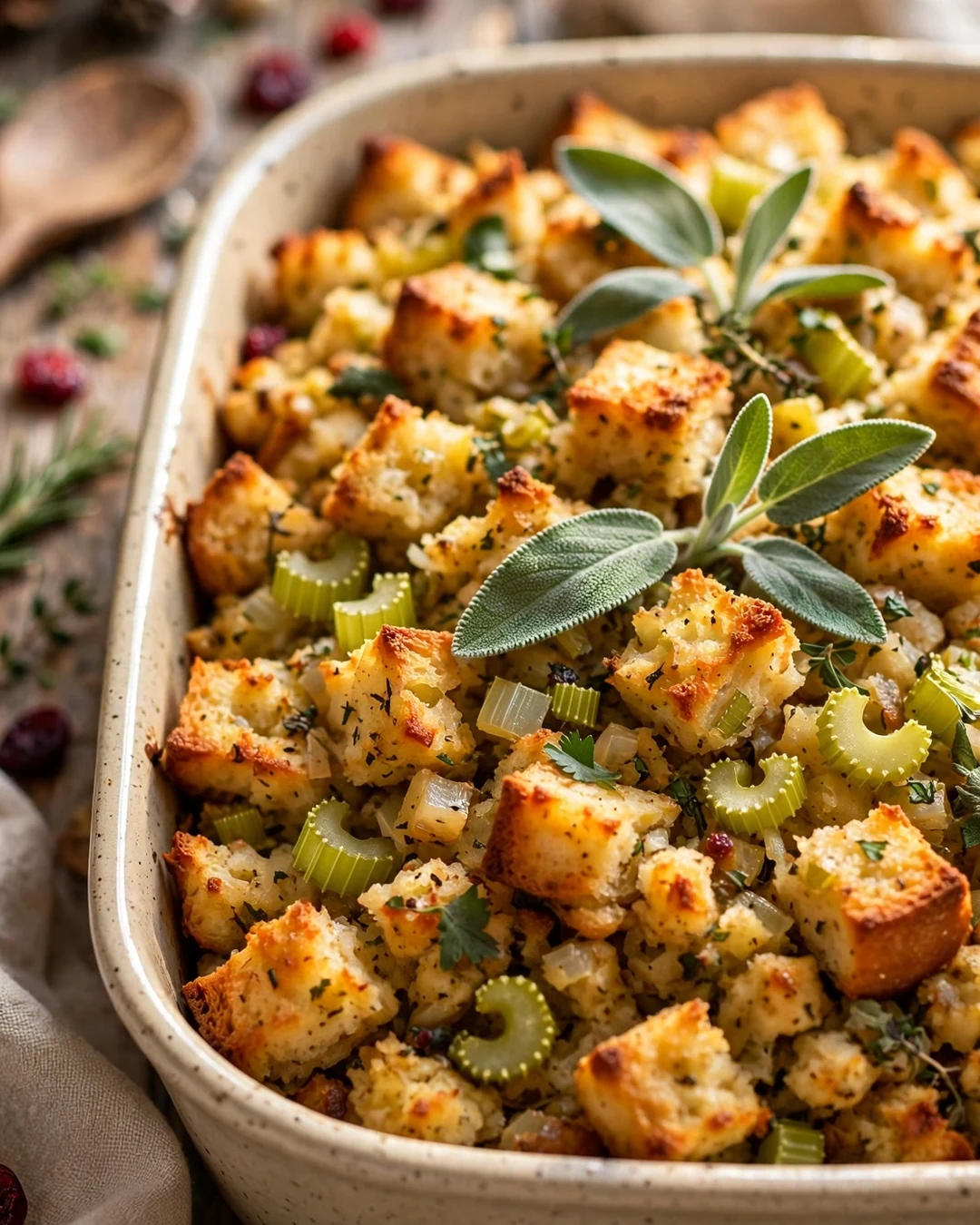
This is the stuffing most of us grew up on, and it still sets the standard. Cubes of white bread soak up butter, onion, celery, sage, and thyme, then bake into a pan that is soft and savory in the center with a crackly golden top. It tastes like Thanksgiving itself.
The key is drying the bread properly. Fresh bread turns to mush, while day old or lightly toasted cubes hold their shape and drink up the broth like little sponges. Saute the onion and celery in a full stick of butter until sweet and soft before folding everything together.
Pro Tips
Use a mix of sage, thyme, and a little rosemary for depth, and season boldly because the bread soaks up salt. Add the broth gradually; you want the cubes moistened all over but never swimming. Let the mixed stuffing rest 10 minutes before it goes in the pan so the bread hydrates evenly.
- Dry or toast the bread cubes first, always
- Saute vegetables in butter until sweet and soft
- Add broth gradually until just moistened
- Rest the mixture 10 minutes before baking
Serving Suggestions
Serve it right alongside the turkey with plenty of gravy ladled over the top. It is the anchor of the holiday plate and pairs with everything else on the table. Bake it in a buttered dish at 375 degrees F for 30 to 35 minutes, covered for the first half so the center stays tender.
Make ahead note: assemble the whole dish the night before, cover, and refrigerate. Pull it out 30 minutes before baking so it heats evenly. Leftovers reheat beautifully in a skillet with a dab of butter, which brings back the crispy edges for breakfast the next morning.
A Holiday Worthy Pan
Chestnut stuffing has been the centerpiece side dish at European Christmas tables for centuries. One pan beside the bird, a sprig of fresh herbs on top, and your table looks like a magazine spread with almost no extra work.
2. Savory Sausage Stuffing
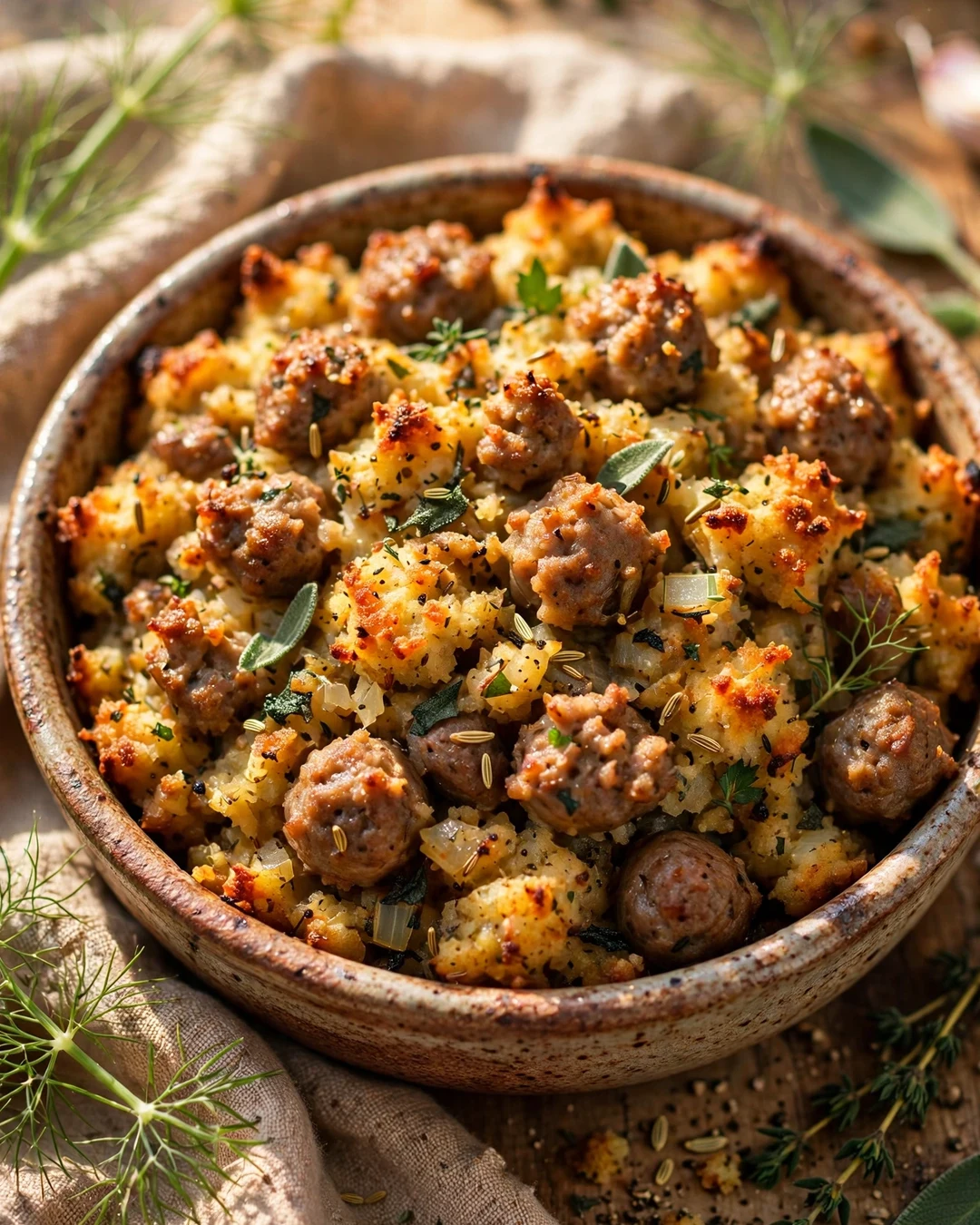
If your family argues that stuffing needs meat, this is your pan. Crumbled Italian sausage brings rich, fennel scented flavor that turns a side dish into something close to a main event. The sausage fat mingles with the butter and broth, seasoning every single cube of bread.
Brown the sausage well and leave the crispy bits in the pan; that fond is pure flavor. Cook the onion and celery right in the drippings, then combine with dried bread cubes, herbs, and just enough broth to moisten. A little of the sausage fat replaces some butter, so the finished dish tastes deeply savory without feeling greasy.
Pro Tips
Choose a good quality pork sausage with fennel for the classic flavor, or use hot Italian sausage if your table likes a gentle kick. Drain only the excess fat and keep a few spoonfuls for the vegetables. Taste before salting, because sausage and broth both bring their own salt.
Slow Cooker Stuffing Steps
1. Butter the inside of the slow cooker well. 2. Fold dried bread, sauteed vegetables, herbs, and broth together in a big bowl. 3. Pack loosely into the crock and dot with butter. 4. Cover with a towel under the lid and cook on low 4 hours. 5. Rest 15 minutes before serving.
- Brown sausage hard and keep the crispy bits
- Cook vegetables in the drippings for extra flavor
- Hot Italian sausage adds a welcome gentle heat
- Taste before adding salt at the end
Serving Suggestions
This hearty stuffing stands up to rich gravy and cranberry sauce alike. It is also wonderful baked in a cast iron skillet, which gives it extra crispy edges all around. Leftovers make an incredible breakfast hash with a fried egg on top.
Freezer friendly: bake it fully, cool, and freeze in portions for up to 2 months. Reheat covered at 350 degrees F until hot in the center, then uncover for the last 5 minutes to crisp the top again. Holiday cooking just got easier.
3. Southern Cornbread Stuffing
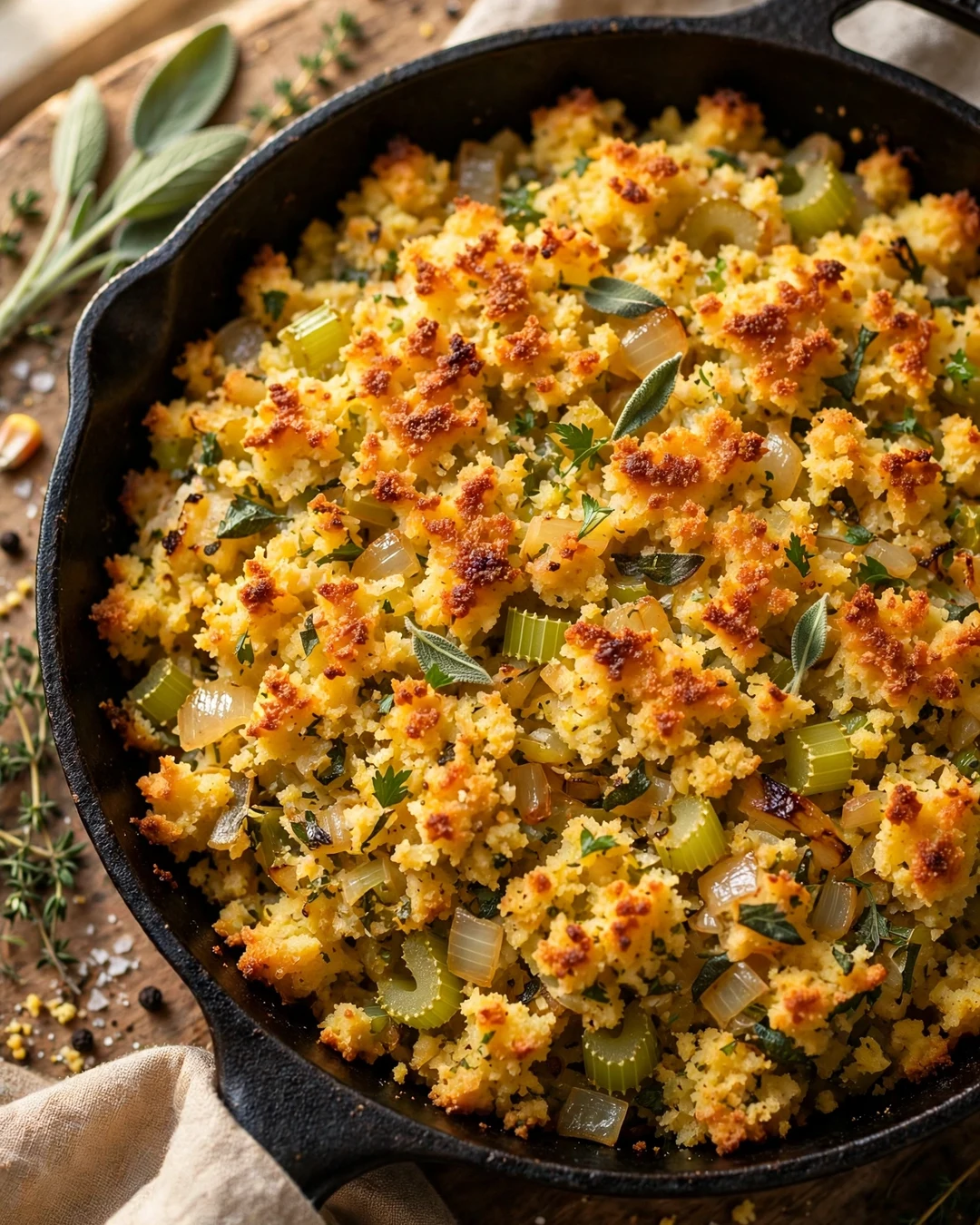
Down South, stuffing starts with cornbread, and one bite explains why. Crumbled cornbread gives the dish a tender, almost custardy crumb with sweet corn flavor and beautifully crisp edges. It is dressing, technically, and Southern cooks will happily explain the difference while serving you seconds.
Bake your cornbread a day ahead in a cast iron skillet, because slightly stale cornbread crumbles without turning gummy. Crumble it coarse, then fold in sauteed onion, celery, and bell pepper with sage and plenty of black pepper. Rich chicken broth and a beaten egg bind it into the classic texture.
Pro Tips
Skip the sweetened cornbread mixes for this; a savory, sturdy cornbread holds up best. Crumble by hand so you get a mix of fine crumbs and bigger chunks. The mixture should be wetter than white bread stuffing going into the oven, because cornbread drinks up broth as it bakes.
- Bake the cornbread a day ahead for easy crumbling
- Hand crumble for the best mix of textures
- Keep the mixture moist; cornbread absorbs a lot
- Plenty of black pepper is traditional
Serving Suggestions
Cornbread stuffing belongs next to turkey, collard greens, and giblet gravy. It is a cornerstone of the spread, and it sits happily among the other Thanksgiving side dishes on a crowded holiday table. Bake in the same cast iron skillet for maximum crust.
Variation worth trying: stir in a cup of crumbled cooked bacon or finely diced ham for a smoky twist. You can also add a pinch of cayenne to wake things up. Keep the sage generous either way, since it is the signature herb of Southern dressing.
4. Rustic Sourdough Stuffing
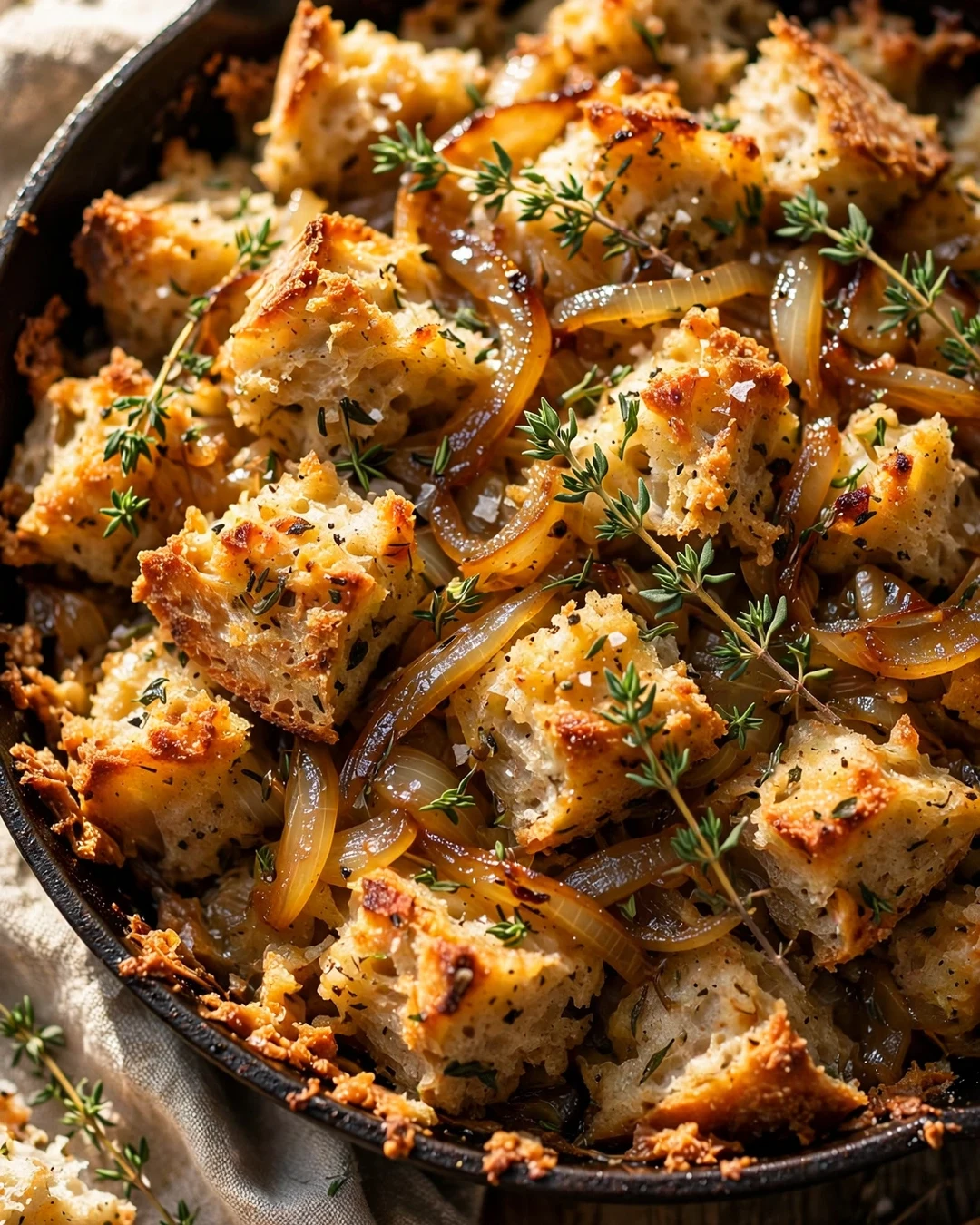
Sourdough brings a gentle tang that makes the whole pan taste brighter and more interesting. The sturdy crumb holds up beautifully to broth, so every bite stays distinct and chewy in the best way. If you bake sourdough at home, this is the holiday destiny of your extra loaves.
Tear the bread instead of cubing it for craggy pieces that crisp at the edges. Because sourdough is denser than sandwich bread, it needs a touch more broth and a longer rest before baking. Caramelized onions add sweetness that plays perfectly against the tang, and fresh thyme keeps it firmly in holiday territory.
Pro Tips
Use a loaf that is at least a day old, and tear it into rough one inch pieces. Let the dressed bread sit a full 15 minutes so the dense crumb can hydrate. A splash of the brine from a jar of pickles sounds odd, but a teaspoon brightens the whole dish.
- Tear, do not cube, for craggy crispy edges
- Dense sourdough needs extra broth and rest time
- Caramelized onions balance the tangy bread
- Fresh thyme is the ideal herb partner
Serving Suggestions
This stuffing shines next to roast chicken any time of year, not just on holidays. It is also the perfect way to use up the heels and extra loaves from your baking, much like these sourdough discard recipes put every bit of starter to work. Serve with a simple pan gravy.
Texture trick: press half the mixture firmly into the dish and scatter the rest loosely on top. The bottom bakes tender and compact while the top stays shaggy and crisp. Two textures in one pan means everyone gets the bite they love.
5. Apple Sage Stuffing
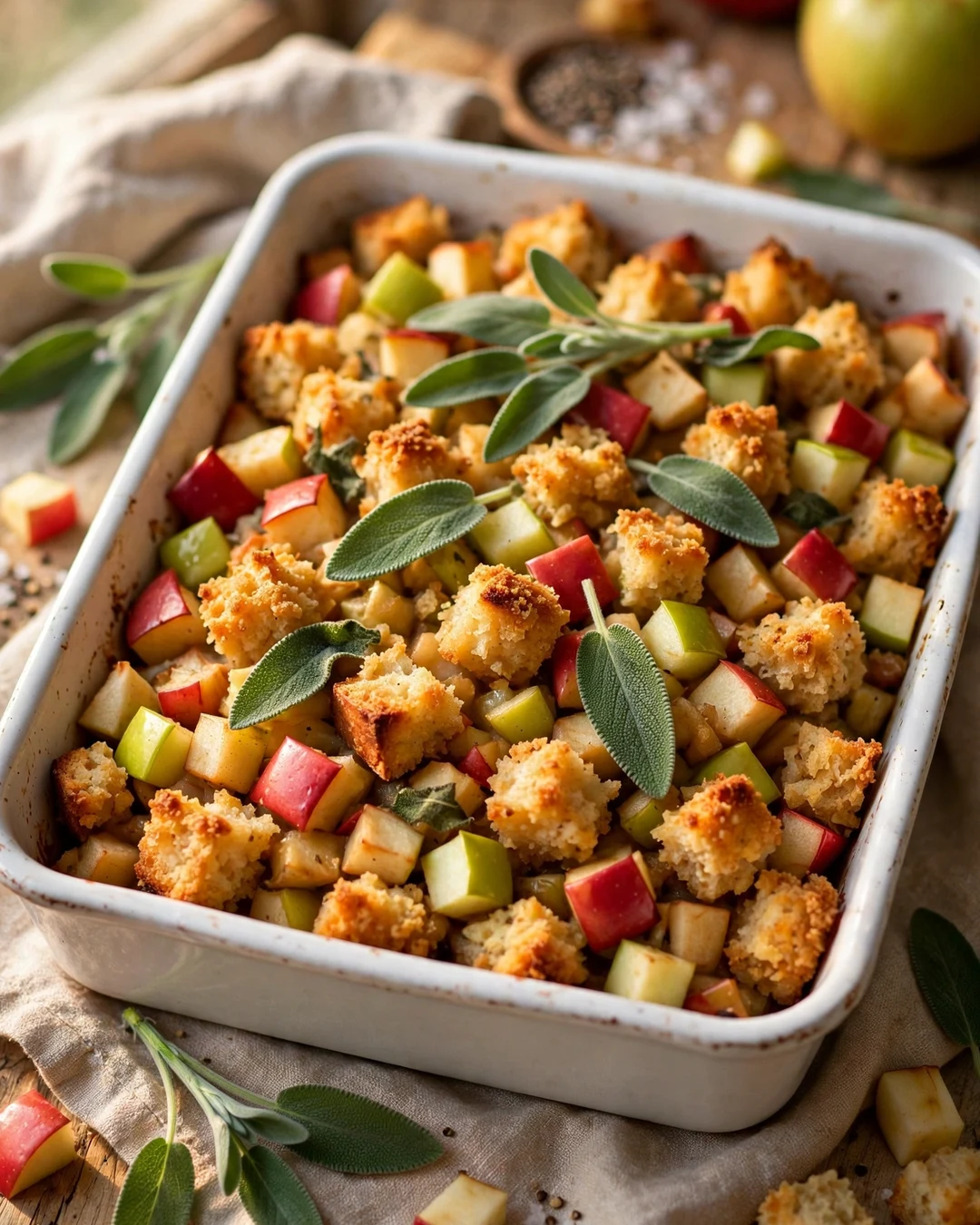
Tart apples and fresh sage are one of fall’s great pairings, and together they lift stuffing into something special. The apples soften into sweet, juicy pockets that cut through the richness of butter and broth, while sage keeps everything grounded and unmistakably savory.
Choose a firm, tart apple like Granny Smith or Honeycrisp so the pieces hold their shape in the oven. Dice them the same size as the bread cubes and saute briefly with the onion and celery so they start to soften without collapsing. Fresh sage matters here; dried sage can taste dusty in comparison.
Pro Tips
Fry a few whole sage leaves in butter until crisp for a gorgeous garnish. Add the apples after the vegetables have softened so they keep some bite. A small handful of golden raisins is a lovely old fashioned addition if your family likes a sweet note.
- Firm tart apples hold their shape best
- Fresh sage leaves, never dusty dried sage
- Crisp fried sage leaves make a pretty garnish
- Aim for the drier side of moist before baking
Serving Suggestions
Apple sage stuffing is made for roast pork as much as turkey, so keep it in mind for Sunday dinners all season. A drizzle of warm apple cider gravy over the top ties the flavors together beautifully.
Pairing idea: serve this next to pork chops with a simple cider pan sauce for a weeknight version of the holiday plate. The stuffing bakes in about 30 minutes, so it is very doable outside of November. Add a green salad and dinner feels complete.
6. Cranberry Pecan Stuffing
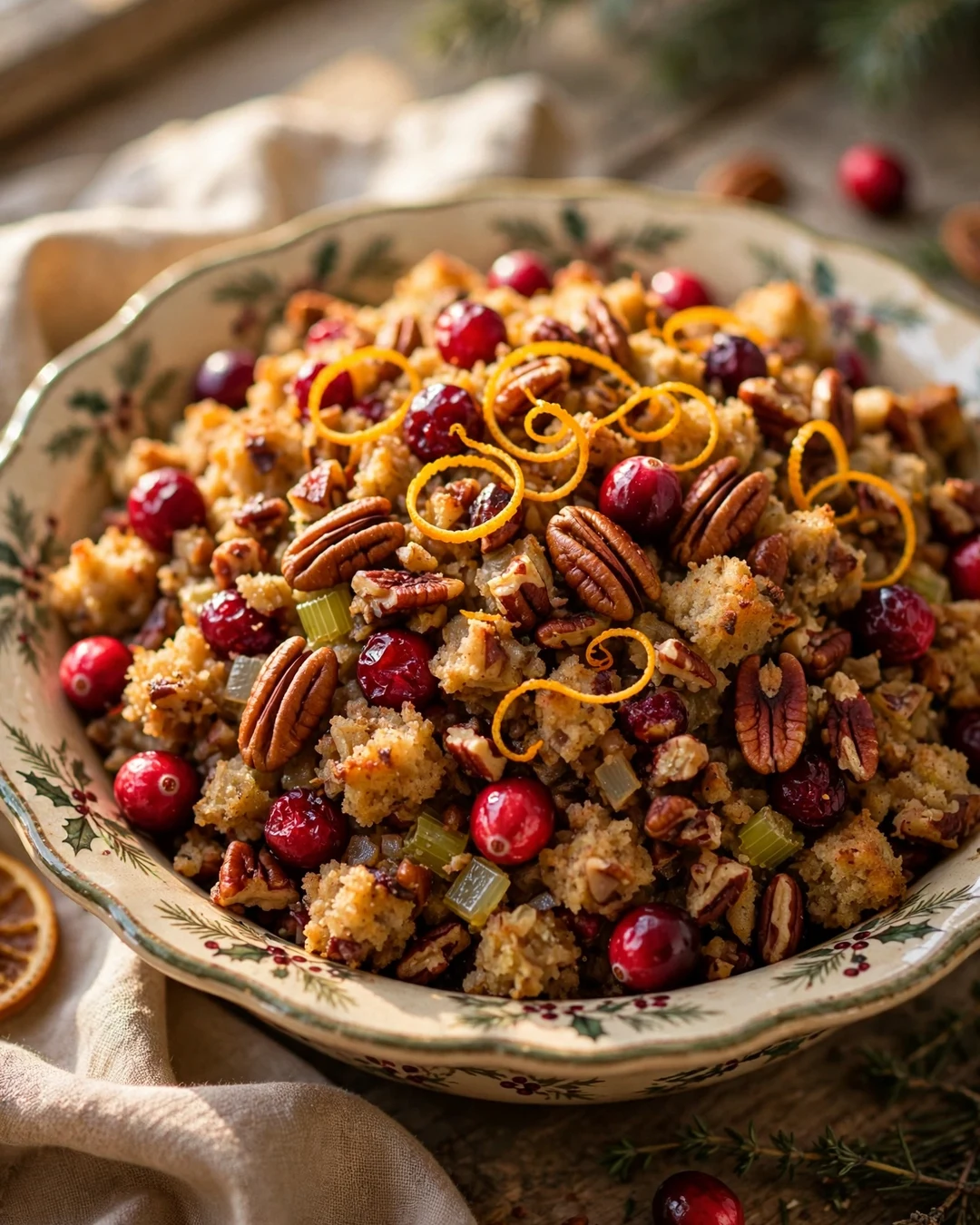
This is the prettiest stuffing on the table, dotted with ruby cranberries and golden toasted pecans. The cranberries bring bright, tart pops that cut through a rich meal, and the pecans add a buttery crunch in every bite. It tastes festive before you even sit down.
Use dried cranberries softened in warm broth or orange juice so they plump instead of staying chewy. Toast the pecans in a dry skillet until fragrant; raw nuts taste flat in comparison. A little orange zest stirred in at the end makes the whole pan smell like the holidays.
Pro Tips
Plump dried cranberries for 10 minutes in warm liquid before mixing. Toast pecans separately and fold in half, saving the rest to scatter on top after baking so they stay crunchy. Fresh cranberries can work too, but chop them and add a spoonful of sugar to tame the bite.
- Plump dried cranberries in warm broth or juice
- Toast pecans until fragrant for real flavor
- Save some pecans for a crunchy top garnish
- Orange zest brightens the whole pan
Serving Suggestions
This stuffing loves a crowded holiday buffet and looks beautiful in a white serving dish. It travels well, too, which makes it a smart choice for potlucks alongside the other crowd pleasers in these fall potluck dishes. Spoon it warm, not piping hot, so the flavors shine.
Sweet and savory balance: if your table leans sweet, add a tablespoon of maple syrup to the broth. If it leans savory, a pinch of red pepper flakes keeps the cranberries in check. Either way, the color alone earns this stuffing its place on the table.
7. Wild Mushroom Stuffing
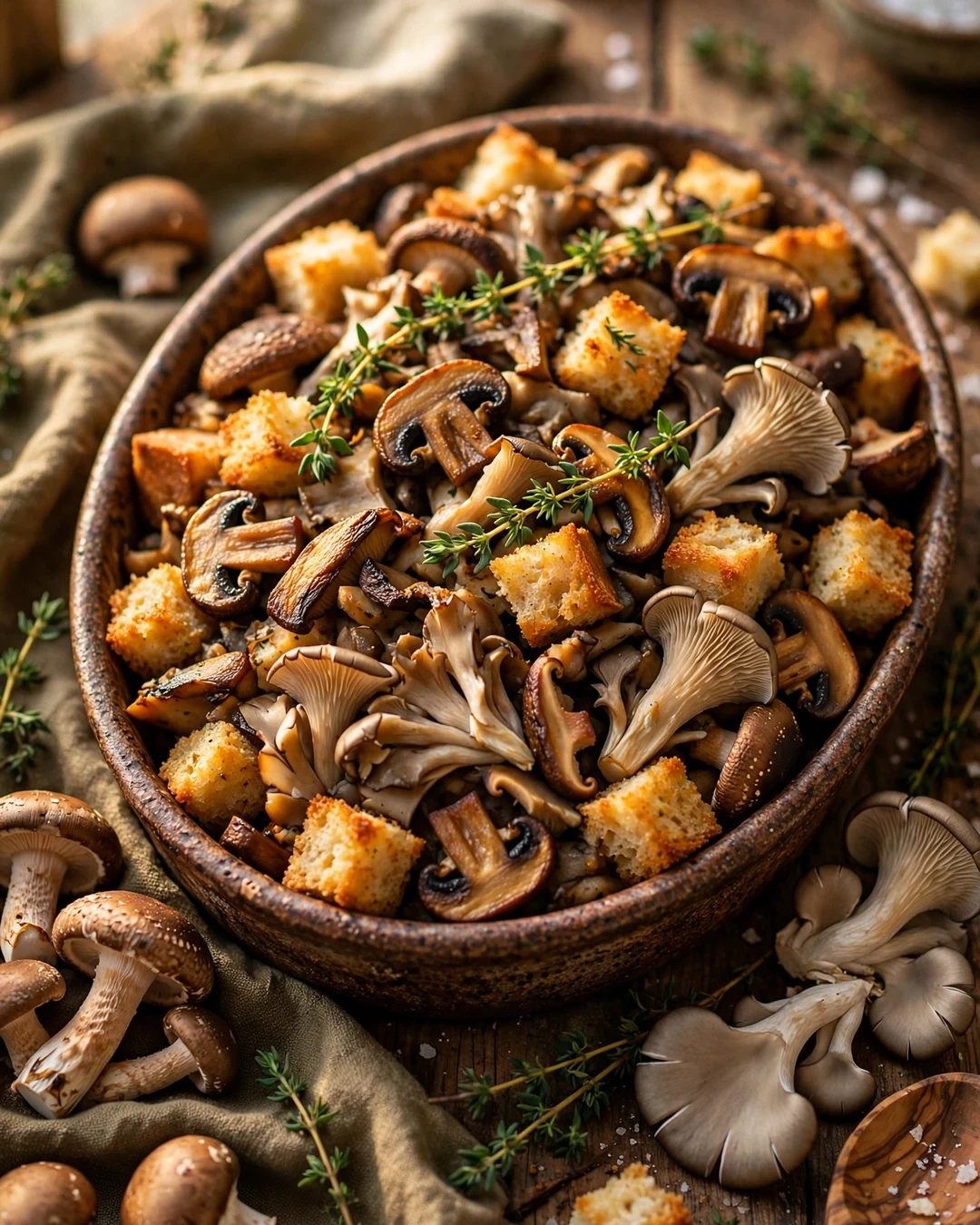
For the mushroom lovers, this is the stuffing that steals the show. A mix of cremini, shiitake, and oyster mushrooms cooks down into deep, earthy, almost meaty flavor that makes this pan satisfying enough to headline a vegetarian holiday table.
The secret is cooking the mushrooms properly: in batches, in a hot pan, without crowding, until they give up their water and brown at the edges. Mushrooms dumped in all at once just steam and stay bland. A splash of dry sherry or white wine in the pan lifts all those browned bits into the mix.
Pro Tips
Brown mushrooms in batches so they sear instead of steam. Mix at least two varieties for the most interesting flavor and texture. Save the mushroom soaking liquid if you use dried porcini, strain it, and swap it in for part of the broth for an extra layer of depth.
- Sear mushrooms in batches until deeply browned
- Mix mushroom varieties for complex flavor
- A splash of sherry lifts the pan drippings
- Dried porcini liquid makes a richer broth
Serving Suggestions
Serve this with roast chicken, beef tenderloin, or as the centerpiece of a vegetarian feast with gravy made from vegetable broth. A sprinkle of fresh parsley and thyme over the top keeps it looking bright despite its earthy soul.
Upgrade idea: fold in a handful of grated Parmesan just before baking for a savory, golden crust. The cheese melts into the top layer and adds a gentle saltiness that mushroom fans adore. Leftovers tucked into an omelet the next morning are a cook’s treat.
8. Chesapeake Oyster Stuffing

A coastal classic with real history, oyster stuffing has graced holiday tables along the Chesapeake Bay for generations. The oysters bake up plump and tender, giving the bread a rich, briny depth that tastes like a celebration. It is different, it is special, and converts are made every year.
Use fresh shucked oysters and their liquor, which is liquid gold for flavoring the bread. Chop the oysters coarse so you get a piece in most bites, and add them raw to the mixture; they cook gently in the oven and stay tender. Butter, celery, and a whisper of Old Bay or cayenne keep the seasoning in the coastal family.
Pro Tips
Strain the oyster liquor through a fine sieve to catch any shell bits. If fresh oysters are hard to find, jarred shucked oysters work well. Keep the pieces big enough to notice, about two per spoonful, so the flavor registers in every bite.
- Save and strain the oyster liquor for the bread
- Add oysters raw so they stay tender
- Coarse chop for oyster in most bites
- A whisper of Old Bay or cayenne fits perfectly
Serving Suggestions
Oyster stuffing is the traditional partner for roast turkey along the coast, and it is equally at home next to baked ham. Serve it in a shallow dish so the top gets extra crisp, and pass lemon wedges for anyone who likes a bright squeeze.
Portion note: this rich stuffing goes further than plain bread versions, so a half batch is plenty for a small table alongside other sides. Bake any extra in muffin tins for individual servings with crisp edges, which makes plating easy and elegant.
9. Wild Rice Stuffing
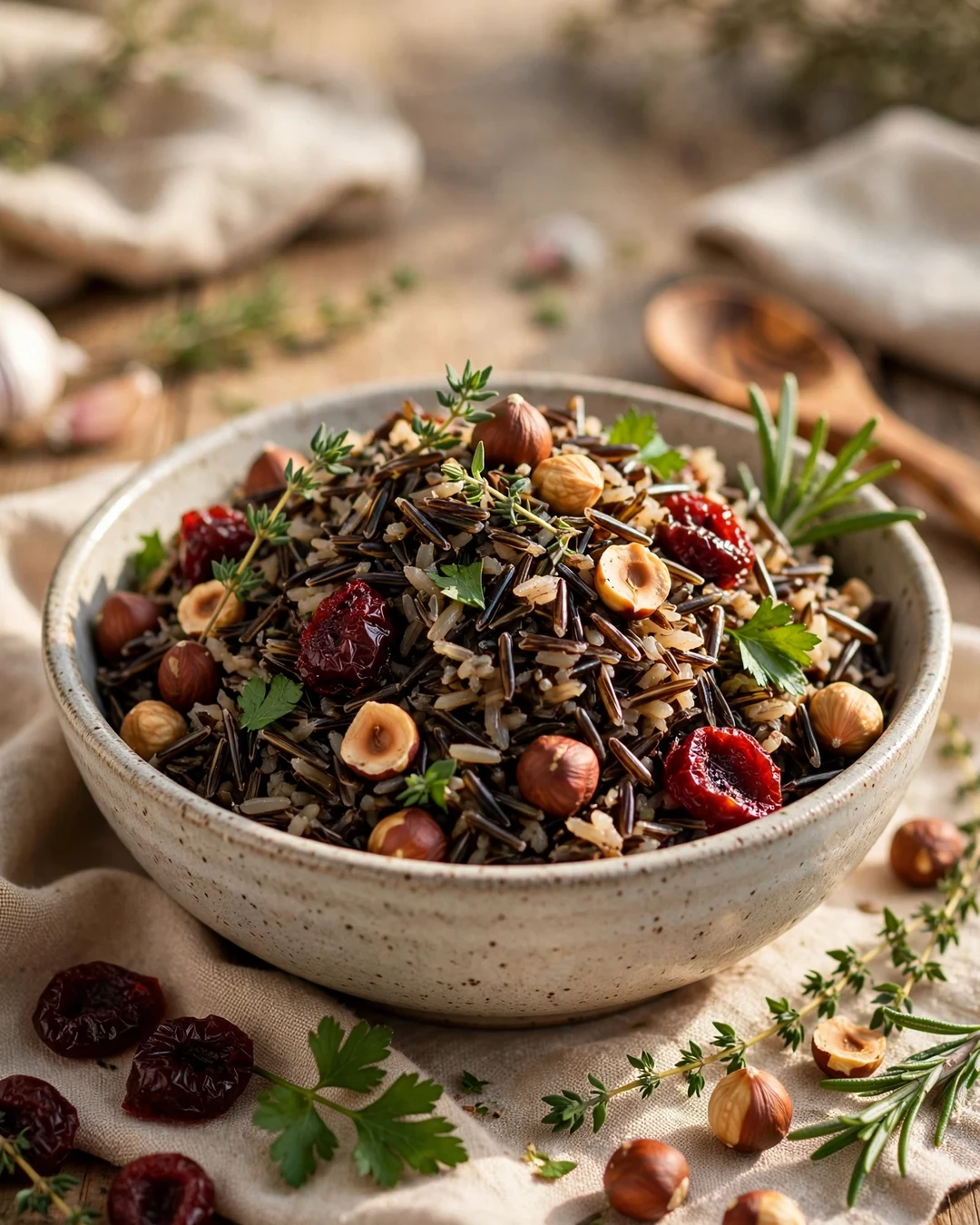
Wild rice brings a nutty chew and a beautiful dark flecked look that sets this stuffing apart. Cooked until the grains burst and curl, the rice mixes with herbs, dried fruit, and toasted nuts for a dish that eats like a hearty grain salad’s cozier cousin. It happens to be naturally gluten free, too.
Cook the wild rice separately until tender, because it takes far longer than bread needs in the oven. Some cooks blend wild rice with brown rice for a softer texture and lower cost, since true wild rice is pricey. Sauteed leeks, celery, and garlic build the savory base, and dried cherries or cranberries add the sweet tart sparkle.
Pro Tips
Rinse wild rice well and cook it in plenty of salted water until the grains split open. Make the rice a day ahead to save time. Toasted hazelnuts, pecans, or walnuts all work; pick one and toast it well. A little fresh parsley at the end keeps the flavors lively.
- Cook wild rice separately until grains burst
- Blend with brown rice to stretch the budget
- Make the rice a day ahead for easy assembly
- Dried cherries add sweet tart contrast
Serving Suggestions
This stuffing is wonderful with roast duck, turkey, or a simple chicken, and it makes a stunning filling for roasted squash halves. It also sits naturally beside dishes like these roasted squash recipes on an autumn table full of color.
Presentation tip: spoon the rice stuffing into a buttered ring mold or bundt pan, bake, and unmold for a gorgeous holiday centerpiece. Garnish the top with extra herbs and a few dried cherries. It slices neatly and looks like you hired help.
Dry Bread, Better Stuffing
Cut your bread into cubes and leave them out overnight, or toast them at 300 degrees F for 15 to 20 minutes until dry but not browned. Properly dried cubes absorb broth without falling apart, which is the difference between stuffing and bread pudding.
10. Slow Cooker Stuffing
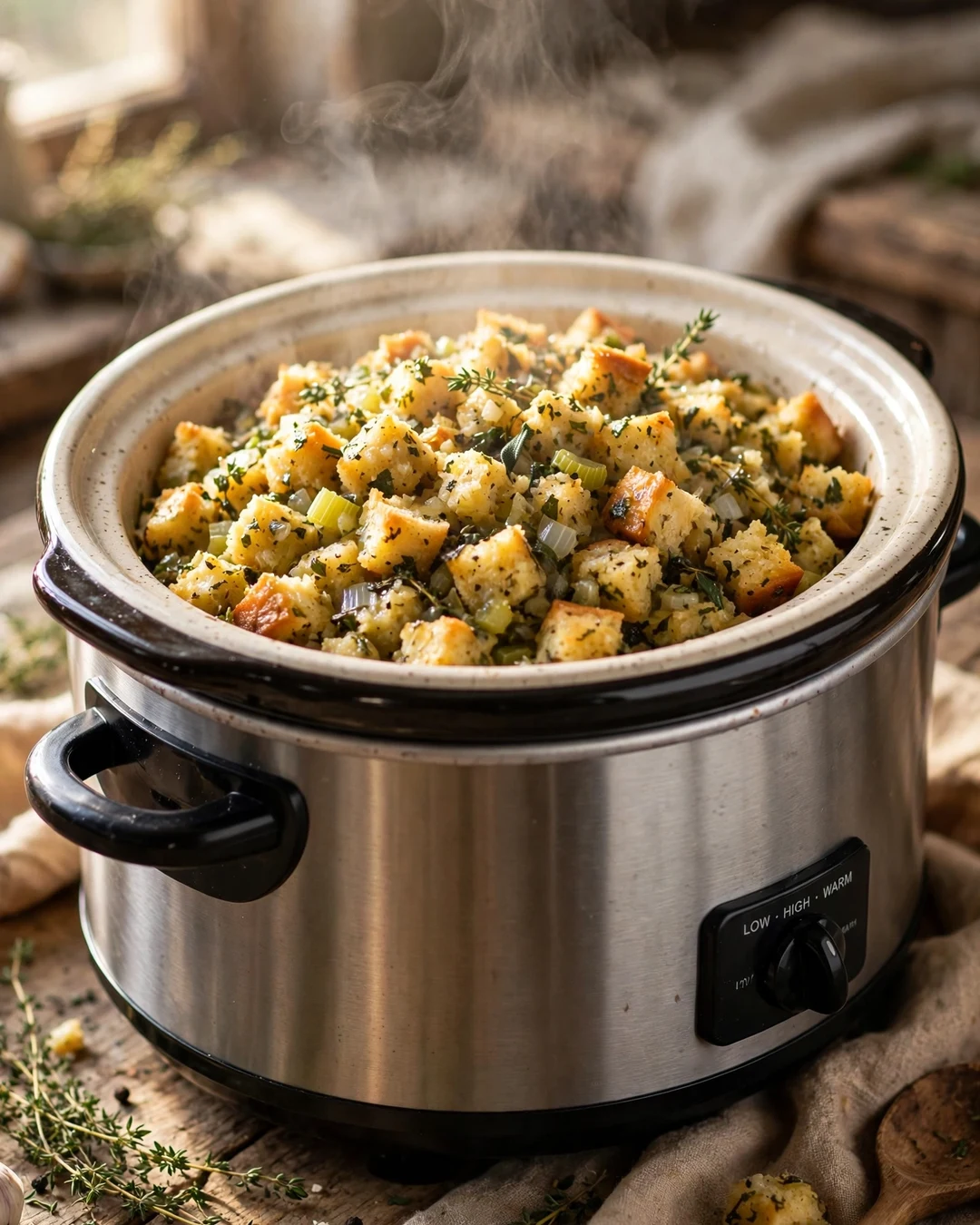
On Thanksgiving Day, oven space is the most valuable real estate in the kitchen, and this stuffing gives yours back. Mixed in minutes and cooked low in the slow cooker, it comes out moist and flavorful with a soft, steamy texture that bread stuffing lovers adore.
The method is simple but the details matter. Use well dried bread cubes, because the slow cooker traps moisture instead of letting it escape. Add a little less broth than you would for an oven version, and cook on low for about 4 hours. A clean kitchen towel under the lid catches condensation so the top does not get soggy.
Pro Tips
Greasing the crock well prevents a stubborn ring of stuck bits. If you love crispy edges, spoon the finished stuffing into a baking dish and broil for 3 to 4 minutes before serving. Stir once halfway through cooking if your slow cooker runs hot on one side.
- Use a little less broth than oven versions
- A towel under the lid catches drips of condensation
- Broil briefly at the end for crispy edges
- Low for about 4 hours is the sweet spot
Serving Suggestions
Serve it straight from the crock on the buffet, set to warm, which keeps it at the perfect temperature through a long meal. It is the ideal partner for a spread built around leftovers too, and these leftover turkey recipes make the next day’s plate just as good.
Timing wisdom: start the slow cooker after the turkey goes in the oven and the stuffing will be ready right on schedule. This is the recipe that lets one cook serve a full holiday dinner from a small kitchen without a single moment of oven panic.
11. Gluten Free Herb Stuffing
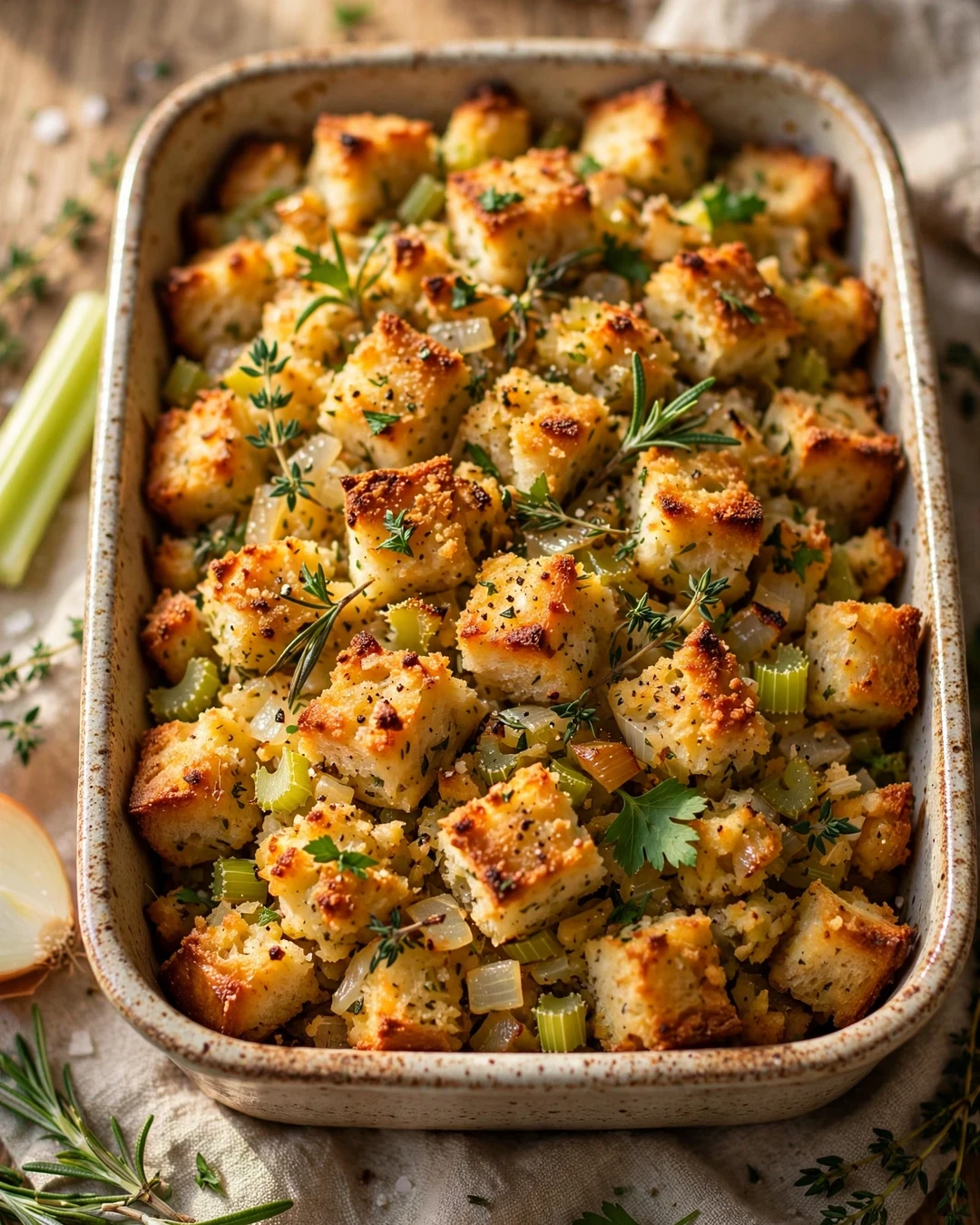
Nobody at the table should have to skip the stuffing, and this gluten free version makes sure of it. With the right bread and the classic herb treatment, it bakes up golden and savory, and honestly, most guests never guess it is any different from the traditional pan.
The bread choice is everything. Pick a sturdy gluten free loaf with real structure, not the soft sandwich style that collapses. Cube it and dry it well, because gluten free bread holds moisture differently and can turn gummy if it starts out fresh. An extra egg in the mix helps bind the cubes so slices hold together.
Oyster Do and Do Not
Do buy oysters from a source you trust and keep them cold until the moment you use them. Do save every drop of the oyster liquor for the stuffing. Do not cook the oysters before they go into the bread, or they will turn rubbery in the oven. Do not serve this to anyone with a shellfish allergy without a clear warning.
Pro Tips
Let the dressed bread rest a full 20 minutes so it hydrates evenly before baking. Check that your broth is certified gluten free, since some brands hide wheat based flavorings. Bake in a shallow layer for the best ratio of crisp top to tender center.
- Choose a sturdy gluten free loaf with structure
- Dry the cubes well to avoid a gummy texture
- An extra egg helps the stuffing hold together
- Verify the broth is gluten free too
Serving Suggestions
Serve it proudly in its own dish with a little marker for guests who need it, and watch everyone else reach for it too. It pairs with the same gravy and cranberry sauce as the main event, and it reheats just as gracefully as any of the easy bakes in these easy casserole dinners.
Flavor boost: because gluten free bread can be a touch bland, season one notch bolder than usual and add a pinch of poultry seasoning plus fresh parsley. A handful of sauteed mushrooms folded in adds savory depth that makes the whole pan taste richer.
12. Bacon Leek Stuffing
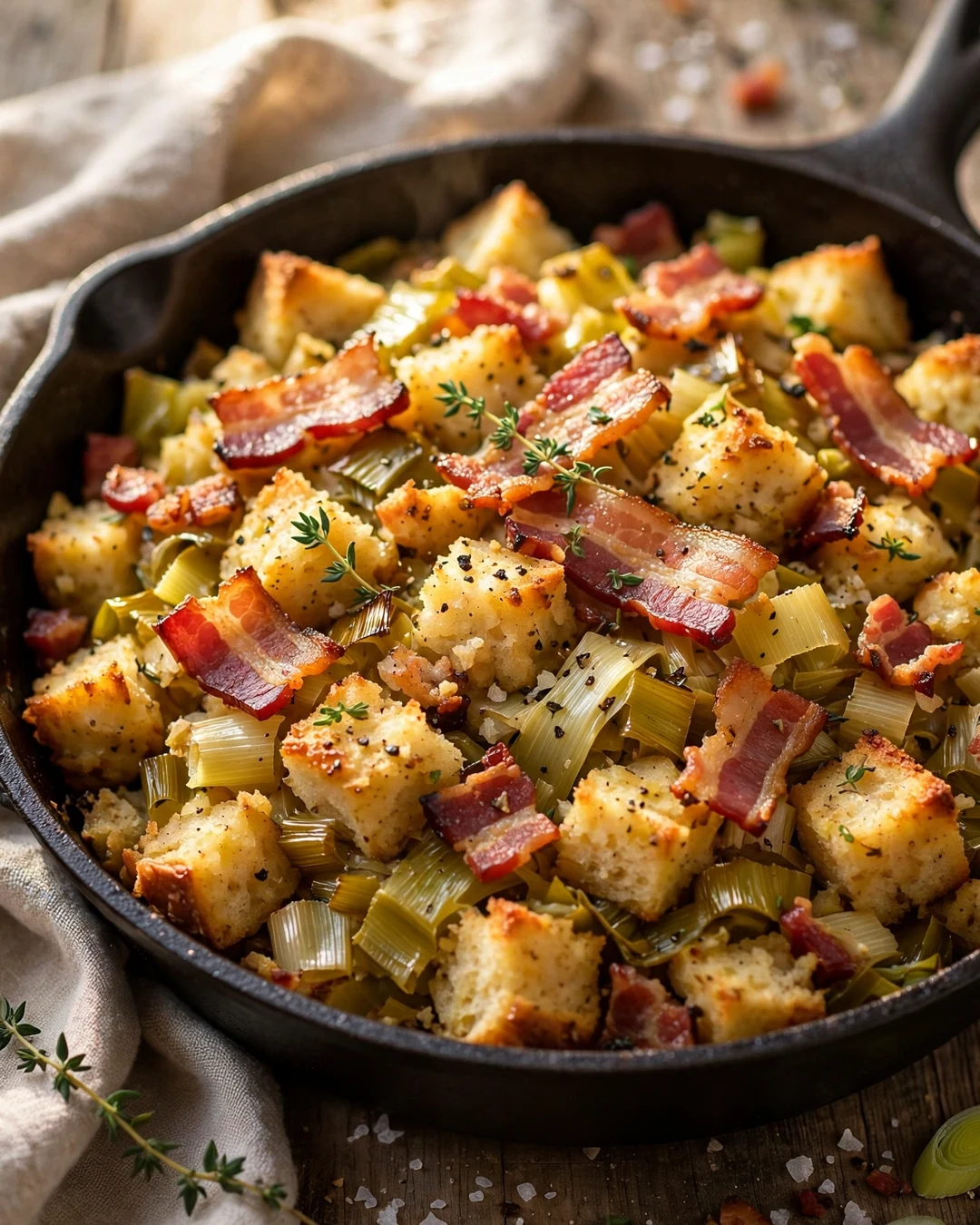
Smoky bacon and sweet, mellow leeks turn stuffing into the dish people talk about on the drive home. The bacon renders its fat into the bread, the leeks melt into gentle sweetness, and the whole pan tastes rich and deeply savory with very little effort.
Leeks need a good wash, since grit hides between their layers; slice them, then swish in a bowl of cold water and lift them out. Cook the bacon first, then soften the leeks and celery in the drippings with a knob of butter. Everything goes together with thyme and plenty of black pepper.
Pro Tips
Wash leeks thoroughly; grit ruins a bite faster than anything. Keep the bacon pieces fairly large so they stay noticeable in the finished dish. Save a little crisp bacon to scatter over the top after baking for texture and looks.
- Wash leeks well to remove hidden grit
- Soften leeks in bacon drippings plus butter
- Keep bacon pieces chunky for the best bites
- Reserve crispy bacon for a top garnish
Serving Suggestions
This stuffing is rich, so it pairs best with simply roasted turkey or chicken and a bright, acidic side like cranberry sauce or a green salad. It also makes a stunning side for a holiday ham, where the smoky flavors echo each other nicely.
Next day idea: press leftover bacon leek stuffing into a hot skillet and fry until crisp on both sides, then top with a poached or fried egg. It might honestly outshine the original meal, and it is the cook’s reward for making a big pan.
13. Roasted Chestnut Stuffing
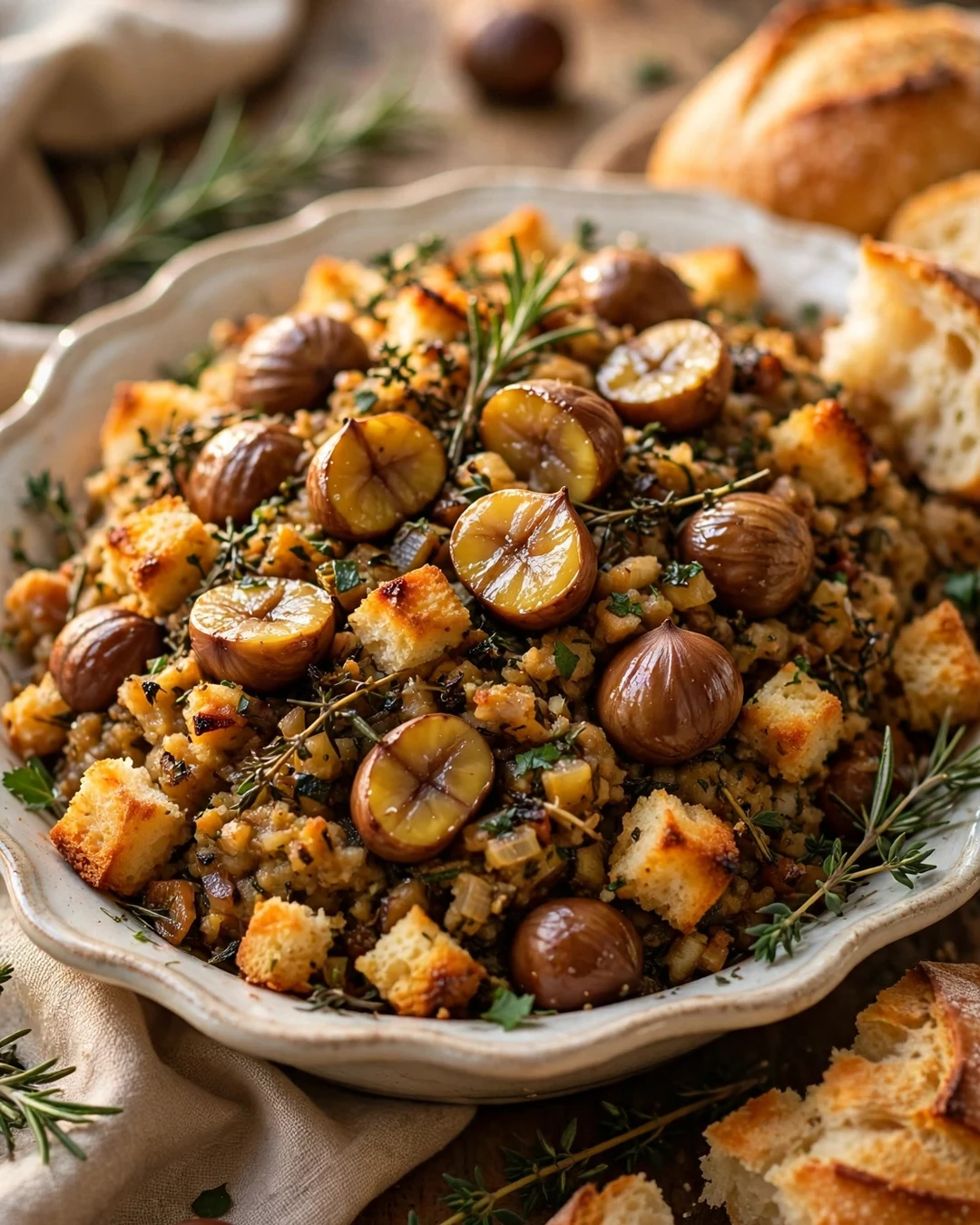
Chestnuts make stuffing feel like a special occasion all on their own. Their sweet, nutty, almost potato like texture folds into the bread and herbs, creating a dish with roots in old European holiday cooking. It is elegant without being fussy, and the flavor is unforgettable.
Save yourself the trouble of roasting and peeling fresh chestnuts and use the jarred or vacuum packed cooked ones; they are tender, sweet, and ready to chop. Cut them into rough halves or quarters so they distribute through the pan. Shallots instead of onion keep the flavor refined, and a touch of fresh nutmeg is the classic partner.
Pro Tips
Buy cooked, peeled chestnuts to skip the hardest step entirely. Warm them briefly in butter before folding in, which deepens their sweetness. Chestnuts are starchy and filling, so a slightly lighter hand with the broth keeps the texture balanced.
The Moisture Check
Before baking, squeeze a handful of the mixture. It should clump together and feel damp, with no broth pooling in the bowl. Too dry and the stuffing bakes up crumbly; too wet and it turns heavy. Apples release juice as they cook, so aim for the drier side of moist.
- Cooked jarred chestnuts save real time
- Chop coarse so the pieces stay distinct
- Shallots keep the flavor refined
- A touch of fresh nutmeg is classic
Serving Suggestions
Serve chestnut stuffing with roast goose, turkey, or a holiday beef roast for a table that feels timeless. A simple gravy and something green, like buttered Brussels sprouts, complete the picture without competing.
Make it vegetarian with ease: use vegetable broth and all butter, and this rich pan becomes the star of a meatless holiday spread. Add a handful of dried porcini mushrooms if you want even more depth, and nobody will miss a thing.
14. Old Fashioned Southern Dressing
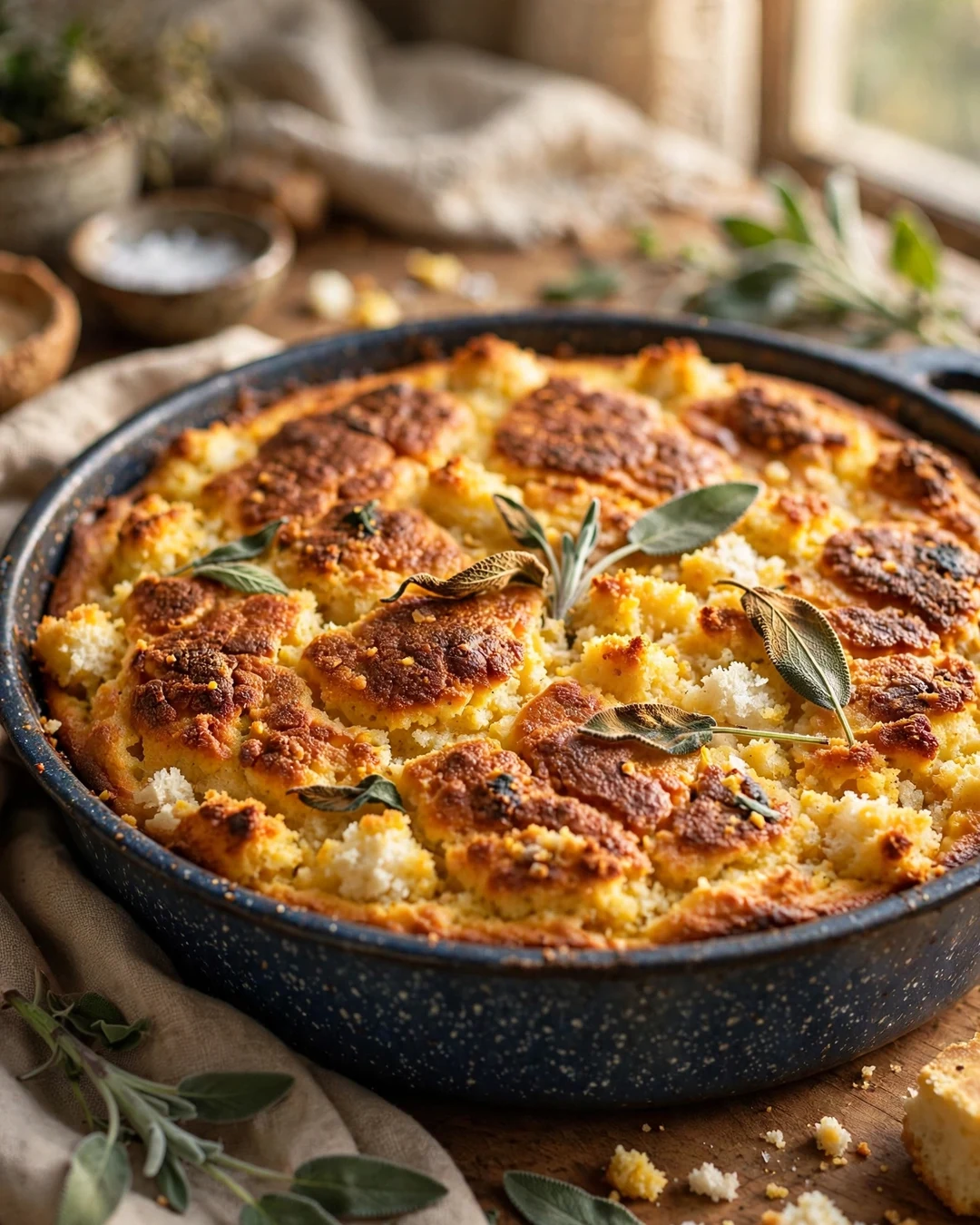
In much of the South, it is called dressing, it is never cooked inside the bird, and the recipe is a point of family pride. This version splits the difference between cornbread and white bread, binds it with eggs and rich broth, and bakes it into a pan that is custardy in the middle with a deeply golden top.
The texture is the signature: moister than Northern stuffing, almost like a savory bread pudding. The mixture should look quite wet before baking, because the eggs set it as it cooks. Sage leads the seasoning, supported by onion, celery, and a generous hand with black pepper.
Pro Tips
Use half cornbread and half white bread for the classic balance of crumb and structure. The batter should be pourable, closer to a thick cake batter than a dry crumble. Bake until the center is just set and the top is well browned; pale dressing is underdone dressing.
- Half cornbread, half white bread is the classic mix
- The mixture should look wet before baking
- Eggs bind it into a custardy texture
- Bake until the top is deeply golden
Serving Suggestions
Giblet gravy is the traditional partner, ladled generously over each square. Serve it as the first side on the plate at any gathering built around generous starters like these Thanksgiving appetizer recipes, and expect the pan to need refilling.
Family note: write down your version once you land on it, because dressing is the recipe grandchildren ask about. Small choices, like the brand of cornbread or the amount of sage, become the details everyone remembers. This is heritage cooking at its tastiest.
15. Crispy Stuffing Muffin Cups
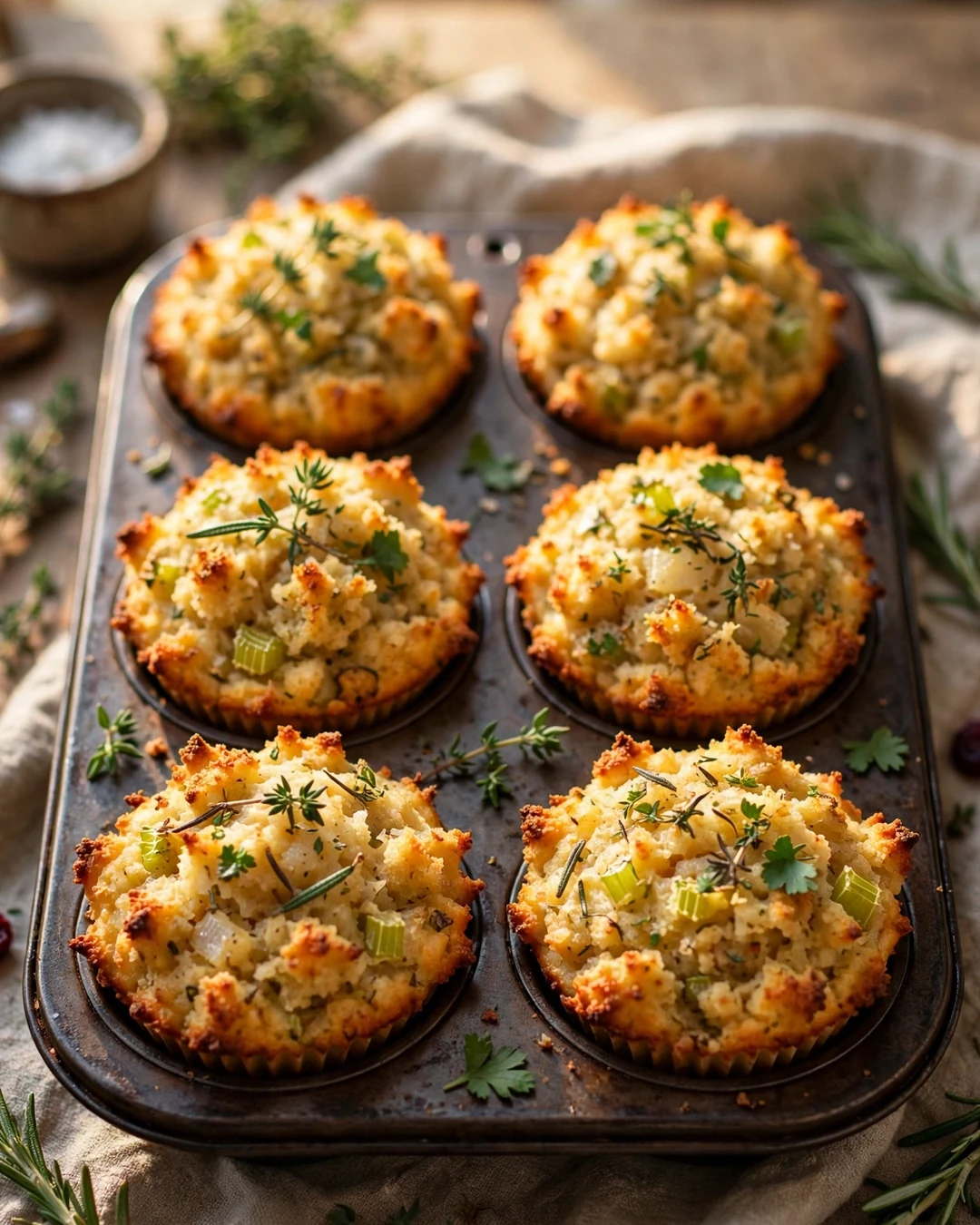
Everyone’s favorite part of stuffing is the crispy edge, and these muffin cups are nothing but edges. Your favorite stuffing mixture gets packed into a muffin tin and baked into individual portions with crisp, golden outsides and soft centers. Portion control and maximum crunch, all in one.
Stuffing Bake Times at a Glance
| Style | Time | Best For |
|---|---|---|
| Large casserole dish | 30 to 40 minutes | Crowds and buffets |
| Muffin cups | 25 to 30 minutes | Crispy edges, easy portions |
| Slow cooker | 4 hours on low | Freeing the oven |
| Stuffed in the bird | Until 165 degrees F | Traditionalists only |
Any of the stuffings in this collection works as the base; classic herb and sausage versions are especially good. Press the mixture firmly into well buttered cups so they hold together, and mound the tops slightly for extra crispy surface area. They bake faster than a big pan, about 25 to 30 minutes at 375 degrees F.
Pro Tips
Butter the muffin tin generously or use parchment liners for easy release. Let the cups rest 5 minutes before unmolding so they set. A beaten egg in the base mixture helps the cups hold their shape when served.
- Works with any stuffing base you love
- Press firmly and mound the tops
- Rest 5 minutes before unmolding
- An egg in the mix helps them hold shape
Serving Suggestions
Stack two cups per plate with gravy drizzled over, or serve one as a tidy side next to sliced turkey. They are perfect for kids, for potlucks, and for anyone who has ever fought over the corner piece. They also reheat in minutes, much like the sides in these loaded baked potato recipes that everyone loads up their own way.
Party trick: bake mini versions in a mini muffin tin for two bite appetizers at holiday gatherings. Top each with a tiny dollop of cranberry sauce and a sage leaf. They vanish fast, so make more than you think you need.
16. Italian Sausage and Parmesan Stuffing
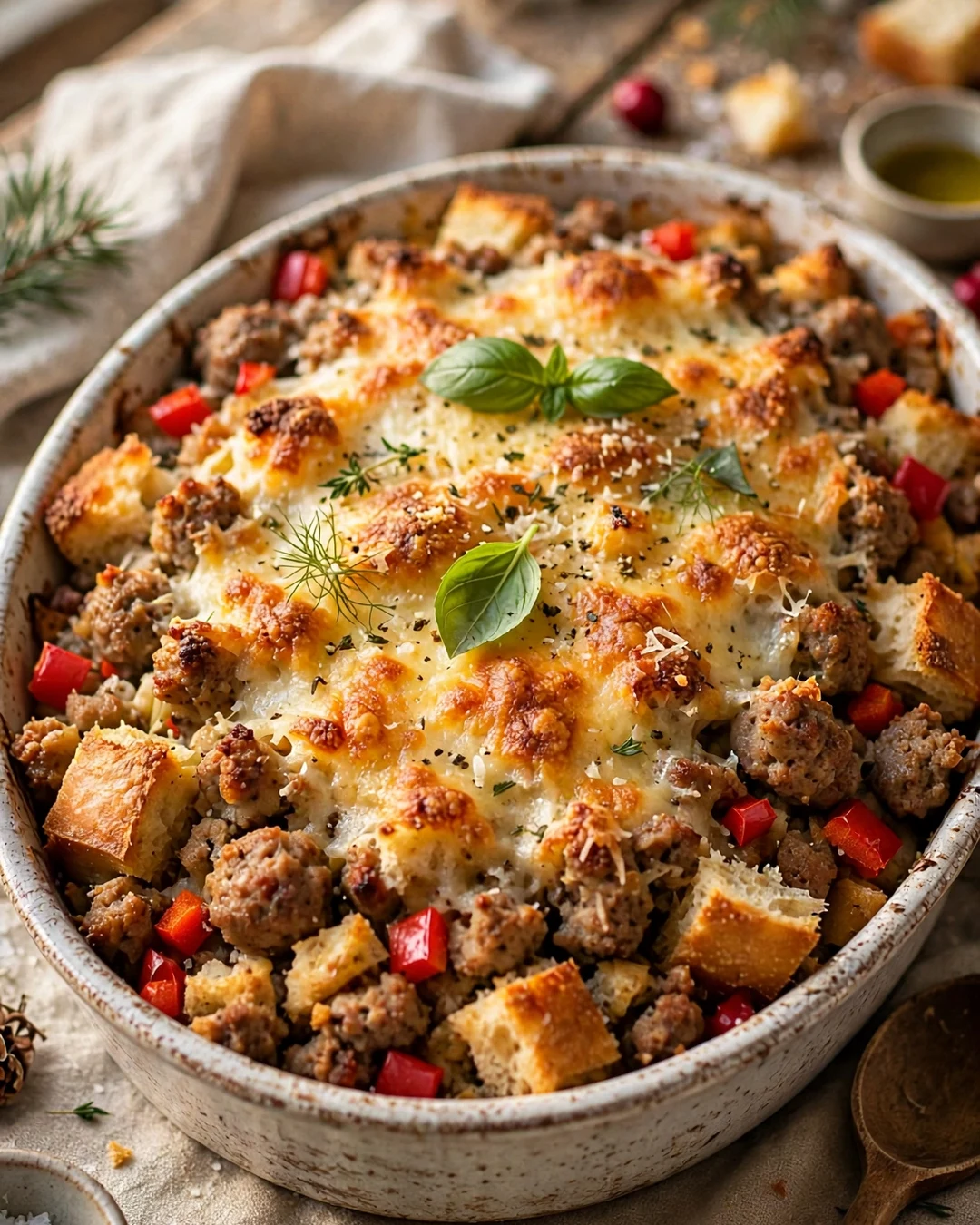
Think of this as the Italian deli version of the holiday classic. Crusty Italian bread, sweet sausage with fennel, sweet red peppers, and a generous shower of Parmesan come together in a pan that tastes like Sunday supper met Thanksgiving. The cheese melts into the top and forms a savory golden crust that people pick at before the dish even reaches the table.
Use a sturdy Italian loaf or ciabatta, torn into rough pieces and dried overnight. Brown the sausage with diced red bell pepper and onion, then fold everything together with chicken broth, a beaten egg, chopped basil, and dried oregano. Save a third of the Parmesan for the top so it bakes into that crisp, salty lid.
Pro Tips
Sweet Italian sausage keeps this friendly for kids, while hot Italian sausage gives it a gentle warmth; either works beautifully. Grate the Parmesan fresh if you can, because the pre shredded kind melts less smoothly. A handful of chopped sun dried tomatoes is an optional flourish that adds sweet, concentrated flavor.
- Tear crusty Italian bread for the best texture
- Brown sausage with peppers and onion together
- Save a third of the Parmesan for the top crust
- Fresh basil and oregano keep it bright
Serving Suggestions
This pan sits happily next to turkey, but it is just as good beside roast chicken or a simple pork loin for a Sunday dinner. It holds its own among the other Thanksgiving side dishes on the table, and it brings a little Italian warmth to the whole spread.
Make ahead note: brown the sausage and saute the vegetables a day early, then store them in the fridge and combine with the bread and broth just before baking. The flavors mingle overnight and the morning of the holiday you simply assemble, top with parmesan, and slide the pan into the oven while the turkey rests.
17. Vegetarian Lentil and Herb Stuffing
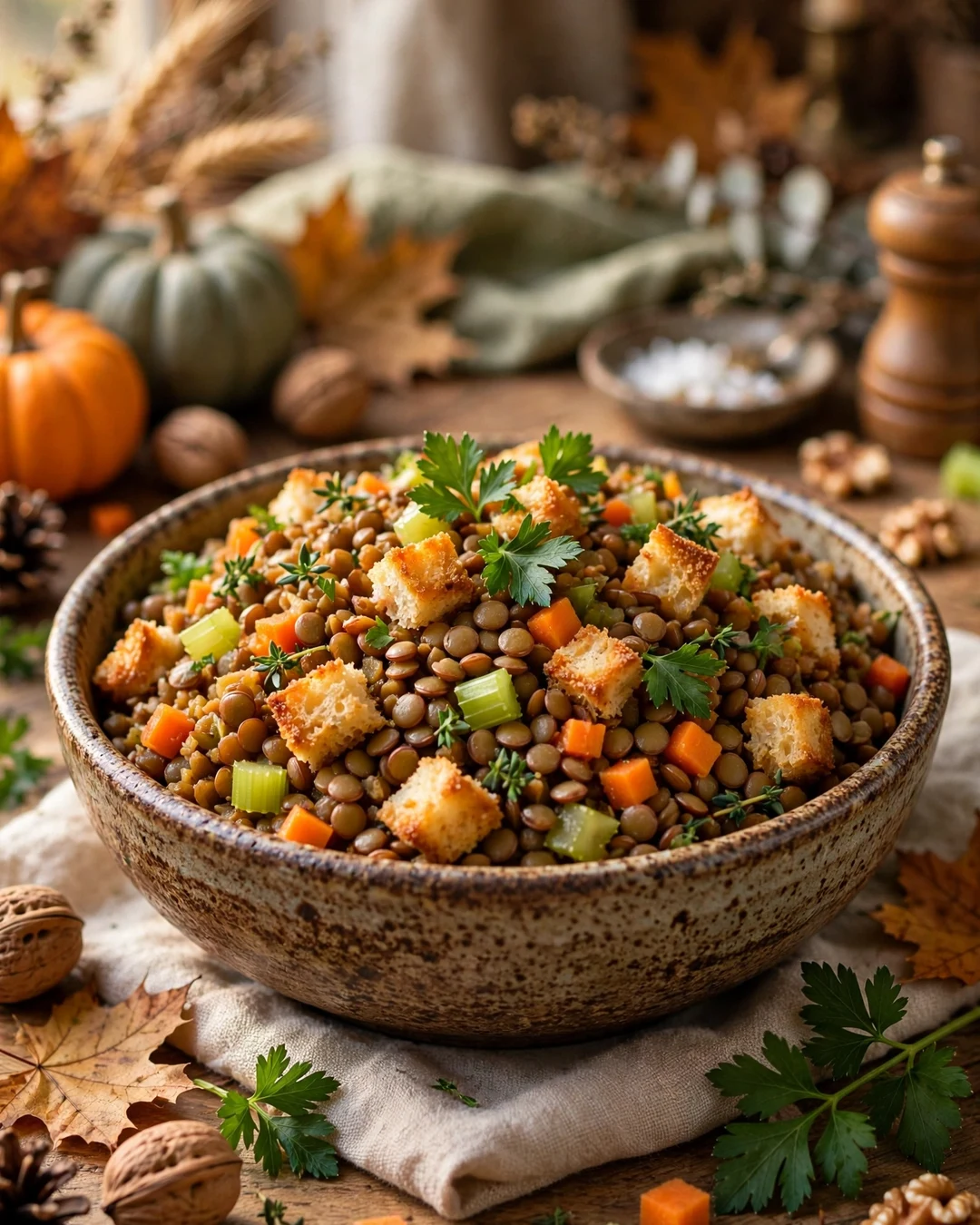
This is the stuffing that makes vegetarian guests feel genuinely looked after, not like an afterthought. Tender lentils fold through the bread with onion, celery, carrots, and a big handful of fresh herbs, giving the pan real heft and a deep, earthy flavor. Cooked in vegetable broth, it comes out moist, savory, and satisfying enough to serve as a main dish in its own right.
Cook the lentils separately until just tender, because they need longer than the bread takes to bake. Brown or green lentils hold their shape best; red lentils melt away and are better saved for soup. Saute the vegetables in olive oil or butter, stir in garlic and thyme at the end, then combine everything with the dried bread cubes and warm broth.
Pro Tips
Season with confidence, since lentils and bread both soak up salt as they sit. A splash of soy sauce or a spoonful of miso paste stirred into the broth adds quiet depth without making the dish taste like anything but itself. A handful of chopped walnuts or pecans folded in at the end brings a welcome crunch.
- Brown or green lentils hold their shape best
- Cook lentils separately until just tender
- Olive oil keeps it fully vegetarian and rich
- A little miso or soy sauce deepens the flavor
Serving Suggestions
Serve it as a main for vegetarian guests with mushroom gravy ladled over the top, or spoon it into roasted squash halves for a beautiful meatless centerpiece like the ones in these roasted squash recipes. It reheats well, too, so leftovers make an easy lunch next to a crisp green salad.
Protein note: a cup of cooked lentils brings hearty texture and keeps vegetarian guests full and happy at a table built around a turkey. If your crowd is mixed, bake this pan as the second stuffing and watch it disappear just as fast as the classic one, especially with a ladle of mushroom gravy over the top.
Stuffing FAQs
What is the difference between stuffing and dressing?
Technically, stuffing is cooked inside the bird and dressing is baked in a separate dish. In practice, most people use the names by region and family habit, and most modern recipes are baked in a dish either way for food safety and better texture. The ingredients are the same.
Why does my stuffing turn out soggy?
Usually the bread was too fresh or there was too much broth. Dry or toast the bread cubes first, add broth gradually until the mixture is just moistened, and bake uncovered for the last part of cooking so the top crisps. A shallow pan also helps excess moisture escape.
Can I make stuffing ahead of time?
Yes, and it is the smart move for holidays. Assemble the stuffing in its dish, cover, and refrigerate up to 24 hours. Let it sit at room temperature for 30 minutes before baking, and add 5 to 10 minutes to the bake time. You can also bake it fully and reheat.
How much stuffing should I make per person?
Plan on about 3/4 cup to 1 cup of stuffing per person, which means a 9 by 13 inch pan for a table of 10 to 12. Stuffing is famously popular and leftovers are prized, so err on the side of a bigger pan.
Can I freeze stuffing?
Yes. Baked stuffing freezes well for up to 2 months in airtight containers. Thaw overnight in the fridge and reheat covered at 350 degrees F until hot, then uncover briefly to crisp the top. Unbaked stuffing with egg is best frozen after baking instead.
What bread makes the best stuffing?
A sturdy white bread is the classic choice, but sourdough, cornbread, challah, and even sturdy gluten free loaves all work beautifully. The real rule is that the bread must be dried or lightly toasted first so it absorbs broth without falling apart.
Final Thought
From the classic herb pan to crispy muffin cups and coastal oyster dressing, these stuffing recipes prove there is a perfect pan for every table and every cook. Dry your bread, season with confidence, and make a big batch, because the best holiday arguments are the ones over who gets the last scoop.