
If you love desserts that are fruity without being overly sweet, this German Rhubarb Pie Recipe hits that balance beautifully. Fresh rhubarb brings its natural tart bite, while sugar softens the sharpness and turns the filling juicy as it bakes. A buttery homemade crust gives every slice a tender, slightly crisp base.
The biggest challenge with rhubarb pie is moisture. Rhubarb releases a lot of juice in the oven, and without enough thickener, that beautiful filling can turn into a puddle when you cut the first slice. This recipe uses a measured amount of thickener and gives the finished pie plenty of cooling time, so the juices have a chance to set.
Plan on about 25 minutes of active prep, 30 minutes for chilling the dough, 45–50 minutes for baking, and at least 2 hours for cooling. None of the steps require advanced baking skills. Keep the butter cold, measure carefully, and resist cutting into the pie while it is hot.
By the end, you’ll have a golden homemade rhubarb pie with a tender crust and a bright, sweet-tart filling.
What You Need
At a Glance
- Gather and measure the ingredients
- Cut the butter into the flour
- Bring the pie dough together
- Chill the dough before rolling
- Wash and cut the rhubarb
- Toss the rhubarb with sugar and thickener
- Roll out the chilled pie dough
- Fit the dough into the pie dish
- Fill the crust with the rhubarb mixture
- Add the top crust or crumble
- Bake until golden and bubbling
- Cool the pie before slicing
Gather and measure the ingredients
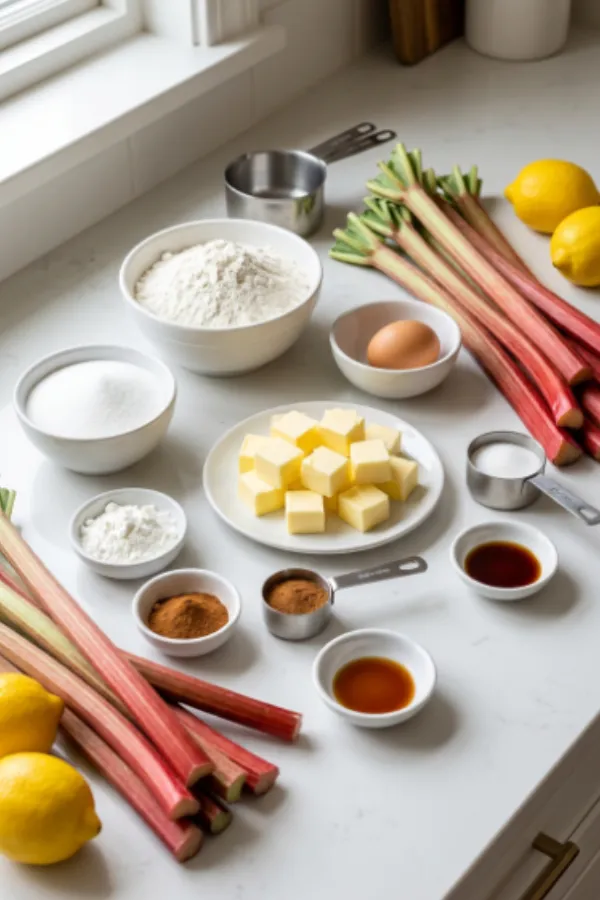
Cold ingredients matter most for the crust. Measure 2½ cups flour, 1 cup cold butter, ¼ cup sugar, ½ teaspoon salt, 1 egg, and 2–4 tablespoons cold water into separate bowls or cups.
Keep the butter refrigerated until you need it. Measure the filling ingredients separately so you do not accidentally use the filling sugar in the dough. Having everything ready also keeps the butter from warming while you search the kitchen for ingredients.
Cut the butter into the flour
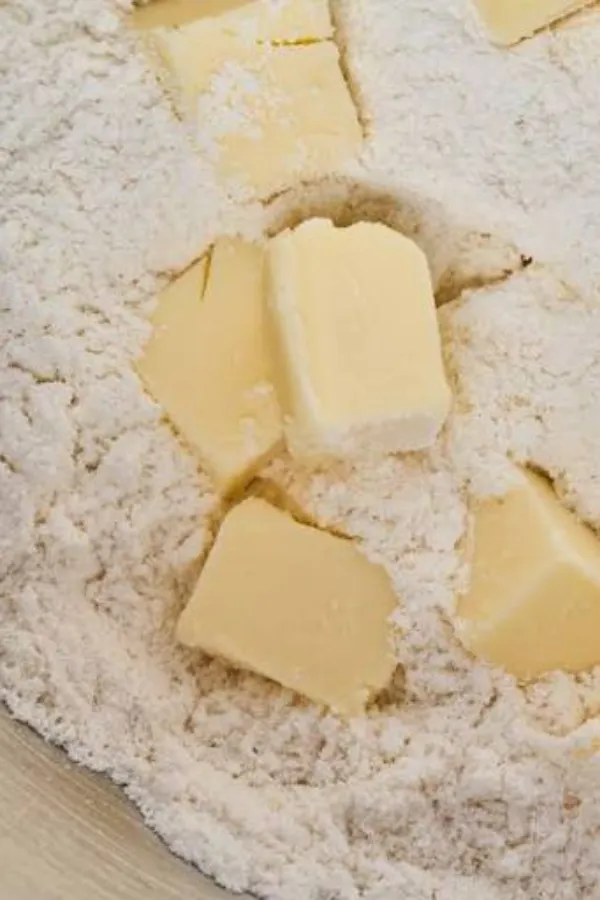
Combine the flour, ¼ cup sugar, and ½ teaspoon salt in a large bowl. Cut the 1 cup cold butter into small cubes and add them.
Use a pastry cutter to press the butter into the flour until the mixture resembles coarse crumbs with some pea-size pieces remaining. No pastry cutter? Two forks work well. Those visible pieces of cold butter create tiny pockets as the crust bakes, helping it stay tender rather than dense.
Bring the pie dough together
Add the egg and start with 2 tablespoons cold water. Stir gently with a fork until moist clumps begin forming. If dry flour remains at the bottom, add more cold water 1 tablespoon at a time, using no more than needed.
Stop once the dough holds together when pressed between your fingers. It does not need to look perfectly smooth. Too much mixing develops the flour’s gluten and warms the butter, which can leave the baked crust firm instead of tender.
Chill the dough before rolling
Shape the dough into a thick disk rather than a ball. A flatter shape chills more evenly and will be much easier to roll later. Wrap it tightly and refrigerate for 30 minutes.
That short rest does two jobs: it firms the butter again and gives the flour time to absorb the moisture. Avoid leaving the dough uncovered in the refrigerator because the outside can dry out and crack when rolled.
Wash and cut the rhubarb
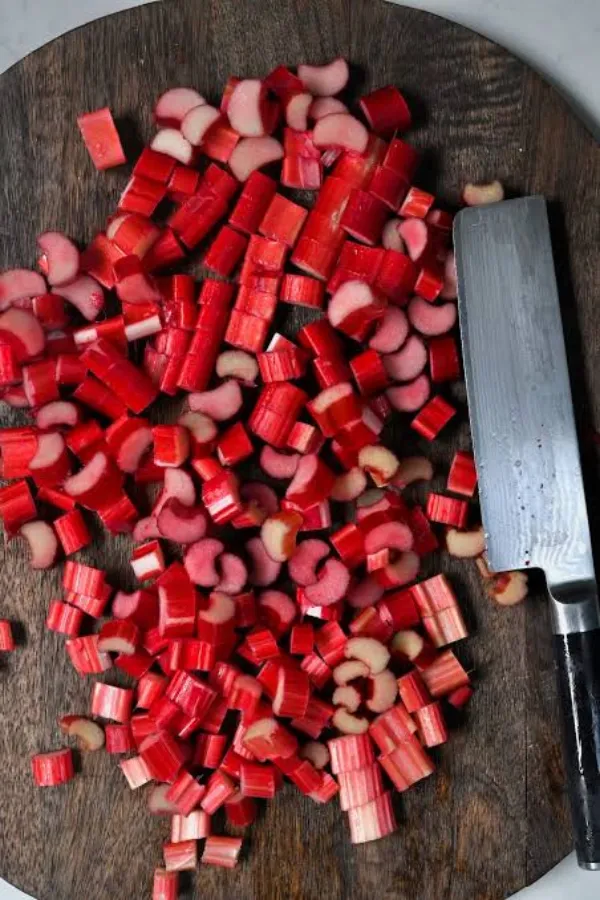
Rinse 5 cups fresh rhubarb under cool water and dry the stalks well. Trim off both ends, then cut the stalks crosswise into pieces about ½ inch thick.
Keep the pieces close to the same size so they soften at roughly the same rate in the oven. Discard any leaves attached to fresh stalks; rhubarb leaves should not be eaten. If some stalks are much thicker than the others, split those lengthwise before cutting.
Toss the rhubarb with sugar and thickener
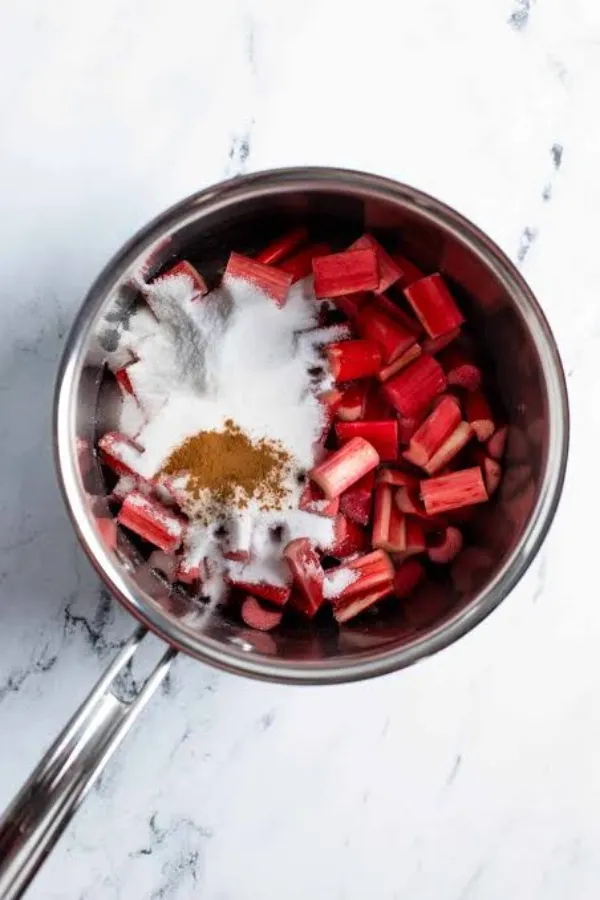
Place the chopped rhubarb in a large bowl. Sprinkle over 1 cup granulated sugar, ¼ cup cornstarch, ½ teaspoon cinnamon, 1 teaspoon vanilla extract, and 1 tablespoon lemon juice. Toss until the rhubarb has an even, thin coating.
The cornstarch is important because rhubarb releases plenty of liquid while baking. It thickens those juices into a filling that can hold together after cooling.
Roll out the chilled pie dough
Lightly dust your counter and rolling pin with flour. Take the dough from the refrigerator and divide it into two portions, making one slightly larger for the bottom crust.
Roll the larger piece from the center outward until you have a circle about 12 inches wide and roughly ⅛ inch thick. Turn the dough a quarter turn every few rolls to keep it round and prevent sticking.
If the edges crack, press them back together with your fingers rather than adding extra water.
Fit the dough into the pie dish
A 9-inch pie dish needs a little overhang around the edges. Loosely roll the dough around your rolling pin, lift it, and unroll it over the dish.
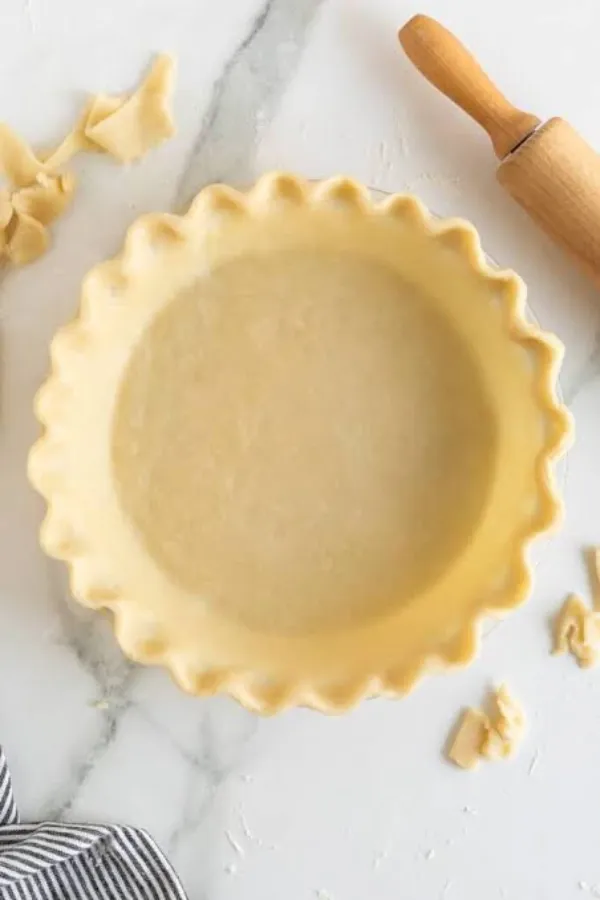
Ease the dough into the bottom and sides without stretching it. Press lightly into the corners with your fingertips. Leave about 1 inch hanging beyond the rim and trim away anything longer.
Stretching the dough may look harmless now, but it can cause the crust to shrink while baking.
Fill the German Rhubarb Pie Recipe crust
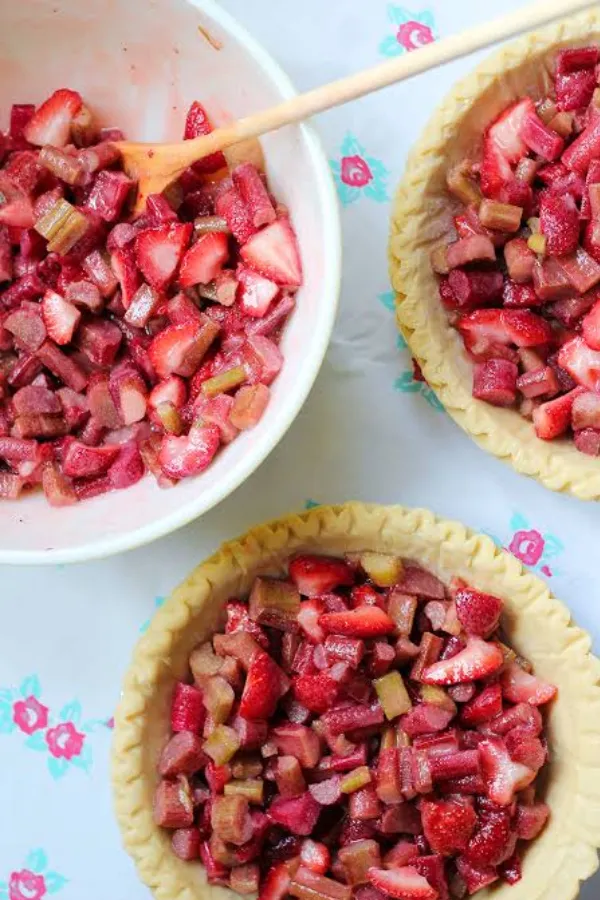
Give the prepared rhubarb mixture one quick toss to redistribute any juice collected at the bottom of the bowl. Spoon it into the lined pie dish and spread the pieces into an even layer.
Pour the remaining thickened sugary mixture from the bowl over the fruit rather than leaving it behind. Keep the filling level instead of piling most of the rhubarb in the center. An even layer helps the fruit cook at the same rate and gives you more consistent slices later.
Add the top crust
Roll the remaining chilled dough into a circle about 10–11 inches wide and roughly ⅛ inch thick. Lay it over the rhubarb filling and trim the edge so it lines up with the bottom crust.
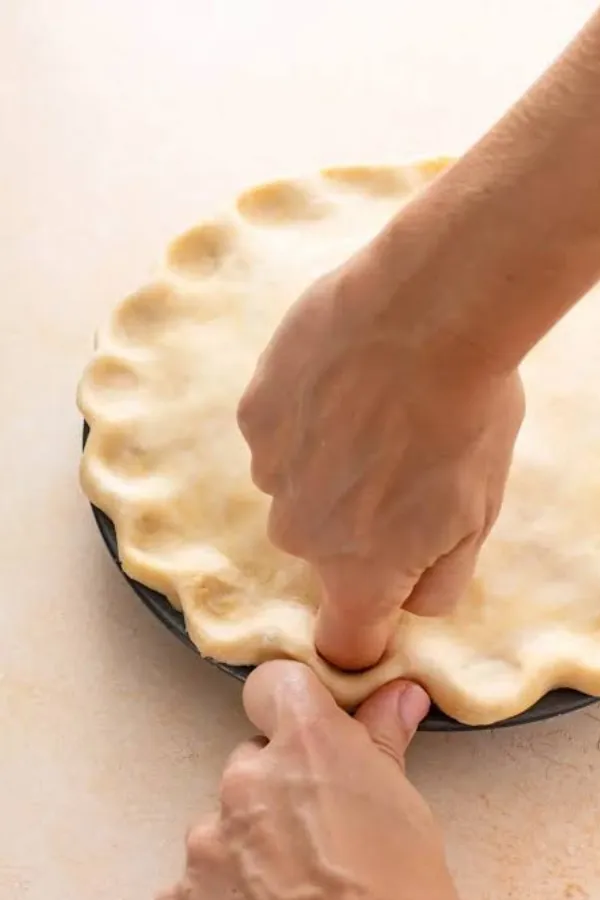
Pinch the two crust edges together, then crimp them with your fingers or press lightly with a fork. Cut 4–5 small slits in the center of the top crust. These openings give hot steam somewhere to escape instead of becoming trapped beneath the pastry.
For extra color, brush the surface lightly with beaten egg and sprinkle with a little sugar.
Bake until golden and bubbling
Heat the oven to 400°F (200°C) and place the pie on the middle rack with a baking sheet underneath to catch any drips.
Bake for 20 minutes, then reduce the temperature to 375°F (190°C) and continue baking for about 25–30 minutes.
Look for a deep golden crust and thick fruit juices bubbling through the vents. Bubbling matters—the cornstarch needs enough heat to properly thicken the rhubarb juices.
Cool the pie before slicing
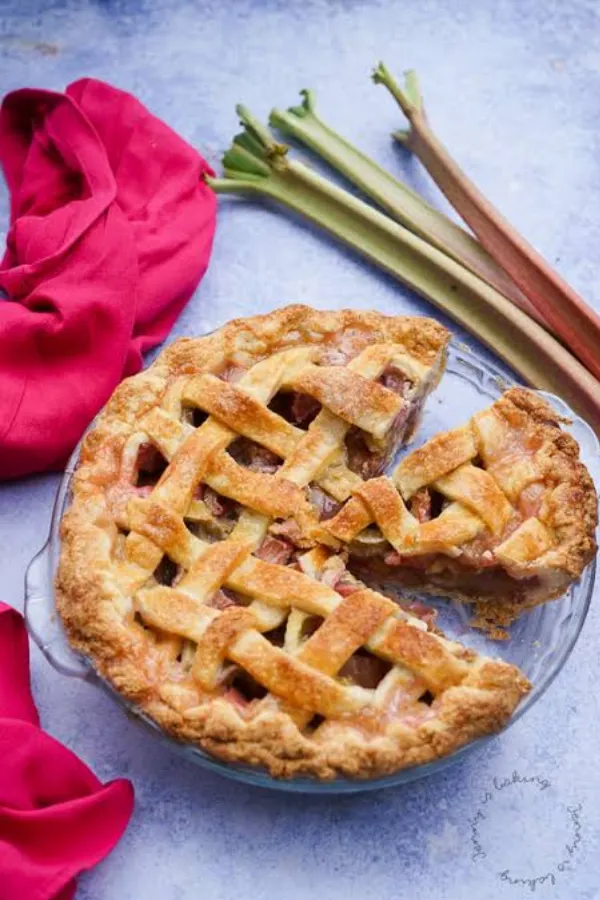
The filling will still be loose and extremely hot when the pie comes out of the oven. Set the dish on a wire rack and leave it undisturbed for at least 2 hours.
This cooling period is part of the recipe, not spare waiting time. As the filling cools, the thickened rhubarb juices set enough to stay inside each slice. Cutting the pie while hot can cause the filling to run across the plate.
Serve at room temperature, or add a spoonful of lightly whipped cream or vanilla ice cream.
A troubleshooting table fits this recipe better than a separate common-mistakes block because the main beginner problems have clear causes and fixes.German Rhubarb Pie Troubleshooting
| If This Happens | Try This |
|---|---|
| The filling is runny | Let the pie cool for at least 2 hours. If it was fully cooled and still runny, make sure you used the full ¼ cup cornstarch and baked until the filling visibly bubbled. |
| The bottom crust is soggy | Avoid letting the sugared rhubarb sit too long before filling the crust. If a large pool of thin juice forms in the bowl, leave the excess behind. |
| The dough cracks while rolling | Let very firm dough sit at room temperature for about 5 minutes, then roll again. Press small cracks together with your fingertips. |
| The crust turns dark too quickly | Loosely cover the browned edges with aluminum foil and continue baking until the filling bubbles. |
| The crust feels tough | Use only enough cold water to bring the dough together. Stop mixing once it holds when pressed. Overworking the dough can make the baked crust firm. |
German Rhubarb Pie FAQ
German Rhubarb Pie Quick Reference
Keep this card handy while you bake.
Crust
- 2½ cups all-purpose flour
- 1 cup cold unsalted butter
- ¼ cup granulated sugar
- ½ teaspoon salt
- 1 large egg
- 2–4 tablespoons cold water
Rhubarb Filling
- 5 cups chopped fresh rhubarb
- 1 cup granulated sugar
- ¼ cup cornstarch
- 1 teaspoon vanilla extract
- ½ teaspoon ground cinnamon
- 1 tablespoon lemon juice
Steps
- Gather and measure the ingredients.
- Cut the cold butter into the flour mixture.
- Bring the pie dough together.
- Chill the dough for 30 minutes.
- Wash and cut the rhubarb.
- Toss the rhubarb with sugar and cornstarch.
- Roll out the chilled bottom crust.
- Fit the dough into a 9-inch pie dish.
- Spread the rhubarb filling evenly inside.
- Add and vent the top crust.
- Bake at 400°F, then reduce to 375°F.
- Cool for at least 2 hours before slicing.
Conclusion
Your German Rhubarb Pie Recipe is ready once that golden crust has cooled and the sweet-tart filling has had enough time to set.
Serve a slice on its own, or add whipped cream or vanilla ice cream for a richer dessert. If you have extra fresh rhubarb, freeze it in measured portions so your next pie takes less prep.
Save this recipe to your Pinterest recipe board so you can find it again when rhubarb season arrives.
German Rhubarb Pie Recipe
Ingredients
Equipment
Method
- Keep the butter cold until you are ready to make the crust.
- Combine the flour, sugar, and salt in a large bowl. Add the cold butter and work it into the flour with a pastry cutter or two forks until coarse crumbs form with a few pea-size butter pieces remaining.
- Add the egg and 2 tablespoons of cold water. Stir gently with a fork. Add more water, 1 tablespoon at a time, only until the dough holds together when pressed.
- Shape the dough into a thick disk, wrap it, and refrigerate for 30 minutes.
- Wash and dry the rhubarb. Trim the ends and cut the stalks into roughly ½-inch pieces.
- Place the rhubarb in a large bowl. Add the sugar, cornstarch, vanilla, cinnamon, and lemon juice. Toss until evenly coated.
- Divide the chilled dough into two portions, making one slightly larger. Roll the larger piece on a lightly floured surface into a 12-inch circle about ⅛ inch thick.
- Transfer the dough to a 9-inch pie dish. Ease it gently into the bottom and sides without stretching. Leave about 1 inch of overhang.
- Give the rhubarb mixture another quick toss and spread it evenly inside the crust. Avoid adding a large amount of excess thin liquid if it has collected in the bowl.
- Roll the remaining dough into a 10–11-inch circle. Place it over the filling, trim the edges, and seal the top and bottom crusts together. Cut 4–5 small slits in the center for steam to escape. Brush with beaten egg and sprinkle with sugar if desired.
- Bake at 400°F (200°C) for 20 minutes. Reduce the oven temperature to 375°F (190°C) and bake for another 25–30 minutes, until the crust is deep golden and the filling is bubbling through the vents.
- Place the pie on a wire rack and cool for at least 2 hours so the filling can thicken and set.