If you’ve only ever had meatballs the Italian way, drowning in tomato sauce, German Frikadellen will surprise you. These are pan-fried patties with a crisp, deep-brown crust and a soft, savory center — the kind of thing German grandmothers make without a recipe because they’ve done it a thousand times. The secret isn’t a fancy ingredient. It’s a soaked bread roll, a properly hand-mixed blend, and a hot enough pan.
This guide walks you through a real German Frikadellen meatball recipe from soaking the bread to resting the finished patties, so you land on tender, flavorful results instead of dry, crumbly ones. You’ll use a mix of ground beef and pork, a stale roll softened in milk, and a handful of pantry seasonings. Nothing exotic, nothing that requires a special trip to the store.
Active cooking takes about 30 minutes, and most of that is hands-off frying time while you watch and flip. This isn’t a fussy technique. It’s a forgiving one, built for a weeknight, and once you’ve made it twice you won’t need the recipe card again. Let’s get your ingredients together.
What You Need
- 1 stale bread roll (or 2 slices day-old bread)
- ½ cup whole milk
- 1 lb ground beef
- ½ lb ground pork
- 1 small onion, finely chopped
- 1 tablespoon butter (for softening onion)
- 2 large eggs
- 1 tablespoon Dijon or German mustard
- 2 tablespoons fresh parsley, chopped
- 1 teaspoon salt
- ½ teaspoon black pepper
- Pinch of paprika (optional)
- 3 tablespoons vegetable oil, for frying
- Large mixing bowl
- Nonstick or cast iron skillet
- Instant-read thermometer (optional but helpful)
At a Glance
- Soak the bread roll in milk
- Chop and soften the onion
- Combine the ground meats and soaked bread
- Add the eggs, mustard, and seasoning
- Mix the mixture by hand until it holds together
- Shape the patties to an even thickness
- Heat the pan and oil until shimmering
- Fry the first side undisturbed
- Flip and fry the second side
- Check for doneness and let the patties rest
Soak the bread roll in milk
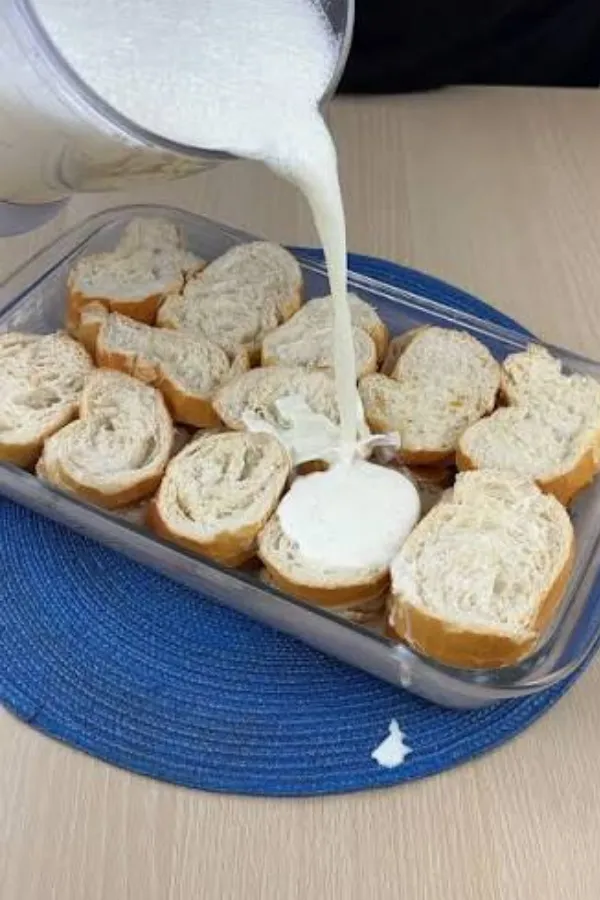
Tear the stale roll into rough chunks and drop them into a small bowl with ½ cup of milk. Press down gently so every piece gets wet, then leave it alone for 10 minutes. The bread needs time to soften all the way through — a dry center won’t blend into the meat later and leaves hard little lumps in your finished patty. If your roll is fresh instead of stale, it will soak faster, so check it at 5 minutes.
Chop and soften the onion
Dice the onion into small, even pieces, no bigger than a pea. Melt 1 tablespoon of butter in a skillet over medium-low heat, add the onion, and cook until it turns soft and translucent, about 4 minutes, stirring occasionally so it doesn’t brown. Raw onion straight into the meat mixture tastes sharp and overpowering once cooked. Softening it first mellows the flavor and keeps it from turning bitter in the hot pan later. Set the pan aside to cool slightly before the next step.
Combine the ground meats and soaked bread
Squeeze the soaked bread firmly between your hands to press out the excess milk, then crumble it into a large mixing bowl. Add the 1 lb ground beef and ½ lb ground pork on top. Don’t discard that squeezed-out milk liquid just yet set it aside in case your mixture feels too dry later. At this point, everything is just sitting in the bowl unmixed. That comes in a later step, so resist stirring anything together yet.
Add the eggs, mustard, and seasoning
Crack 2 large eggs into the bowl with the meat and bread, then add the cooled onion, 1 tablespoon mustard, chopped parsley, 1 teaspoon salt, and ½ teaspoon black pepper. A pinch of paprika works here too, if you want a little warmth in the background. Everything is now in the bowl together, but still unmixed layered on top of each other rather than combined. The actual blending happens next.
Mix the mixture by hand until it holds together
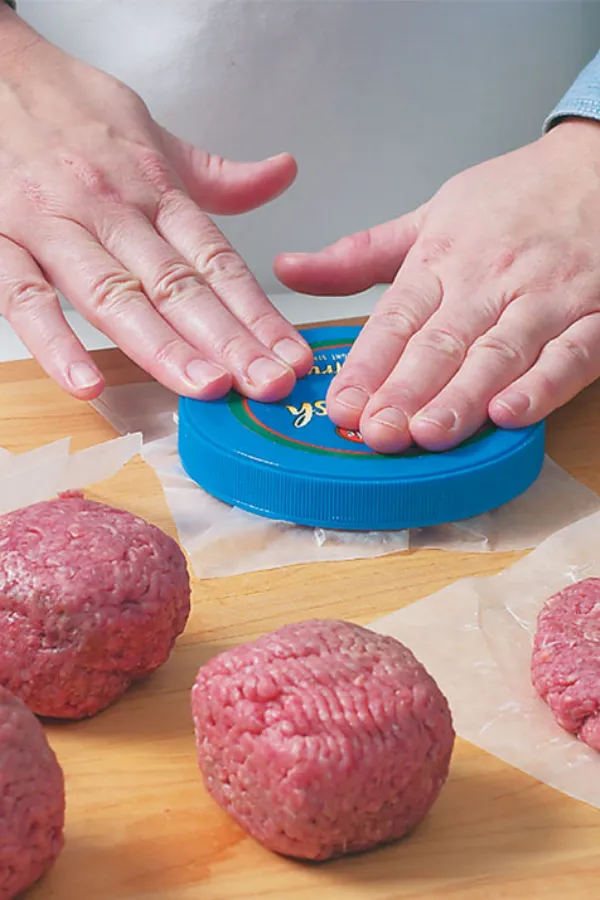
Wash your hands, then dig in and mix everything using your fingers, not a spoon. Hands work the ingredients evenly in a way a utensil can’t reach. Mix for about 1 to 2 minutes, just until everything is evenly distributed and the mixture holds together when pressed. If it feels loose or won’t hold shape, add a splash of the reserved milk from earlier. If it feels too wet, add a tablespoon of breadcrumbs.
Shape the patties to an even thickness
Wet your hands slightly so the meat doesn’t stick to your palms, then divide the mixture into 6 equal portions, roughly the size of a tennis ball. Flatten each one into an oval patty about ¾ inch thick thicker than a burger, since Frikadellen need to hold together while frying without falling apart. Uneven thickness means uneven cooking, with a burnt edge and a raw middle, so press gently until each patty feels roughly the same across.
Heat the pan and oil until shimmering
Medium heat is the target here, not high. Pour 3 tablespoons of oil into a skillet and let it heat for about 2 minutes, until it moves like water when you tilt the pan and gives off a faint shimmer. A pan that’s too hot scorches the outside before the inside cooks through; too cool, and the patties soak up oil instead of browning. Cast iron holds heat more evenly than nonstick, if you have the choice.
Fry the first side undisturbed
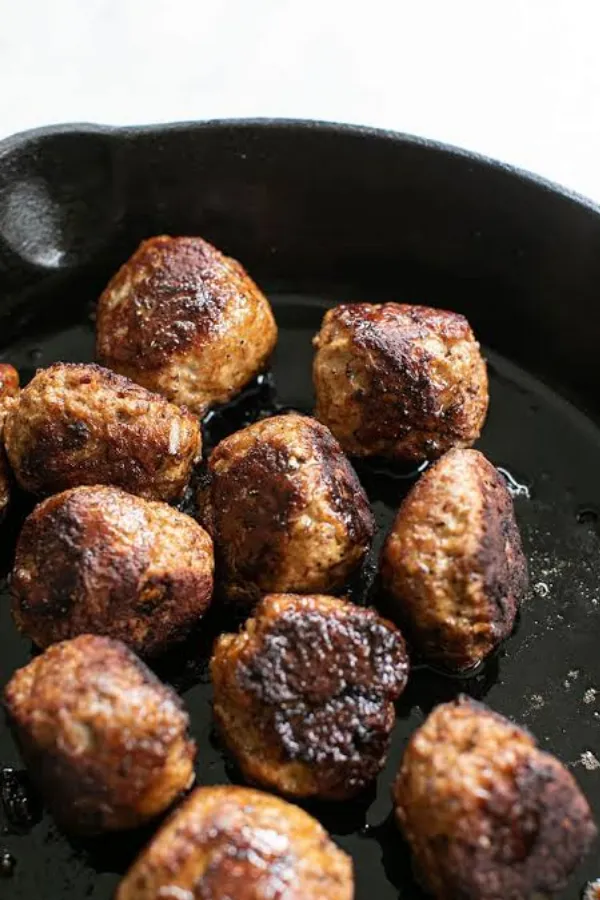
Lay the patties into the pan gently, leaving space between each one so they don’t steam each other. Let them cook for 5 to 6 minutes without touching, pressing, or peeking underneath. That crust needs uninitiated time to form flipping too early tears it and leaves meat stuck to the pan. You’ll know it’s ready when the edges look cooked and the patty releases easily when nudged with a spatula.
Flip and fry the second side
Once the first side releases cleanly, turn each patty over in one confident motion. The second side cooks a little faster, about 4 to 5 minutes, since the pan and the patty are both already hot. Resist flipping back and forth one flip per patty is all you need. If a patty looks like it’s browning too fast, nudge the heat down slightly rather than lifting it out early.
Check for doneness and let the patties rest
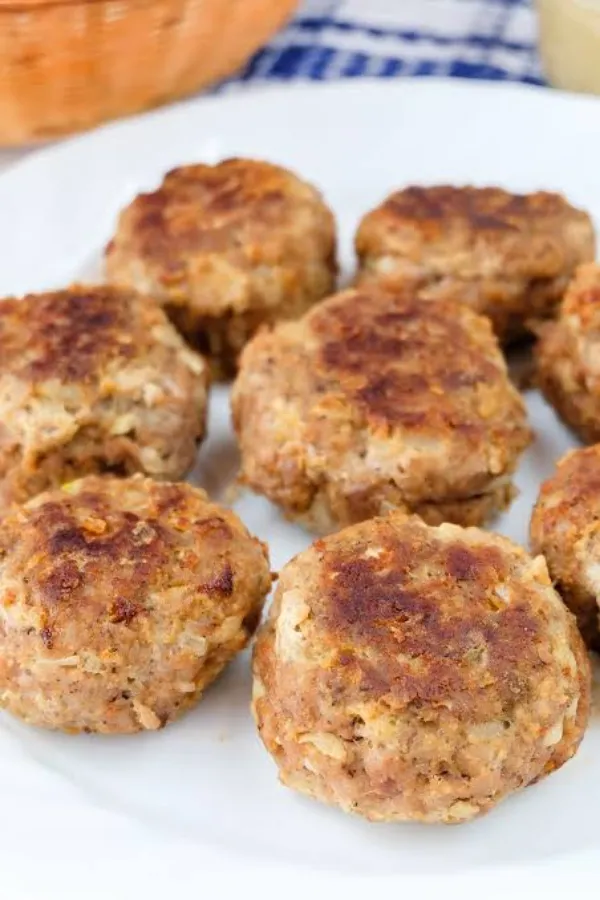
A finished Frikadelle looks deep golden-brown on both sides with no pink showing at the center when you cut one open. If you’re using a thermometer, the center should read 160°F. Move the patties to a plate and let them sit for 5 minutes before serving this short rest lets the juices settle back into the meat instead of running out the moment you cut in, so the inside stays moist rather than dry.
Common Mistakes
Dry breadcrumbs straight from the bag don’t soften the mixture the same way. Soaked bread is what keeps the inside tender instead of dense and dry.
All-lean meat turns dry and crumbly once fried. The pork adds fat that keeps the patties moist through cooking.
Too many patties at once drops the pan’s temperature and causes steaming instead of browning. Fry in batches if your skillet is small.
Thin patties dry out before the crust fully develops. Keep them close to ¾ inch thick for the right balance of crust and juicy center.
Skipping the rest sends all the juices out onto the plate. Give it those 5 minutes before serving.
Frequently Asked Questions
Yes, but the patties will be a bit leaner and less tender. If using only beef, choose an **80/20** blend rather than extra-lean.
Yes. Bake at **400°F** for about **20 minutes**, flipping halfway, though the crust will be lighter than pan-frying gives.
A gluten-free bread roll soaked the same way works fine, or substitute with soaked gluten-free oats.
Freeze them raw and shaped, separated by parchment paper, for up to **3 months**. Thaw in the fridge overnight before frying.
Potato salad, mashed potatoes, or a simple cucumber salad are the most traditional pairings.
Quick Reference Card — German Frikadellen
Stale bread roll, milk, ground beef, ground pork, onion, butter, eggs, mustard, parsley, salt, pepper, paprika, oil, mixing bowl, skillet
- Soak bread in milk — 10 min
- Soften onion in butter — 4 min
- Combine meats and squeezed bread
- Add eggs, mustard, seasoning
- Mix by hand — 1–2 min
- Shape into 6 patties, ¾ inch thick
- Heat oil until shimmering
- Fry first side — 5–6 min
- Flip, fry second side — 4–5 min
- Rest — 5 min — then serve
Conclusion
You’ve got a plate of golden, crisp-edged Frikadellen sitting in front of you now the real thing, made the way German kitchens have always made it. That crust and tender center didn’t happen by accident. It came from the soaked bread, the hand mixing, and the patience to let the pan do its job.
Next time, try doubling the batch and freezing half raw, so a future weeknight dinner is already halfway done. This German Frikadellen meatball recipe holds up well as leftovers too, sliced cold on a sandwich the next day.
Save this recipe now so you don’t lose it in your feed future you will want these again soon.
Traditional German Frikadellen (Meatball Patties)
Ingredients
Equipment
Method
- Soak torn bread in ½ cup milk for 10 minutes.
- Sauté chopped onion in butter over medium-low heat until soft, about 4 minutes; cool slightly.
- Squeeze excess milk from bread; combine with ground beef and pork in a large bowl.
- Add eggs, cooled onion, mustard, parsley, salt, pepper, and paprika.
- Mix by hand for 1–2 minutes, just until combined.
- Shape into 6 patties, about ¾ inch thick.
- Heat oil in skillet over medium heat until shimmering, about 2 minutes.
- Fry patties undisturbed for 5–6 minutes per side.
- Flip once; fry second side 4–5 minutes, until internal temp reaches 160°F.
- Rest patties 5 minutes before serving.