
Chicken With Buttered Noodles is the kind of dinner that sounds basic but can go wrong in two places. Thick chicken breasts often dry out before the center cooks, while hot noodles can turn greasy when the butter is added too fast. This recipe avoids both problems with thin chicken pieces, moderate heat, and a small splash of starchy noodle water.
By the end, you will have tender egg noodles coated in garlic butter and golden chicken that stays moist when sliced. The seasoning is mild enough for the whole family, but it does not taste flat. You will use common grocery-store ingredients, one large pot, and one skillet.
Plan on about 30 minutes from start to finish. Most of that time is active, so measure the seasonings and place your tools within reach before cooking. You do not need advanced knife skills or special cookware. An instant-read thermometer helps, but you can still follow the timing and visual signs in each step.
This recipe makes 4 servings and is best served warm, soon after the noodles are coated.
What You Need
Ingredients
- 12 ounces wide egg noodles
- 1½ pounds thin-sliced boneless, skinless chicken breasts
- 6 tablespoons unsalted butter
- 1 tablespoon olive oil
- 2 garlic cloves, minced
- 1 tablespoon kosher salt for the noodle water
- 1 teaspoon kosher salt for the chicken
- 1 teaspoon paprika
- ½ teaspoon garlic powder
- ½ teaspoon black pepper
- 2 tablespoons chopped parsley, optional
- ¼ cup grated Parmesan, optional
Kitchen Tools
- Large pot with a lid
- Large skillet
- Colander
- Tongs
- Measuring spoons
- Small bowl
- Cutting board
- Sharp knife
- Paper towels
- Instant-read thermometer, recommended
At a Glance
- Bring the salted water to a boil.
- Pat the chicken dry.
- Season the chicken on both sides.
- Cook the chicken until golden.
- Rest the chicken before slicing.
- Boil the noodles until tender.
- Reserve some noodle water.
- Drain the noodles well.
- Coat the noodles with garlic butter.
- Slice the chicken across the grain.
- Plate the chicken with buttered noodles.
Bring the salted water to a boil
Fill a large pot with about 4 quarts of water. Cover it and place it over high heat. Once the water reaches a strong, steady boil, stir in 1 tablespoon kosher salt. The salt seasons the noodles from the inside as they cook, which gives the finished dish more flavor than salting the butter alone.
Keep the pot covered while it heats so the water boils faster.
Pat the chicken dry
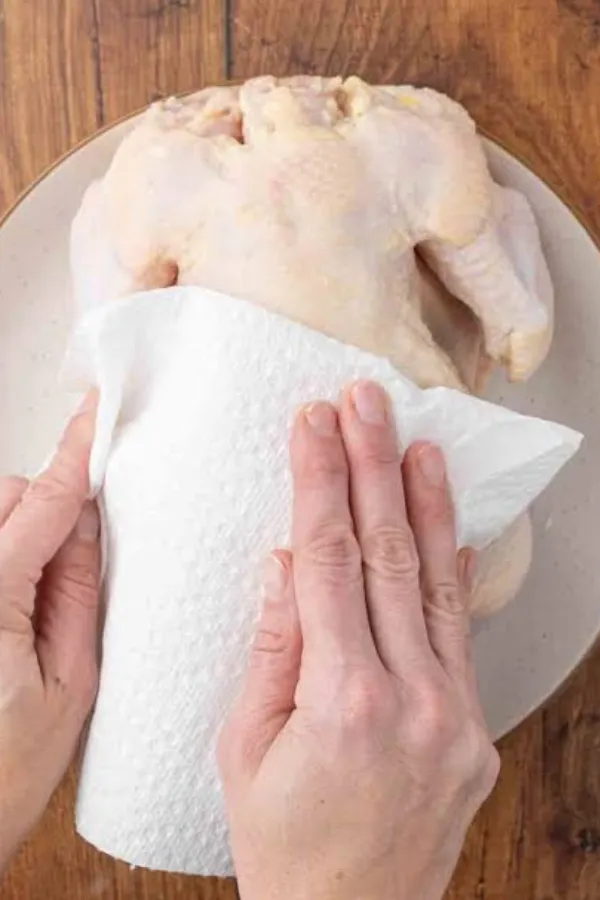
Place 1½ pounds of thin-sliced chicken breasts on a clean plate. Press paper towels firmly against both sides until the surface no longer looks wet or shiny.
Dry chicken browns more evenly because surface moisture creates steam in the skillet. Do not rinse raw chicken in the sink, since splashing water can spread bacteria nearby. Throw away the paper towels, wash your hands with soap, and wipe down any surface touched by the raw chicken.
Season the chicken on both sides
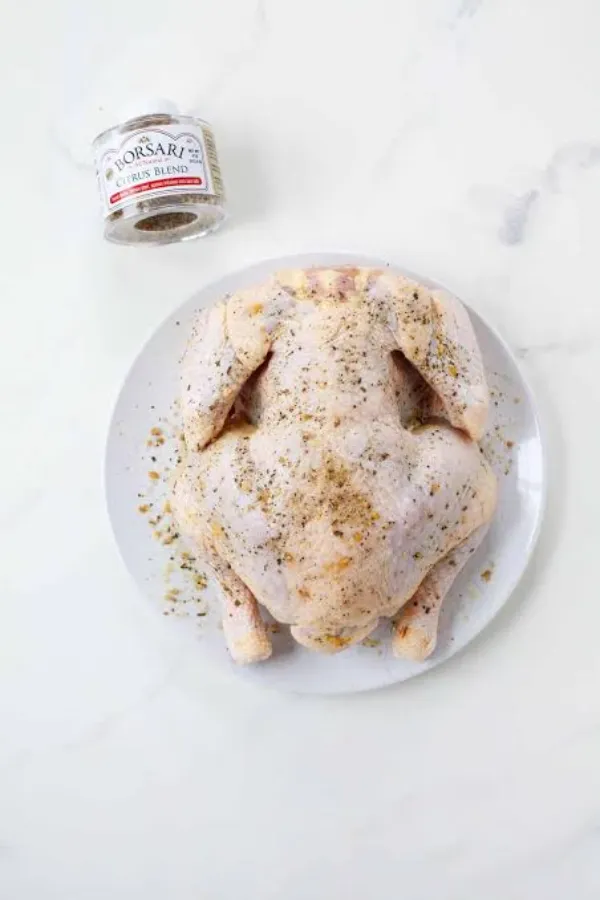
Combine 1 teaspoon kosher salt, 1 teaspoon paprika, ½ teaspoon garlic powder, and ½ teaspoon black pepper in a small bowl. Sprinkle half over the top of the chicken. Turn each piece with clean tongs, then spread the remaining seasoning over the second side.
Press the seasoning lightly against the meat so it stays in place during cooking. Aim for an even coating instead of heavy patches. Thick piles of paprika can scorch in the skillet and leave bitter spots.
Cook the chicken until golden
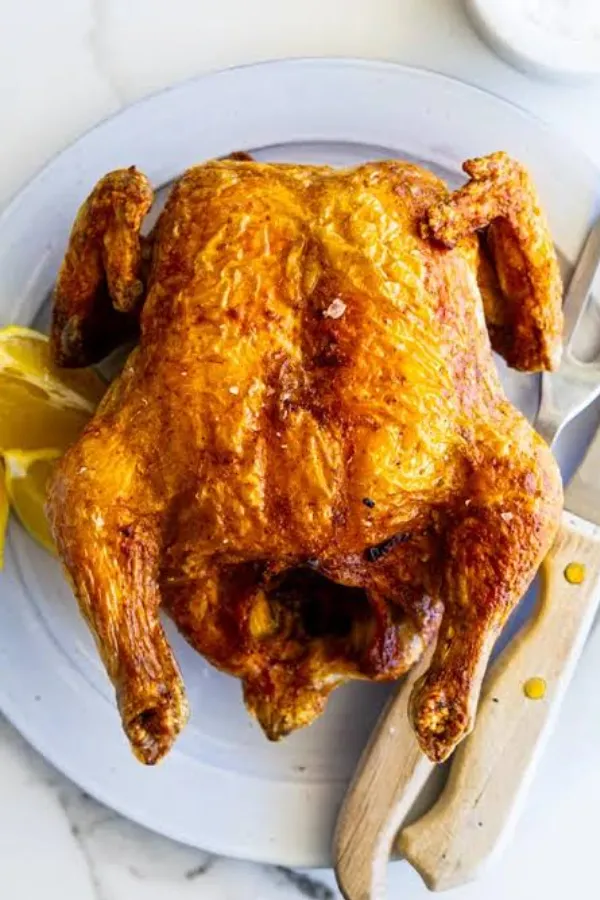
Heat 1 tablespoon olive oil in a large skillet over medium-high heat for about 90 seconds. Add the chicken in one layer, leaving a little space between each piece. Cook without moving it for 4 to 5 minutes, then turn it with tongs and cook the second side for 3 to 5 minutes.
The chicken is ready when the thickest part reaches 165°F. Cook in two batches if your skillet feels crowded.
Rest the chicken before slicing
Transfer the cooked chicken to a clean cutting board or plate. Leave it untouched for 5 minutes.
Resting gives the hot juices time to settle back into the meat. Cutting sooner lets those juices run onto the board, which can leave the chicken dry. Keep the pieces whole during this pause, and do not cover them tightly with foil. Trapped steam can soften the browned surface.
Boil the noodles until tender
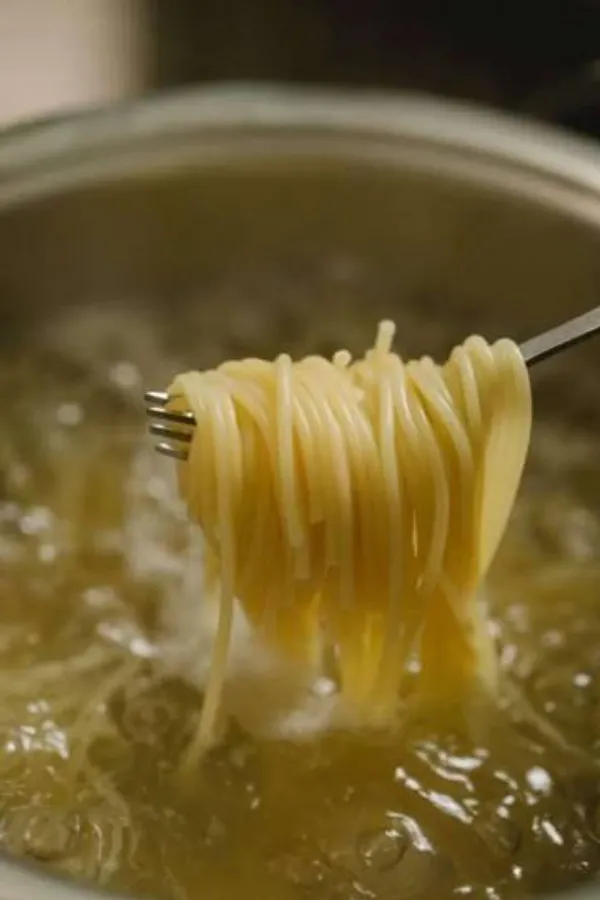
When the salted water is bubbling strongly, add 12 ounces of wide egg noodles. Stir for the first 30 seconds so the noodles separate instead of sticking to the bottom or each other.
Cook according to the package directions, usually 6 to 8 minutes, stirring once or twice. Begin tasting a noodle 1 minute before the listed time ends. It should feel tender with a slight bite in the center, since it will soften a little more when mixed with the warm butter sauce.
Reserve some noodle water
Before draining, dip a heat-safe measuring cup into the pot and scoop out ½ cup of the cloudy cooking water. Set it beside the stove.
That water contains starch released by the noodles. A small amount helps the melted butter cling to the noodles instead of settling at the bottom of the bowl. You may not need all of it, but it is hard to replace once the pot has been emptied.
Drain the noodles well
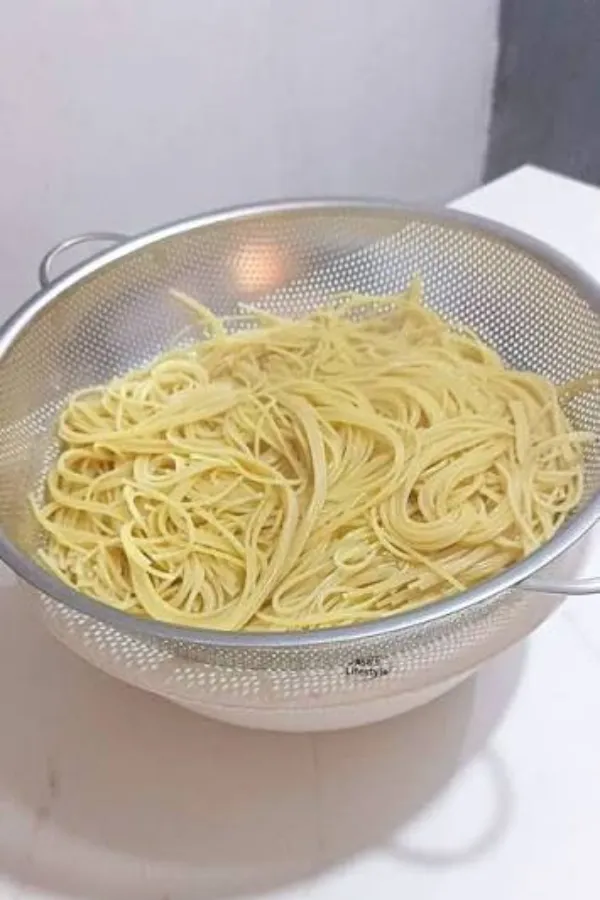
Pour the noodles into a colander and let them drain for 20 to 30 seconds. Shake the colander two or three times to release water trapped between the folds.
Do not rinse the noodles. Rinsing removes the surface starch that helps the butter sauce stick. Avoid leaving them in the colander for several minutes, since egg noodles cool fast and can clump as they sit.
Coat the noodles with garlic butter
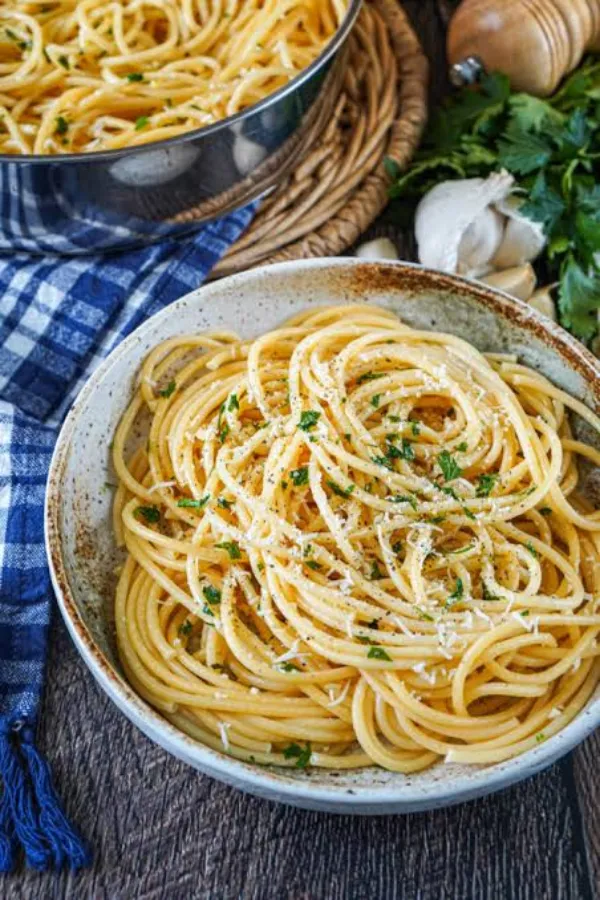
Return the empty pot to low heat. Add 6 tablespoons unsalted butter and 2 minced garlic cloves. Cook for 30 to 45 seconds, until the butter melts and the garlic smells fragrant but does not turn brown.
Add the drained noodles and toss until coated. Pour in 2 tablespoons of the reserved noodle water, then toss again. Add another 1 tablespoon only if the noodles look dry. Remove the pot from the heat.
Slice the chicken across the grain
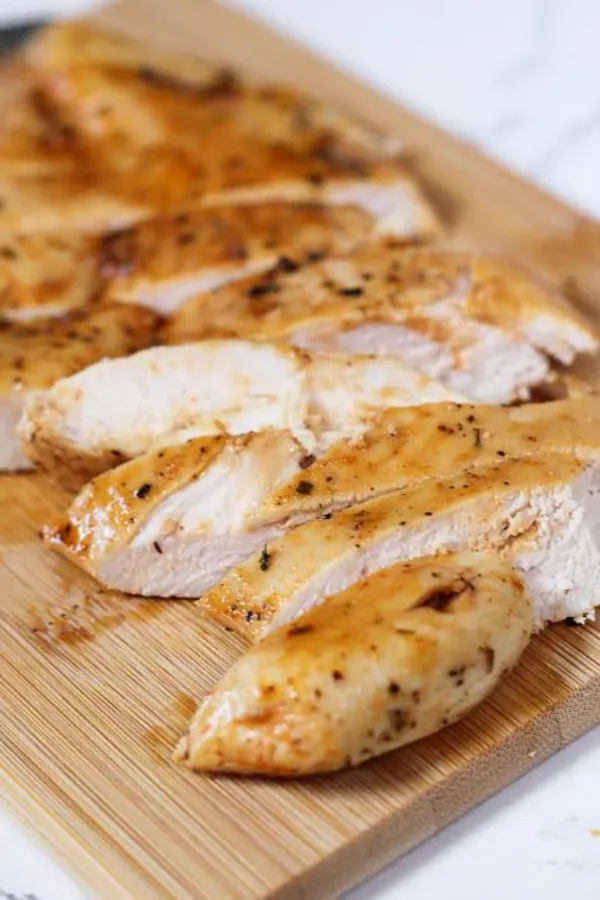
After the 5-minute rest, place each chicken breast on a clean cutting board. Look for the faint lines running through the meat, then cut across those lines into strips about ½ inch thick.
Cutting across the grain shortens the muscle fibers, so each bite feels tender instead of stringy. Use a sharp knife and steady downward strokes. Avoid sawing back and forth, which can pull off the browned coating.
Plate the chicken with buttered noodles
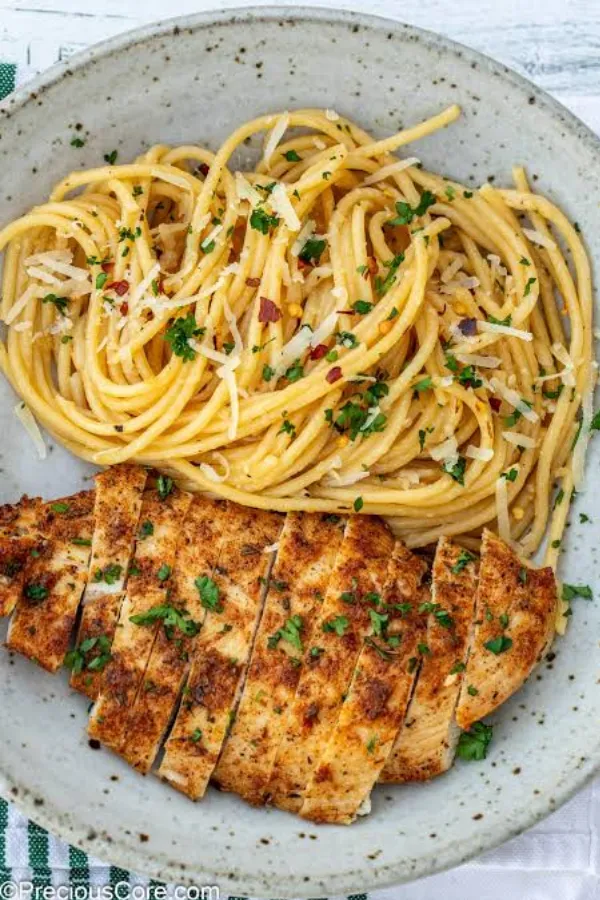
Divide the warm noodles among 4 plates or shallow bowls. Place the sliced chicken over or beside each portion. Spoon any juices from the cutting board over the chicken.
Finish with 2 tablespoons chopped parsley and up to ¼ cup grated Parmesan, if using. Serve at once while the butter sauce is glossy and the noodles are loose. If they tightened while you sliced the chicken, toss them with 1 tablespoon of reserved noodle water before plating.
Troubleshooting Chicken With Buttered Noodles
| If This Happens | Try This |
|---|---|
| The chicken is dry | Check thinner pieces after 3 minutes on the second side. Remove each piece as soon as the center reaches 165°F. |
| The chicken will not brown | Pat the surface dry and leave space between the pieces. Crowded chicken releases steam instead of forming a crust. |
| The garlic tastes bitter | Keep the heat low and cook the garlic for no more than 45 seconds. Start again with fresh butter if the garlic turns dark brown. |
| The noodles look greasy | Toss in 1 tablespoon of reserved noodle water at a time. The starch helps the butter form a light sauce. |
| The noodles are stuck together | Return them to low heat with 1 to 2 tablespoons of noodle water. Toss gently until the strands loosen. |
Frequently Asked Questions
Can I use a different kind of noodle?
Yes. Use fettuccine, rotini, or small shells. Follow the package cooking time and reserve ½ cup of cooking water before draining.
Can I use chicken thighs?
Boneless, skinless chicken thighs work well. Cook them until the thickest part reaches at least 165°F. They may need a few extra minutes.
How do I know when the chicken is cooked?
Insert an instant-read thermometer into the thickest part without touching the skillet. The center should reach 165°F.
Can I make this ahead?
You can cook the chicken up to 2 days ahead. Make the noodles near serving time because buttered egg noodles tend to dry out in the refrigerator.
How should I reheat leftovers?
Warm the noodles in a covered skillet over low heat with 1 tablespoon water and a small piece of butter. Add the sliced chicken during the final 2 to 3 minutes.
Chicken With Buttered Noodles Quick Reference Card
Serves 4 · 30 minutes · Beginner
What You Need
Steps
- Bring 4 quarts of water to a boil and add 1 tablespoon salt.
- Pat the chicken dry with paper towels.
- Season both sides with salt, paprika, garlic powder, and pepper.
- Cook the chicken for 4 to 5 minutes per side, until it reaches 165°F.
- Rest the chicken for 5 minutes.
- Boil the noodles for about 6 to 8 minutes.
- Reserve ½ cup of noodle water.
- Drain the noodles without rinsing them.
- Melt the butter with the garlic, then toss with the noodles and a little noodle water.
- Slice the chicken across the grain into ½-inch strips.
- Divide the noodles among 4 plates and add the chicken.
Enjoy Chicken With Buttered Noodles in 30 Minutes
You now have golden chicken, tender noodles, and a light garlic-butter coating that comes together in about 30 minutes.
Serve your Chicken With Buttered Noodles while it is warm, with peas, green beans, or a crisp salad on the side.
Save this recipe to Pinterest so the full method is close by when you need a dependable weeknight dinner.
Chicken With Buttered Noodles
Ingredients
Equipment
Method
- Fill a large pot with about 4 quarts of water. Cover the pot and bring the water to a strong boil over high heat. Stir in 1 tablespoon kosher salt.
- Pat both sides of the chicken breasts with paper towels until the surface no longer looks wet. Dry chicken forms a better crust in the skillet.
- Mix 1 teaspoon kosher salt, the paprika, garlic powder, and black pepper in a small bowl. Sprinkle the mixture evenly over both sides of the chicken.
- Warm the olive oil in a large skillet over medium-high heat for about 90 seconds.
- Arrange the chicken in one layer, leaving space between the pieces. Cook without moving it for 4 to 5 minutes. Turn and cook for another 3 to 5 minutes, or until the thickest part reaches 165°F.
- Transfer the cooked chicken to a clean cutting board. Let it rest untouched for 5 minutes so the juices stay inside the meat.
- Add the egg noodles to the boiling water. Stir for the first 30 seconds, then cook according to the package directions, usually 6 to 8 minutes. The noodles should be tender with a slight bite in the center.
- Before draining, scoop out ½ cup of the cloudy cooking water and set it beside the stove.
- Pour the noodles into a colander and drain for 20 to 30 seconds. Do not rinse them.
- Return the empty pot to low heat. Add the butter and minced garlic. Cook for 30 to 45 seconds, until the butter is melted and the garlic smells fragrant. Do not let the garlic turn brown.
- Return the drained noodles to the pot. Toss them with the garlic butter and 2 tablespoons of reserved noodle water. Add more noodle water, 1 tablespoon at a time, if the noodles look dry or sticky. Remove the pot from the heat.
- Cut the rested chicken across the grain into strips about ½ inch thick.
- Divide the buttered noodles among 4 plates. Add the sliced chicken and spoon any juices from the cutting board over the top. Finish with parsley and Parmesan, if desired.
Notes
- Use thin-sliced chicken breasts so the outside can brown before the center dries out.
- If using thick chicken breasts, slice them horizontally into thinner pieces or pound them to an even thickness.
- Cook the chicken in two batches if your skillet is crowded. Crowding traps steam and prevents browning.
- Do not move the chicken during the first 4 minutes of cooking. It should release from the skillet when a crust has formed.
- Keep the reserved noodle water until the meal is plated. A spoonful can loosen noodles that become thick or sticky.
- Add the noodle water slowly. Too much can make the butter sauce watery.
- Salted butter may be used, but reduce the salt added to the chicken.
- Fettuccine, rotini, or small pasta shells may be used instead of egg noodles. Follow the cooking time printed on the package.
- Boneless, skinless chicken thighs may be substituted. Cook them until the thickest part reaches at least 165°F.