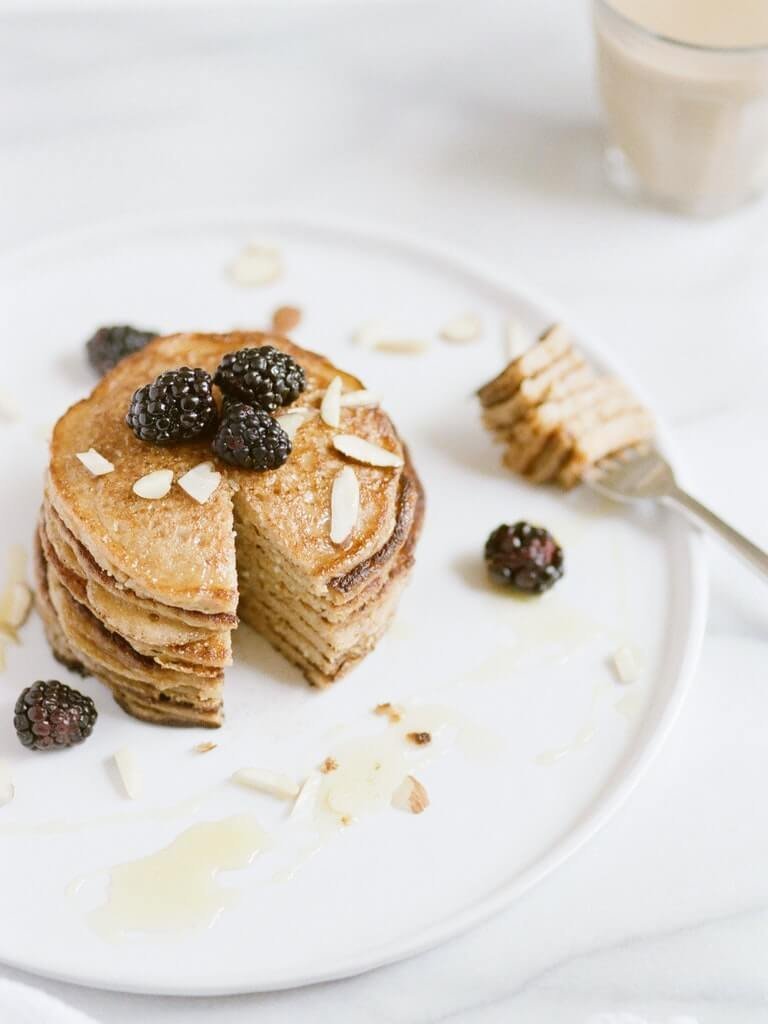

Pancakes can look perfect on the outside and still turn out flat, heavy, or a little gummy in the middle. The good news is that fluffy pancakes do not need fancy ingredients or special equipment. With Pancakes Your Easy Recipe, you can make a soft, golden stack using basic ingredients you probably already have in your kitchen.
The key is how you handle the batter. Measuring the flour correctly keeps it from getting too thick. Mixing the wet and dry ingredients separately helps everything spread evenly. Later, you will fold them together without overworking the flour, which is one of the biggest secrets to keeping pancakes light and tender.
This recipe makes about 10 medium pancakes and takes around 25 minutes from start to finish. You will need two mixing bowls, a whisk, a skillet, and a spatula. No mixer is needed.
Follow each step in order, watch for the visual signs I point out, and you will know exactly when the batter is ready, when to flip each pancake, and how to get that warm, fluffy breakfast stack onto the table.
🥞 What You Need
At a Glance
- Gather and measure the ingredients.
- Whisk the dry ingredients.
- Combine the wet ingredients.
- Fold the wet mixture into the dry ingredients.
- Rest the batter for 5 minutes.
- Preheat and lightly grease the skillet.
- Pour the batter into even rounds.
- Cook until bubbles form and the edges set.
- Flip and cook the second side.
- Stack and serve warm.
Gather and measure your pancake ingredients
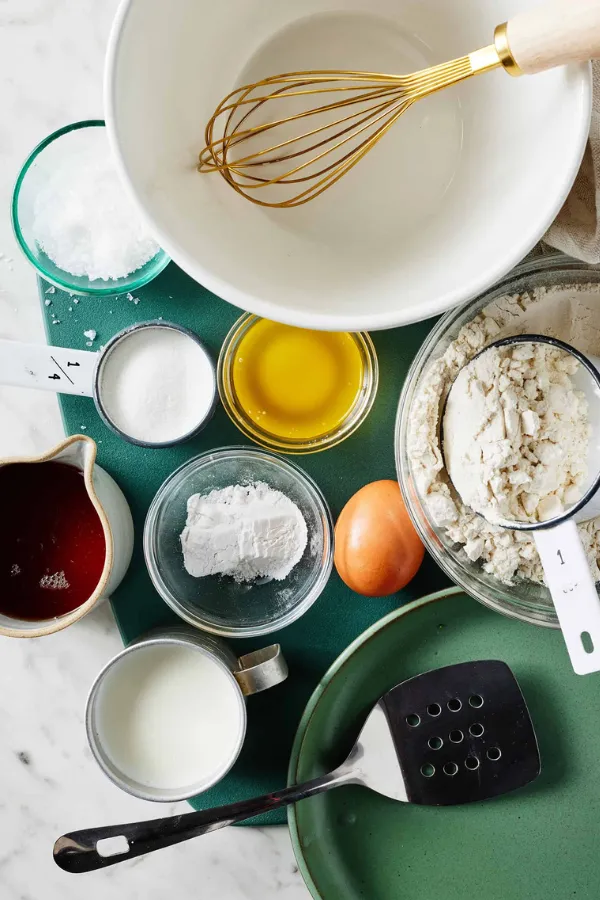
Measure 1½ cups flour, 3½ teaspoons baking powder, 1 tablespoon sugar, ¼ teaspoon salt, 1¼ cups milk, 1 egg, 3 tablespoons melted butter, and 1 teaspoon vanilla.
For the flour, spoon it loosely into the measuring cup and level the top with a knife. Scooping flour straight from the bag can pack too much into the cup, which may give you dense pancakes. Let the melted butter cool slightly before it goes near the egg and milk.
Whisk the dry ingredients evenly
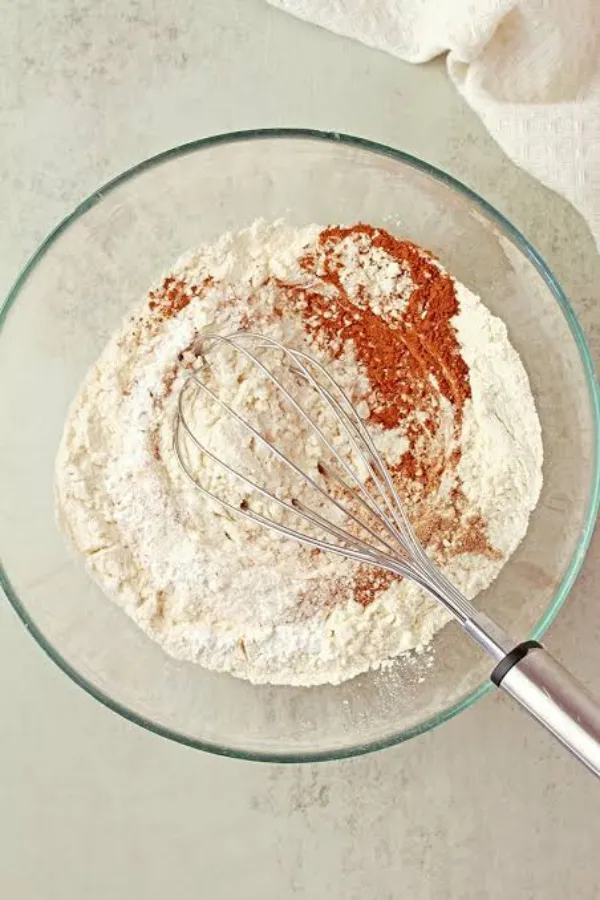
Put the flour, baking powder, sugar, and salt into a large mixing bowl. Whisk for about 20 seconds, reaching around the edges and across the bottom.
Pay special attention to the baking powder. You do not want a concentrated pocket of it hiding in the flour. Spreading it evenly helps the pancakes rise more consistently across the whole batch. Once the dry mixture looks uniform, stop whisking and leave the bowl ready for the wet mixture.
Combine the wet ingredients in a separate bowl
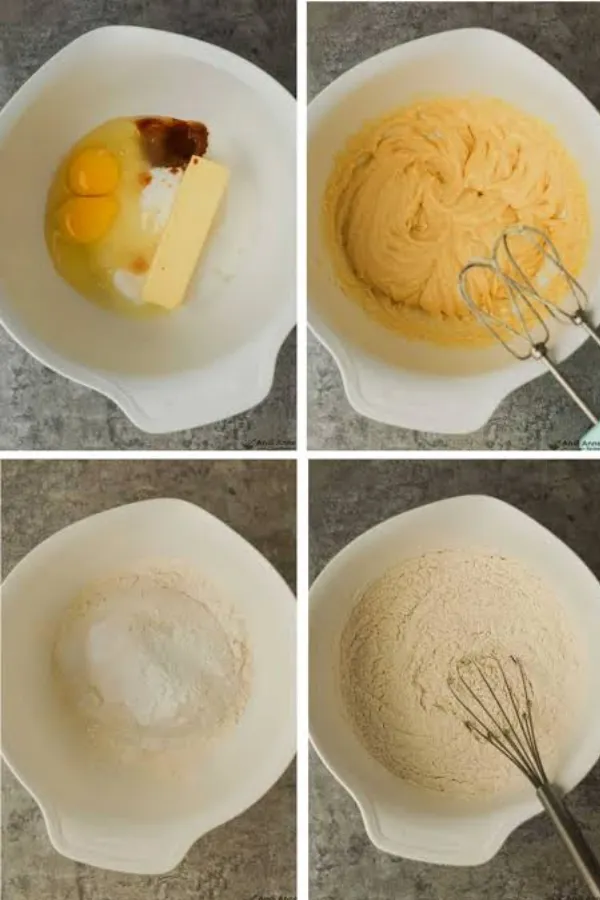
Crack 1 large egg into your second bowl, then add 1¼ cups milk, 3 tablespoons melted butter, and 1 teaspoon vanilla extract. Whisk until the egg is fully broken up and the mixture looks even.
The butter may form a few tiny droplets if your milk is cold. That is fine. Avoid using butter that is still very hot, since it can start cooking the egg before the batter reaches the skillet.
Fold the wet mixture into the dry ingredients
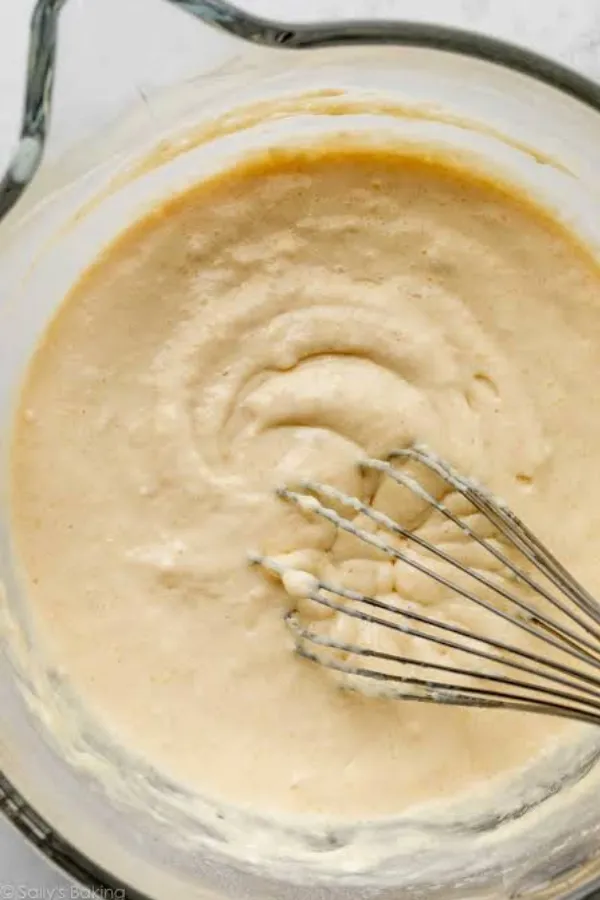
Pour the wet mixture into the bowl of dry ingredients. Use a whisk or rubber spatula to fold gently until you no longer see large patches of dry flour.
A few small lumps should remain. That is what you want. Chasing a perfectly smooth batter develops too much gluten and can make your pancakes chewy instead of soft and fluffy. Aim for a thick batter that slowly falls from the spoon rather than running like milk.
Rest the pancake batter for 5 minutes
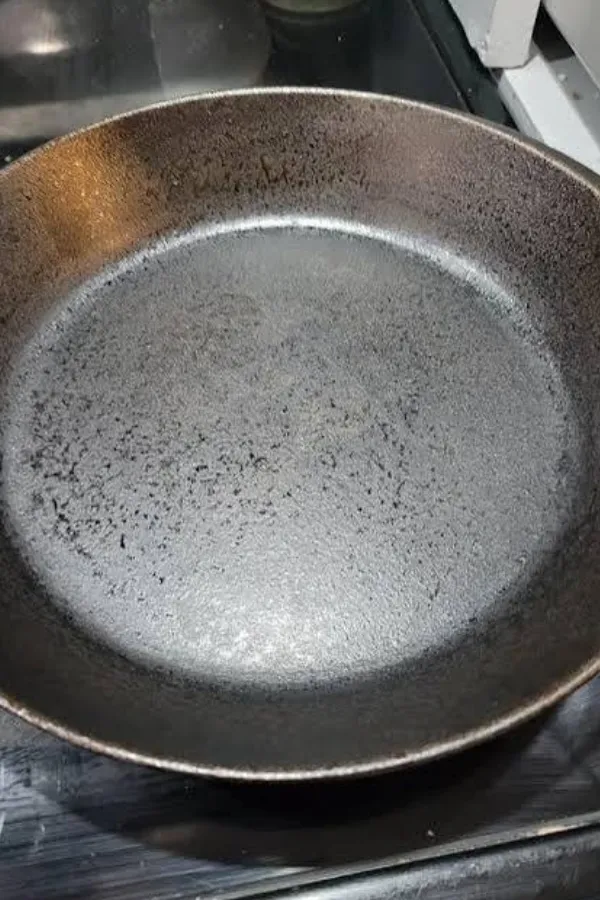
Leave the bowl on the counter for 5 minutes without stirring it again.
This short pause gives the flour time to absorb the liquid while the baking powder begins working. You may notice a few bubbles appearing on top and the batter becoming slightly thicker. Both are good signs. Keep the bowl at room temperature during this brief rest rather than putting it in the refrigerator.
Preheat and lightly grease the skillet
Set a nonstick skillet or griddle over medium-low to medium heat and give it about 3 minutes to warm up. Add a thin coating of butter or neutral cooking oil.
Test the surface with one small drop of batter. It should begin to sizzle gently instead of turning dark right away. If it browns almost at once, lower the heat and wait another minute. A pan that is too hot creates dark outsides before the centers have enough time to cook.
Pour the batter into even pancake rounds
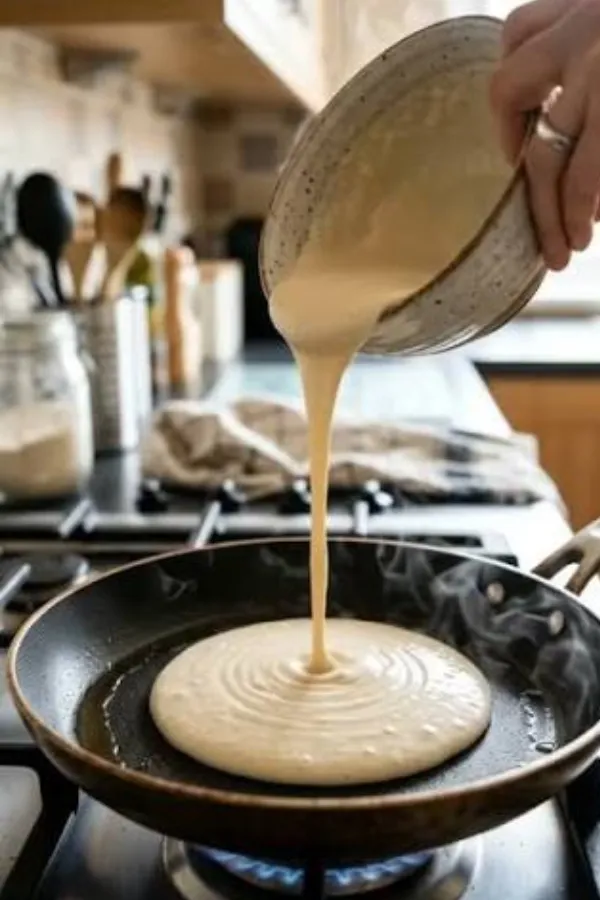
Use a ¼-cup measure to scoop the batter onto the hot skillet. Pour it into one spot and let it spread naturally into a round about 4 inches wide.
Leave at least 1–2 inches between pancakes so you have room to flip them later. Depending on your skillet size, cook 2–3 pancakes at a time. Avoid pressing or spreading the batter with the measuring cup; a slightly thicker round gives the pancake room to rise.
Cook until bubbles form and the edges set
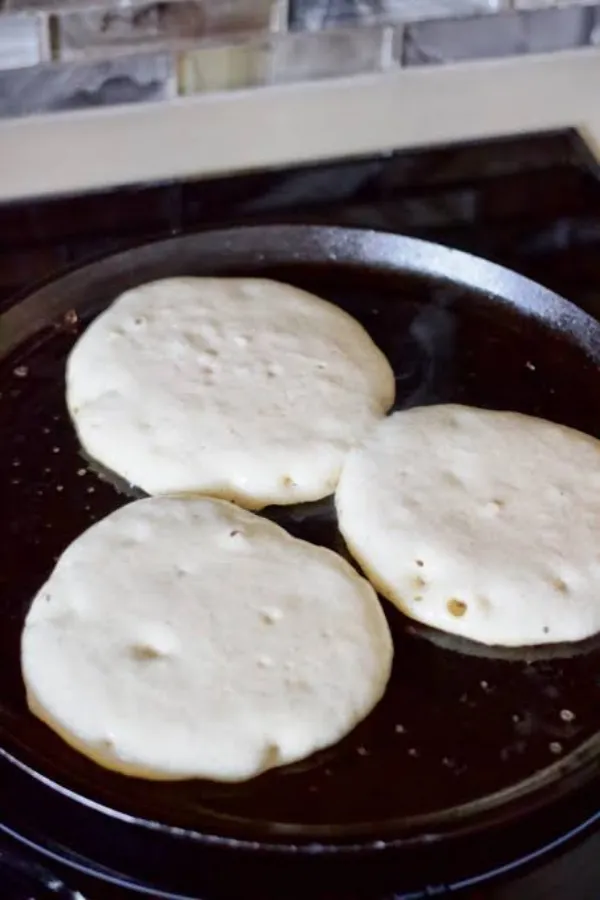
Watch the surface rather than relying only on a timer. After roughly 2–3 minutes, small bubbles should rise and begin popping across the top.
Look at the outer edge too. It should lose its wet shine and appear slightly firm while the center still looks moist. Those two signs together mean the pancake is ready to turn.
Flip and cook the second side
Slide a thin spatula completely underneath the pancake and turn it over in one confident motion. The cooked side should be evenly golden brown.
The second side usually needs less time. Cook for about 1–2 minutes, until the bottom is golden and the center feels springy when lightly touched with the spatula.
If the pancakes are getting dark before the centers finish cooking, reduce the heat slightly before starting the next batch. Keep the pan at a steady temperature rather than turning the heat up to cook faster.
Stack and serve the pancakes warm
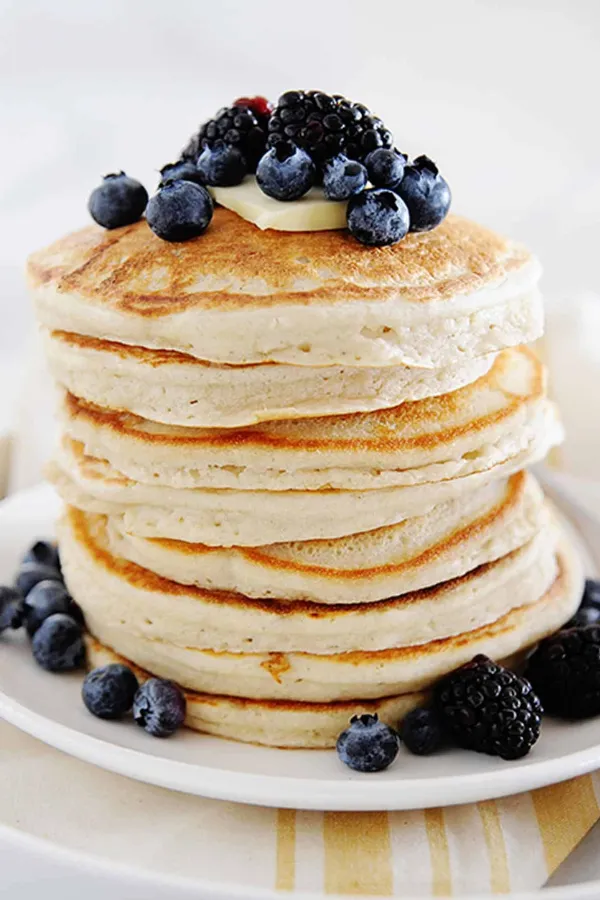
Transfer each finished pancake to a plate and loosely cover the stack with a clean kitchen towel while you cook the remaining batter. This keeps the pancakes warm without trapping too much steam.
Serve the stack while it is fresh and fluffy. Add maple syrup, sliced strawberries, blueberries, bananas, butter, or a light dusting of powdered sugar. For the best texture, avoid leaving cooked pancakes sitting uncovered for more than 10–15 minutes, since they begin to cool and dry around the edges.
🥞 Pancake Troubleshooting
| If This Happens | Try This |
|---|---|
| Pancakes are flat | Check that your baking powder is fresh and avoid pressing the pancakes with your spatula. |
| Pancakes are dense or chewy | Mix the batter less. Stop once the dry flour disappears, even if a few small lumps remain. |
| Outside burns before the center cooks | Lower the skillet heat and give it a minute to cool before pouring the next pancake. |
| Batter spreads too much | The batter may be too thin. Mix in 1 tablespoon of flour and check the consistency again. |
| Centers stay wet | Make slightly smaller pancakes and wait for several bubbles and set edges before flipping. |
Fluffy Pancake FAQ
🥞 Fluffy Pancakes Quick Reference
Keep this card handy while you cook.
What You Need
Quick Steps
- Measure all ingredients.
- Whisk the dry ingredients.
- Combine the wet ingredients separately.
- Fold wet into dry, leaving a few small lumps.
- Rest the batter for 5 minutes.
- Preheat and lightly grease the skillet.
- Pour ¼ cup of batter per pancake.
- Cook for 2–3 minutes until bubbles form.
- Flip and cook for another 1–2 minutes.
- Stack and serve while warm.
Conclusion
You now have a warm stack of soft, golden pancakes made from basic pantry ingredients. Once you learn to leave the batter slightly lumpy and wait for the right bubbles before flipping, getting fluffy results becomes much more predictable.
Keep Pancakes Your Easy Recipe nearby for your next weekend breakfast, then try changing the toppings with fresh berries, bananas, chocolate chips, or maple syrup.
Save this recipe to your Pinterest breakfast board so you can find it the next time a pancake craving hits.