You’ve probably had shakshuka at a brunch spot and thought, “I could make this at home.” Then you tried, and the eggs turned rubbery, the sauce stayed thin and watery, or the whole pan tasted flat no matter how much salt you added. You’re not doing anything wrong exactly you’re just missing a few small moves that separate a soupy tomato-and-egg dish from real shakshuka.
This guide walks you through the actual secrets to perfecting shakshuka: blooming the spices so they taste toasted instead of dusty, simmering the sauce long enough that it holds its shape on a spoon, and cooking the eggs so the whites set while the yolks stay soft and jammy. None of this requires special equipment. One skillet, one stovetop, and about 35 minutes total will get you there.
By the end, you’ll have a bubbling pan of deeply spiced tomato sauce with eggs nestled right into it, ready to eat straight from the pan with warm bread. Grab a good skillet with a lid, and let’s start building the base.
What You Need
- Large skillet with a lid (10 to 12 inches)
- 1 medium yellow onion
- 1 red bell pepper
- 3 cloves garlic
- 3 tablespoons olive oil
- 1 teaspoon ground cumin
- 1 teaspoon smoked paprika
- 1/4 teaspoon cayenne pepper (optional)
- 1 can (28 oz) crushed tomatoes
- Salt and black pepper
- 6 large eggs
- Fresh parsley or cilantro
- Crumbled feta cheese (optional)
- Crusty bread or pita, for serving
At a Glance
- Gather your ingredients before you turn on the stove
- Dice the onion, bell pepper, and garlic
- Soften the onion and pepper in olive oil
- Bloom the spices for 60 seconds
- Stir in the crushed tomatoes
- Simmer the sauce until it thickens
- Season the sauce to taste
- Carve out wells for the eggs
- Crack the eggs into the wells
- Cover the pan and cook the eggs
- Garnish and serve straight from the skillet
Gather your ingredients before you turn on the stove
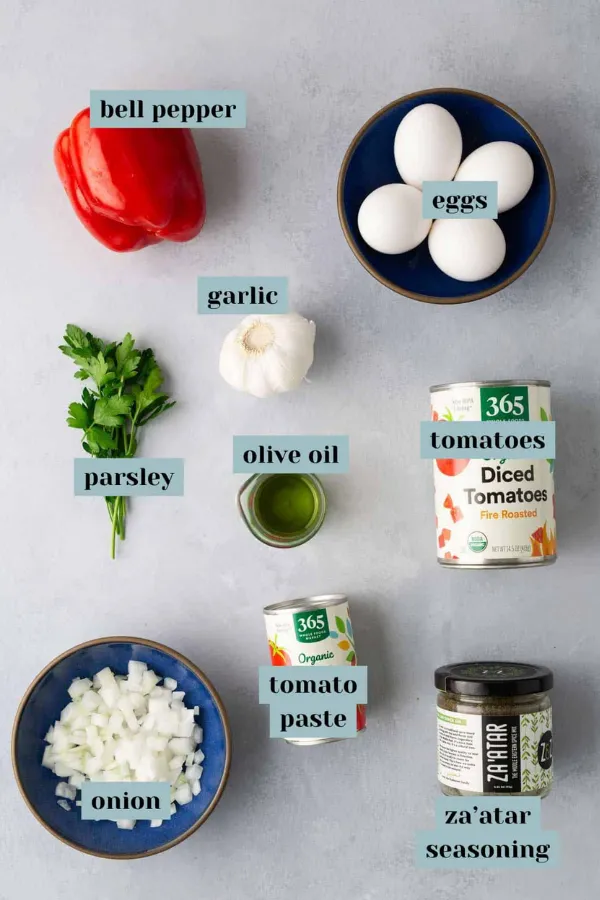
Shakshuka moves fast once the sauce starts simmering, so there’s no time to go hunting for a spice jar mid-step. Pull everything out first: onion, pepper, garlic, canned tomatoes, spices, eggs, and your skillet with its lid nearby. Set the eggs on the counter now too cold eggs straight from the fridge take longer to cook evenly once they hit the hot sauce.
Dice the onion, bell pepper, and garlic
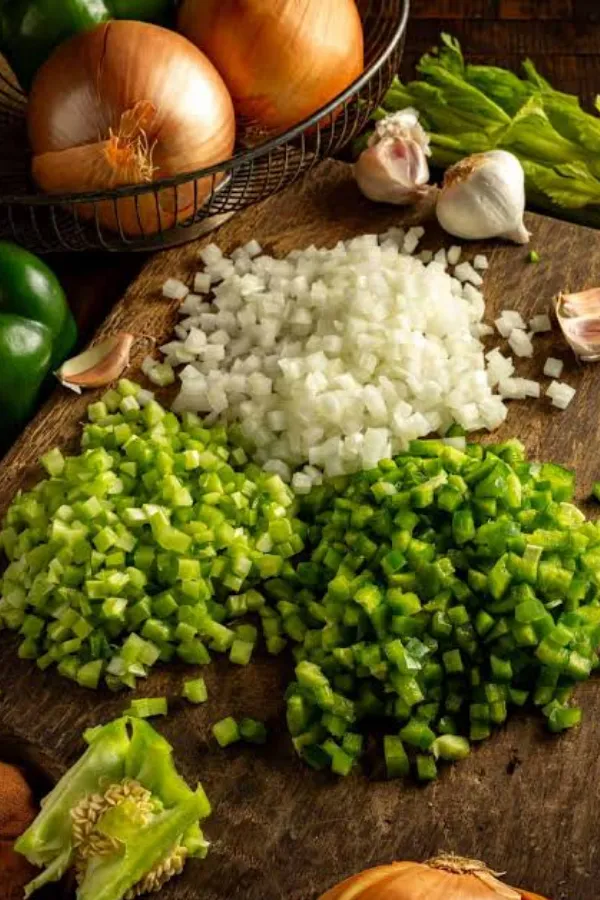
Cut the onion and bell pepper into small, even pieces, roughly 1/4 inch. Even sizing matters here chunks that are too big won’t soften in time, and you’ll end up biting into raw onion later. Mince the garlic separately and keep it apart from the onion and pepper for now. Garlic burns fast, and it goes into the pan a step later than the rest.
Soften the onion and pepper in olive oil
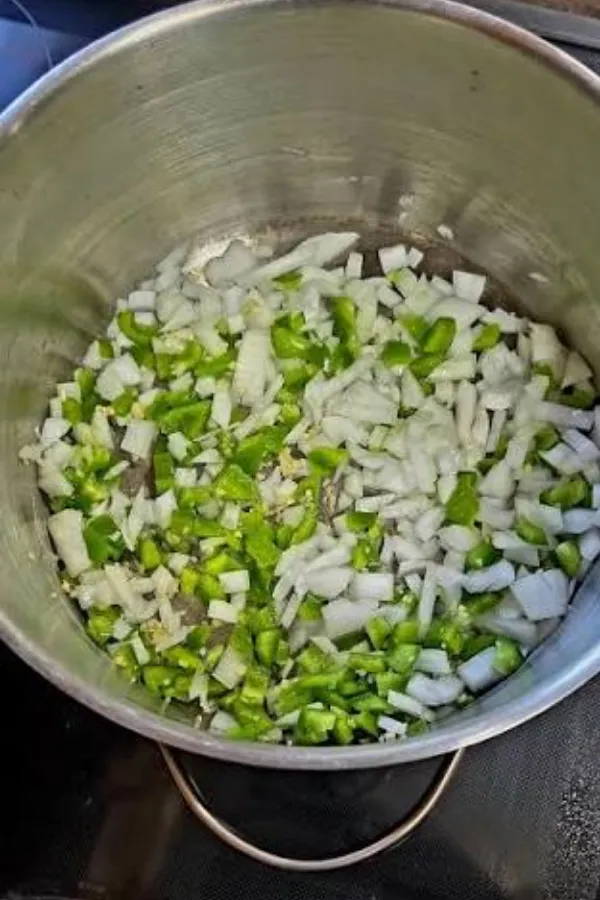
Warm 3 tablespoons of olive oil in your skillet over medium heat, then add the onion and pepper. Cook for 6 to 7 minutes, stirring occasionally, until the onion turns soft and slightly golden at the edges rather than browned. This slow softening step is what builds a sweet base flavor instead of a raw, sharp one. If the pan looks dry before the time is up, add a splash more oil rather than raising the heat.
Bloom the spices for 60 seconds
One minute is all it takes to turn raw spice powder into something deep and toasty. Push the onion and pepper to one side of the pan, add the garlic, cumin, smoked paprika, and cayenne to the empty space, and stir them in the bare oil for 60 seconds until fragrant. Skipping this step is the single biggest reason shakshuka tastes flat dry spices need direct heat and fat to release their full flavor, not just a soak in tomato liquid.
Stir in the crushed tomatoes
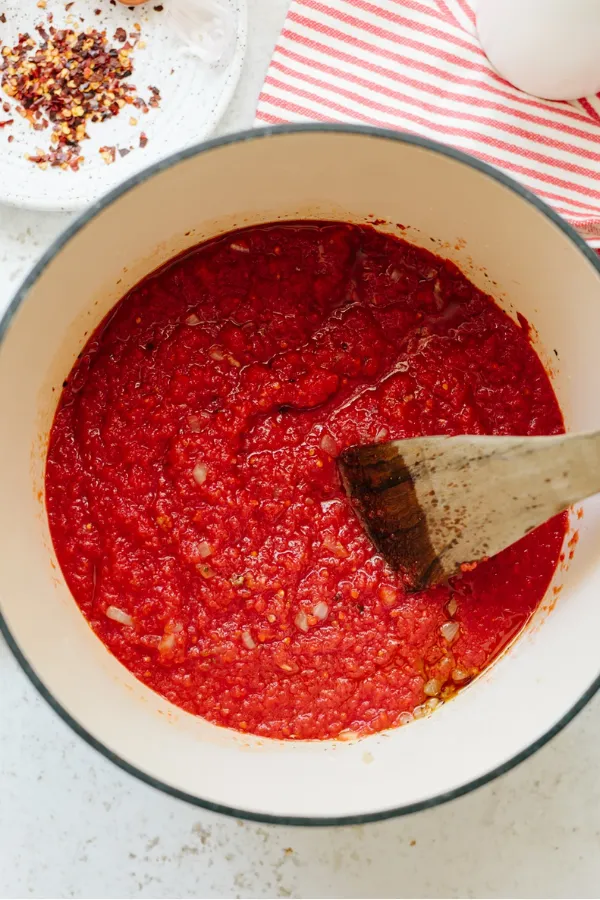
Once the spices smell toasted, pour in the whole can of crushed tomatoes right away this stops them from scorching. Scrape the bottom of the pan with your spoon as you stir, lifting up any browned bits stuck there. Those bits carry flavor, and leaving them stuck to the pan means leaving flavor behind. Bring the mixture up to a gentle bubble before moving to the next step.
Simmer the sauce until it thickens
A thin, soupy sauce will never hold poached eggs properly, so patience here pays off later. Lower the heat to a gentle simmer and let the sauce cook uncovered for 10 to 12 minutes, stirring every few minutes so the bottom doesn’t catch. You’ll know it’s ready when a spoon dragged across the pan leaves a brief trail before the sauce flows back in. If it still looks watery at the 12-minute mark, give it another 5 minutes.
Season the sauce to taste
Taste the sauce before you go any further this is the last easy chance to fix it. Add salt and black pepper a little at a time, stirring and tasting between additions, until the tomato flavor feels rounded instead of sharp or flat. If the sauce tastes slightly acidic, a small pinch of sugar smooths it out without making the dish taste sweet.
Carve out wells for the eggs
The back of a large spoon works perfectly here. Press it gently into the sauce to make 6 shallow indentations, spaced apart so the eggs won’t run into each other once cracked. These wells hold the eggs in place and keep the whites from spreading thin across the whole pan, which is what causes uneven cooking later.
Crack the eggs into the wells
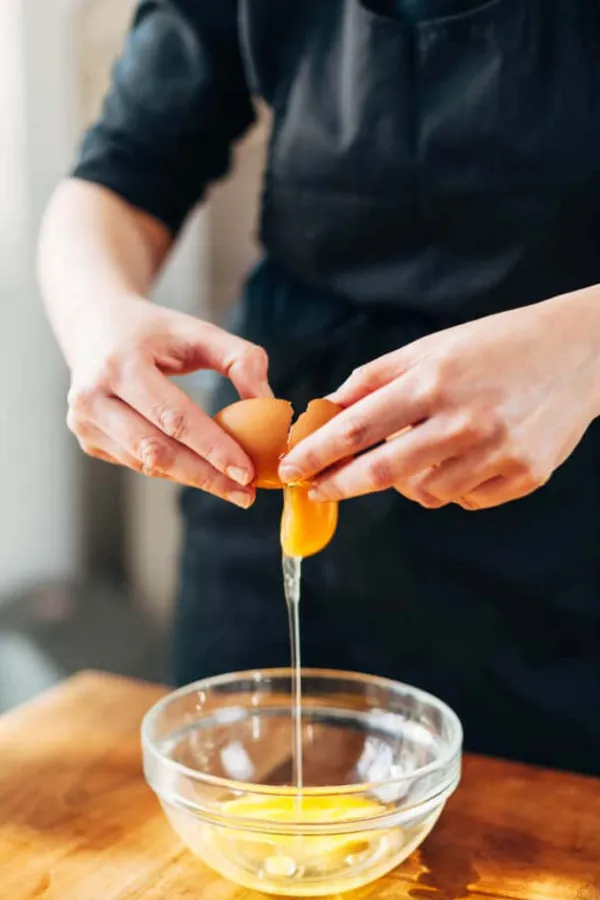
Crack each egg into a small bowl first, then slide it into its well one at a time. Cracking directly into the hot pan risks shell fragments and broken yolks, and once a yolk breaks there’s no fixing it. Work around the pan in order so you don’t lose track of which wells are filled. Leave the eggs uncovered for now the lid comes next.
Cover the pan and cook the eggs
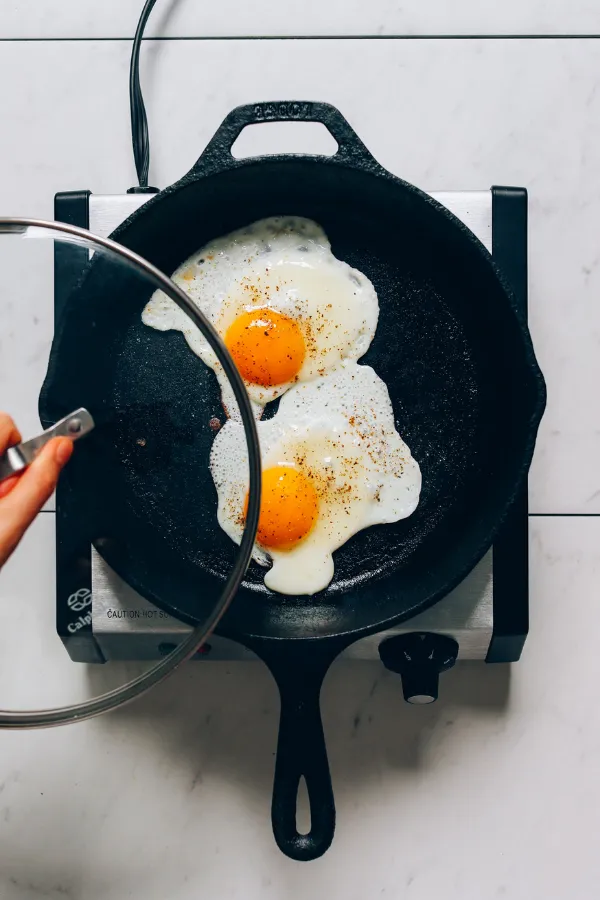
Once every well is filled, put the lid on and drop the heat to low. Cook for 6 to 8 minutes for yolks that are still soft and jammy, or closer to 10 minutes if you prefer firmer yolks. Resist lifting the lid to check early every peek lets out steam the eggs need to set properly. You’ll know they’re close when the whites near the edges look fully opaque.
Garnish and serve straight from the skillet

A little color on top makes the whole dish feel finished. Scatter chopped parsley or cilantro over the pan, and crumble feta cheese on top if you’re using it. Bring the skillet straight to the table with warm bread or pita on the side for scooping. Shakshuka is meant to be shared out of the pan, not plated individually.
Common Mistakes
Frequently Asked Questions
Quick Reference Card: Shakshuka
- Gather ingredients
- Dice onion, pepper, garlic
- Soften onion and pepper, 6-7 min
- Bloom spices, 60 seconds
- Stir in crushed tomatoes
- Simmer sauce, 10-12 min
- Season to taste
- Carve 6 wells
- Crack eggs into wells
- Cover, cook 6-10 min
- Garnish and serve
Conclusion
You’ve got a skillet of shakshuka with a thick, deeply spiced sauce and eggs cooked exactly the way you like them. That’s the real secret to perfecting shakshuka patience during the simmer and a light hand with the eggs.
Next time, try swapping in ground lamb or chickpeas for a heartier version. Save this recipe to your breakfast board so it’s ready whenever the craving hits.
Classic Shakshuka (Eggs Poached in Spiced Tomato Sauce)
Ingredients
Equipment
Method
- Gather all ingredients and equipment before starting.
- Dice the onion and bell pepper into 1/4-inch pieces; mince the garlic separately.
- Warm olive oil in the skillet over medium heat and cook the onion and pepper for 6-7 minutes until softened.
- Push vegetables aside, add garlic and spices to the bare oil, and toast for 60 seconds.
- Stir in the crushed tomatoes, scraping the pan bottom.
- Simmer uncovered for 10-12 minutes, stirring occasionally, until thickened.
- Season with salt and pepper to taste.
- Use a spoon to press 6 shallow wells into the sauce.
- Crack each egg into a small bowl, then slide into a well.
- Cover and cook on low for 6-10 minutes, depending on desired yolk firmness.
- Garnish with herbs and feta, and serve directly from the skillet.
Notes
- For a milder dish, omit the cayenne entirely.
- Leftover sauce (without eggs) keeps in the fridge for up to 3 days and reheats well for a fresh batch of eggs.
- A cast iron skillet holds heat especially well for this recipe and helps keep the eggs cooking evenly once covered.