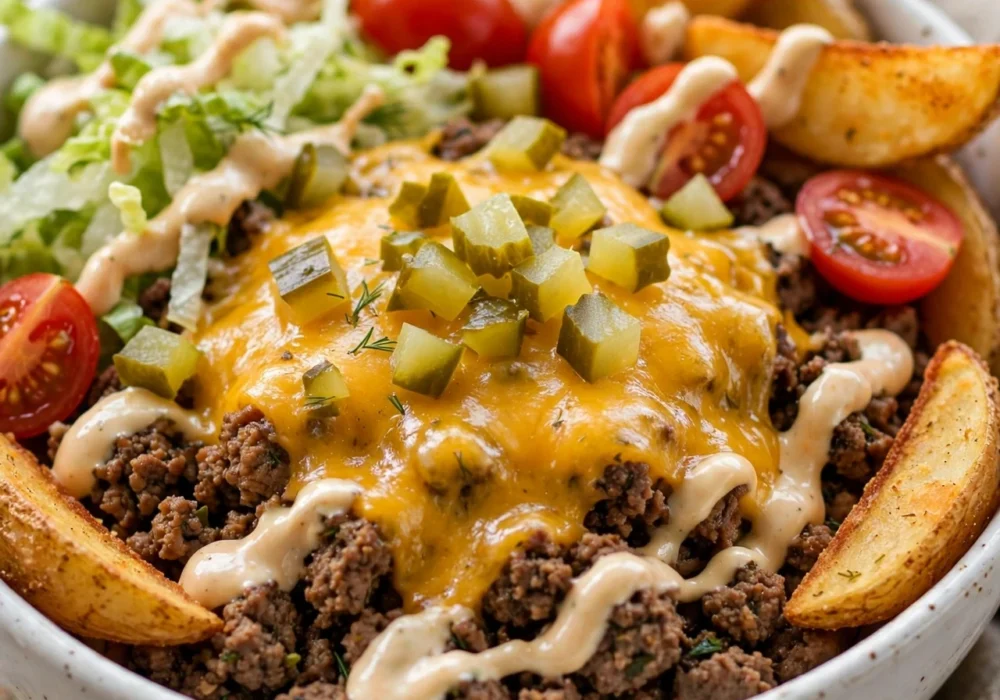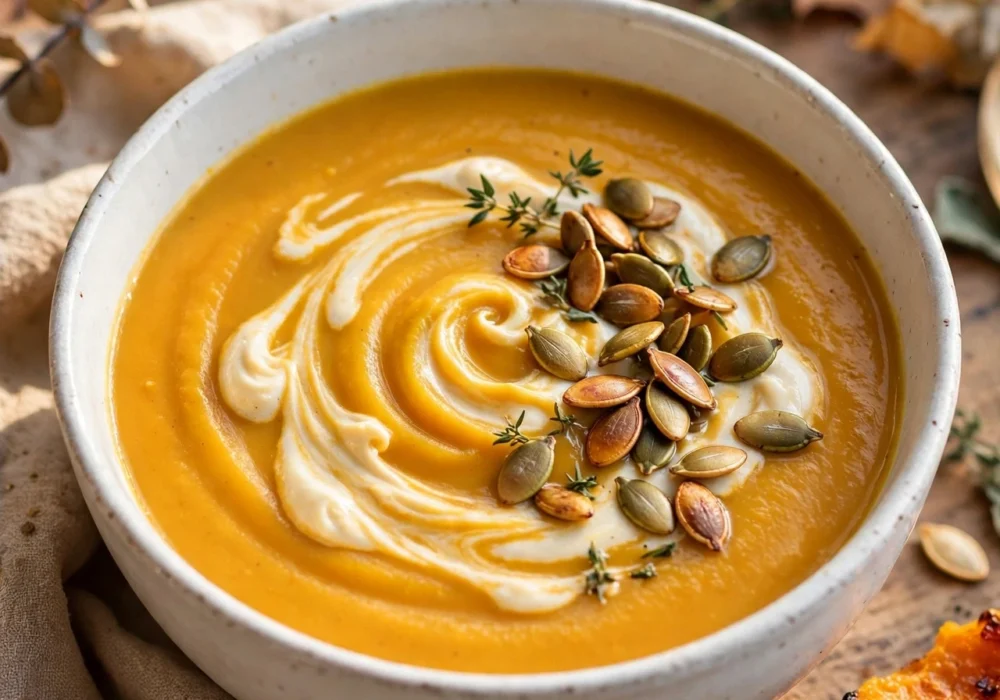

Roasted root vegetables should have browned edges, soft centers, and plenty of flavor. Yet they often come out pale, wet, or cooked at different rates. The fix starts before the vegetables reach the oven: cut them to the same size, dry them well, and give them enough room on the pan.
This recipe uses carrots, parsnips, sweet potato, and rutabaga for a mix of sweet and earthy flavors. You will roast them at high heat until the edges turn golden, then top them with crisp breadcrumbs, fresh sage, garlic, and Parmesan. The sage crunch gives each bite a warm, salty finish without hiding the flavor of the vegetables.
Plan for about 20 minutes of active work and 35 minutes in the oven. The cutting takes the most care, but the rest is beginner-friendly. Two large baking sheets help the vegetables brown instead of steam. By the end, you will have a colorful side dish that serves 6 people and works well with roast chicken, pork, turkey, or a simple grain bowl.
What You Need
Vegetables
- 4 medium carrots
- 3 medium parsnips
- 1 large sweet potato
- 1 small rutabaga
- 3 tablespoons olive oil
- 1 teaspoon kosher salt
- ½ teaspoon black pepper
- ½ teaspoon dried thyme
Sage Crunch and Tools
- ¾ cup panko breadcrumbs
- 2 tablespoons unsalted butter
- 8 fresh sage leaves
- 1 small garlic clove
- ¼ cup finely grated Parmesan
- Vegetable peeler and sharp knife
- Large cutting board
- 2 large rimmed baking sheets
- Large bowl and small skillet
At a Glance
- Heat the oven and prepare two baking sheets.
- Cut the root vegetables into even pieces.
- Dry the vegetables before seasoning.
- Coat the vegetables with oil and seasonings.
- Spread the roasted root vegetables across the pans.
- Roast the vegetables until the edges begin to brown.
- Turn the vegetables and finish roasting.
- Toast the savory sage crunch.
- Scatter the sage crunch over the vegetables.
Heat the oven and prepare two baking sheets
Set an oven rack in the upper third and another in the lower third. Heat the oven to 425°F. Line two large rimmed baking sheets with parchment paper, or brush the bare pans with a thin coat of oil. Two pans give the vegetables more open space, which helps moisture escape. Keep the pans out of the oven while you prepare the vegetables so the oil does not smoke.
Cut the root vegetables into even pieces
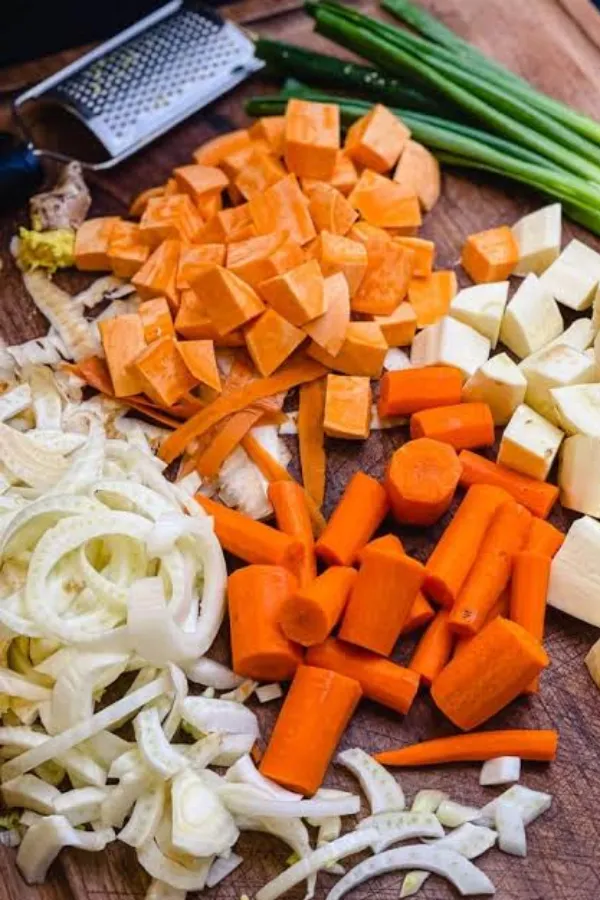
Peel the carrots, parsnips, sweet potato, and rutabaga. Trim away the stem ends and any rough spots. Cut everything into pieces close to ¾ inch thick. Slice thick carrots and parsnips in half lengthwise before cutting them into chunks.
Size matters more than shape. Pieces that are close in thickness will soften at about the same rate. Make the dense rutabaga pieces a little smaller than the sweet potato pieces, since rutabaga takes longer to cook.
Dry the vegetables before seasoning
Spread the cut vegetables over a clean kitchen towel or several layers of paper towel. Pat every side until no beads of water remain. Freshly washed vegetables often hold water in their cuts and grooves.
This small step helps the oil cling to the surface. It also keeps extra steam from building on the baking sheets. Do not leave the vegetables sitting on a damp towel, since they can soak the moisture back up. Move them into a large, dry mixing bowl as soon as they are dry.
Coat the vegetables with oil and seasonings
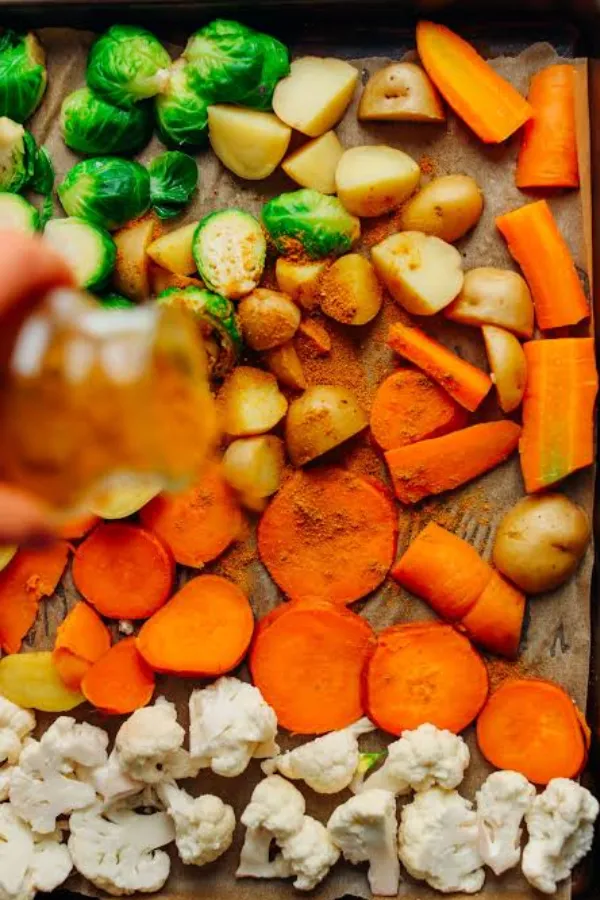
For about 3 pounds of vegetables, use 3 tablespoons olive oil, 1 teaspoon kosher salt, ½ teaspoon black pepper, and ½ teaspoon dried thyme. Add everything to the bowl, then toss with clean hands or a large spoon until every piece has a thin, shiny coating.
Check the bottom of the bowl before moving on. A puddle of oil means too much was added, which can make the vegetables greasy rather than crisp.
Spread the vegetables across the pans
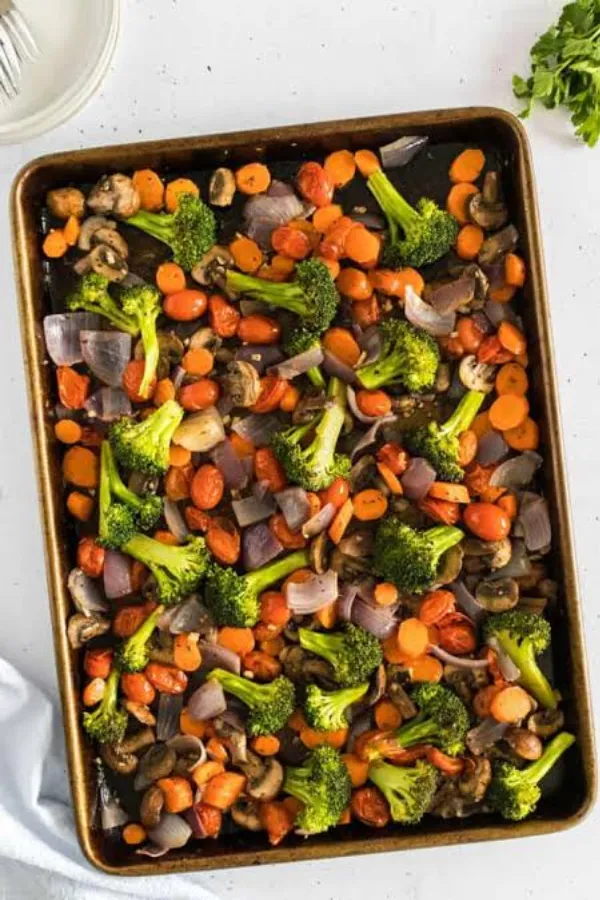
Divide the seasoned vegetables between the two prepared baking sheets. Arrange them in a single layer, leaving a little open space between most pieces. Turn any flat cut sides down against the pans, since those surfaces will develop the deepest browning.
Roast the vegetables until the edges begin to brown
Place one pan on the upper rack and the other on the lower rack. Roast without opening the oven for 20 minutes. This gives the vegetables time to release moisture and form a browned surface before they are moved.
At the end of the first roasting period, look for golden spots on the undersides and slight browning along the edges. The centers may still feel firm when pierced with a fork. That is expected. If the vegetables still look wet and pale, roast them for another 5 minutes before turning them.
Turn the vegetables and finish roasting
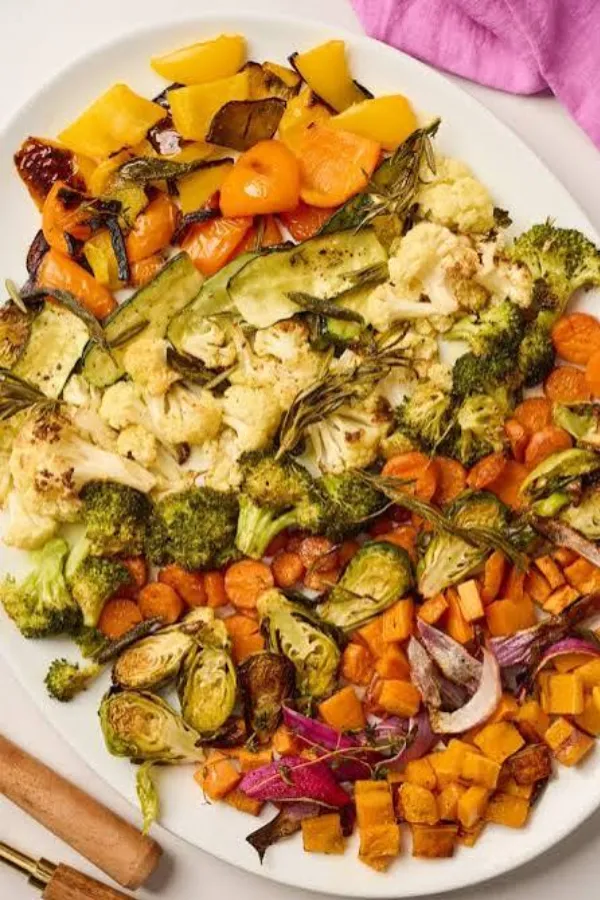
After 20 to 25 minutes, remove both pans from the oven. Use a thin spatula to turn the vegetables, then switch the pans between the upper and lower racks. Roast for another 10 to 15 minutes.
The vegetables are ready when the largest pieces can be pierced with a fork and the flat sides are deep golden brown. Check the sweet potato first because it may soften before the carrots and rutabaga. Remove any fully cooked pieces rather than letting them burn while the firmer ones finish.
Toast the savory sage crunch
A wide skillet gives the breadcrumbs enough surface area to brown evenly. Melt 2 tablespoons unsalted butter over medium-low heat. Add ¾ cup panko breadcrumbs, 8 finely sliced sage leaves, and 1 minced garlic clove. Cook for 3 to 5 minutes, stirring often, until the crumbs are golden and the sage smells fragrant.
Remove the skillet from the heat. Stir in ¼ cup finely grated Parmesan. The crumbs will crisp more as they cool.
Scatter the sage crunch over the vegetables
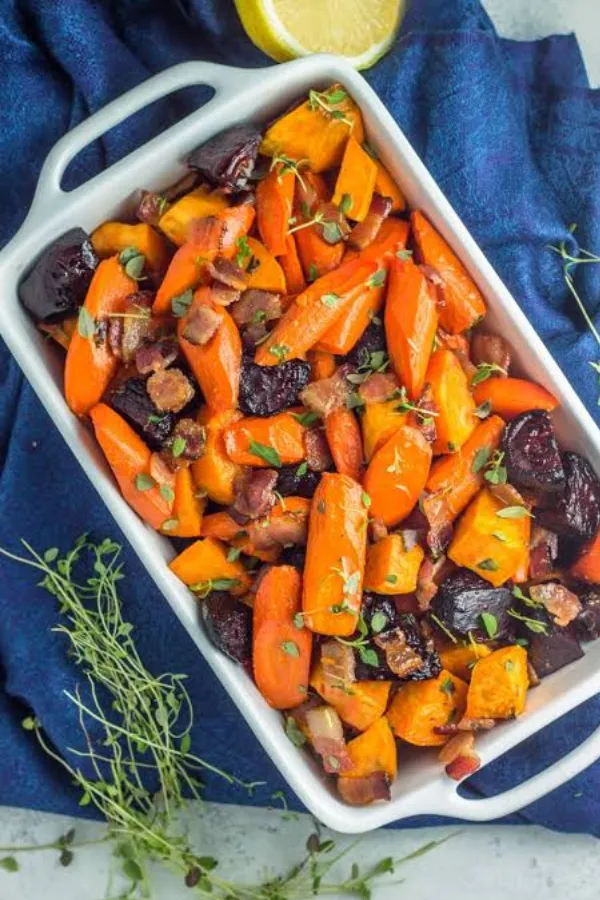
While the roasted vegetables are still hot, transfer them to a shallow serving dish and scatter the sage mixture evenly over the top. Keep the crumbs on the surface instead of stirring them through, or they may absorb steam and lose their crisp texture.
Taste one piece before serving. Add a small pinch of salt only if needed, since the Parmesan already brings plenty of savory flavor.
Troubleshooting Roasted Root Vegetables
| If This Happens | Try This |
|---|---|
| The vegetables are soft but pale. | Spread them farther apart and roast for another 5 to 10 minutes. Crowding traps steam and blocks browning. |
| Some pieces are hard while others are mushy. | Cut dense vegetables, such as rutabaga, smaller next time. Remove soft pieces from the pan and let the firm ones roast longer. |
| The edges are burning too quickly. | Lower the oven to 400°F and move the pan away from the heating element. Dark pans may brown food faster than light pans. |
| The sage crunch tastes bitter. | Discard any burnt crumbs. Toast a fresh batch over medium-low heat and remove it as soon as the panko turns golden. |
| The breadcrumb topping becomes soggy. | Keep the topping separate until serving. Scatter it over the vegetables instead of mixing it into the hot, steamy dish. |
Roasted Root Vegetables FAQ
Do I have to peel every vegetable?
Carrots and parsnips can keep their skins if they are scrubbed well. Peel rutabaga because its outer layer is thick and waxy. Sweet potato skin is edible, but peeling gives the dish a softer texture.
Can I use different root vegetables?
Yes. Beets, turnips, celeriac, and Yukon Gold potatoes work well. Cut dense vegetables into smaller pieces and keep red beets on one side of the pan if you do not want them to stain everything pink.
Can I prepare the vegetables ahead of time?
You can peel and cut them up to 1 day ahead. Store them in a covered container in the refrigerator, then dry them well before adding oil and seasonings.
How do I make the recipe gluten-free?
Replace the panko with gluten-free breadcrumbs. Check the Parmesan label as well if you are cooking for someone who needs strict gluten-free food.
How should I store leftovers?
Refrigerate the vegetables and sage crunch in separate airtight containers for up to 4 days. Reheat the vegetables at 400°F for 10 to 15 minutes, then add the topping after they are hot.
Quick Reference Card
What You Need
Carrots, parsnips, sweet potato, rutabaga, olive oil, salt, black pepper, thyme, panko breadcrumbs, butter, fresh sage, garlic, Parmesan, two baking sheets, a mixing bowl, and a small skillet.
Steps
- Heat the oven to 425°F.
- Cut the vegetables into ¾-inch pieces.
- Pat the vegetables dry.
- Toss with oil and seasonings.
- Spread across two baking sheets.
- Roast for 20 to 25 minutes.
- Turn and roast for 10 to 15 minutes more.
- Toast the sage crunch for 3 to 5 minutes.
- Scatter the topping over the hot vegetables.
Serve Your Roasted Root Vegetables
You now have roasted root vegetables with browned edges, tender centers, and a crisp sage topping that adds texture to every bite.
Serve them beside roast chicken, pork, turkey, or a warm grain bowl. Keep any extra sage crunch in a separate container so it stays crisp.
Save this recipe to your Pinterest board so you can find it the next time you need a colorful, reliable side dish.
Roasted Root Vegetables With Savory Sage Crunch
Ingredients
Equipment
Method
- Place one oven rack in the upper third and another in the lower third. Preheat the oven to 425°F. Line two large rimmed baking sheets with parchment paper or coat them lightly with oil.
- Peel the carrots, parsnips, sweet potato, and rutabaga. Trim the ends and remove any rough spots.Cut the vegetables into pieces about ¾ inch thick. Make the rutabaga pieces slightly smaller because rutabaga cooks more slowly than sweet potato
- Spread the cut vegetables over a clean kitchen towel or several layers of paper towel. Pat them dry until no visible moisture remains.Transfer the dry vegetables to a large mixing bowl
- Add the olive oil, kosher salt, black pepper, and dried thyme. Toss until every piece has a thin, even coating.Check the bottom of the bowl. There should not be a large puddle of oil.
- Divide the vegetables between the two prepared baking sheets. Spread them into a single layer with a little space between most pieces.Place as many flat cut sides against the pans as possible. Do not pile or tightly crowd the vegetables.
- Place one baking sheet on the upper rack and the other on the lower rack.Roast without opening the oven for 20 minutes. The undersides should begin to brown, although the centers may still feel firm.
- Remove both pans from the oven. Turn the vegetables with a thin spatula.Return the pans to the oven, switching their rack positions. Roast for another 10 to 15 minutes, or until the largest pieces are tender when pierced with a fork.Remove any pieces that finish early so they do not burn.
- During the final few minutes of roasting, melt the butter in a skillet over medium-low heat.Add the panko, sliced sage, and minced garlic. Cook for 3 to 5 minutes, stirring often, until the breadcrumbs are golden and the sage smells fragrant.Remove the skillet from the heat. Stir in the Parmesan. The topping will become crisper as it cools.
- Transfer the hot roasted vegetables to a shallow serving dish.Scatter the sage crunch evenly over the top. Do not stir it deeply into the vegetables, since trapped steam can soften the breadcrumbs.Taste and add a small pinch of salt if needed. Serve warm.
Notes
- Replace rutabaga with turnips, celeriac, Yukon Gold potatoes, or more carrots.
- Replace sweet potato with butternut squash, although squash is not a root vegetable.
- Use gluten-free panko for a gluten-free version.
- Replace Parmesan with Pecorino Romano for a sharper, saltier flavor.
- Use plant-based butter and dairy-free Parmesan for a vegan version.
- Replace fresh sage with about 1 teaspoon dried rubbed sage. Add it carefully because dried sage has a stronger flavor.
- Replace panko with crushed crackers or coarse fresh breadcrumbs if needed.