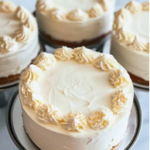
If you’ve ever pulled a quiche out of the oven only to watch the middle jiggle like soup, you already know the frustration. A sun dried tomato and basil quiche should have a tender, custardy filling with just enough structure to slice into clean wedges not scrambled eggs, not soup, not a soggy crust hiding underneath it all.
This guide walks you through the whole process, start to finish, using a store-bought pie crust so you can focus on getting the filling right. The trick to a quiche that sets properly is baking the crust partway on its own first, then controlling the egg-to-cream ratio so the center firms up without drying out the edges.
Hands-on work here is light. You’ll spend most of your time waiting — for the crust to bake, for it to cool, for the quiche itself to set in the oven. Budget about 1 hour and 15 minutes total, with roughly 20 minutes of actual active work. This is a beginner-friendly recipe, even though quiche has a reputation for being tricky.
Get your ingredients out, preheat your oven, and let’s build a quiche that holds together.
What You Need
- 1 store-bought pie crust (9-inch)
- 6 large eggs
- 1 cup heavy cream
- ½ cup whole milk
- ⅔ cup sun dried tomatoes (oil-packed)
- ¼ cup fresh basil leaves
- 1 cup shredded Gruyère or mozzarella
- ½ teaspoon salt
- ¼ teaspoon black pepper
- Pinch of nutmeg
- Fork (for docking crust)
- Pie weights or dried beans
At a Glance
- Preheat your oven and prep your pie dish
- Fit the pie crust into the dish
- Poke holes across the crust bottom
- Blind bake the crust
- Let the crust cool while you prep the filling
- Chop the sun dried tomatoes and fresh basil
- Whisk the eggs and cream together
- Season the egg mixture
- Layer the cheese, tomatoes, and basil in the crust
- Pour the egg mixture over the filling
- Bake the quiche until set
- Let the quiche rest before slicing
Preheat Your Oven and Prep Your Pie Dish
Set your oven to 375°F now, before you touch anything else. It needs the full time to reach temperature, and starting cold will throw off your bake later. While it heats, lightly grease a 9-inch pie dish with butter or non-stick spray, even if your crust already comes in its own tin. This keeps the edges from sticking once the quiche is fully baked and ready to come out.
Fit the Pie Crust Into the Dish
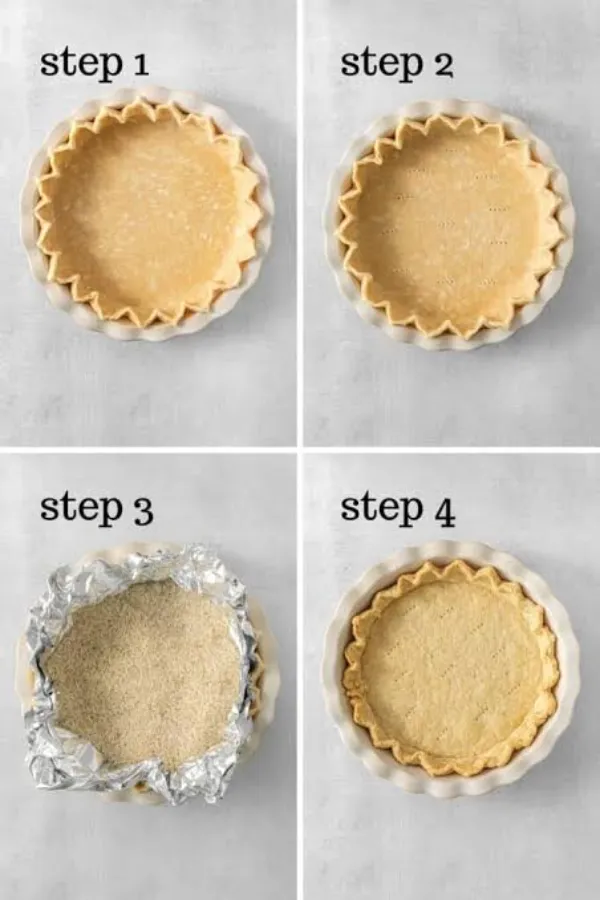
If your crust is frozen, let it sit at room temperature for 10 minutes first so it doesn’t crack when you handle it. Then work it into the dish:
- Unroll or remove the crust from its packaging
- Press it gently into the bottom and up the sides of the dish
- Smooth out any air bubbles with your fingers
- Trim excess dough hanging over the edge, leaving about ½ inch
- Fold that extra edge under itself and crimp with your fingers or a fork
A crust that’s pressed in loosely will slump down during baking, so take a moment to press it firmly against the dish.
Poke Holes Across the Crust Bottom
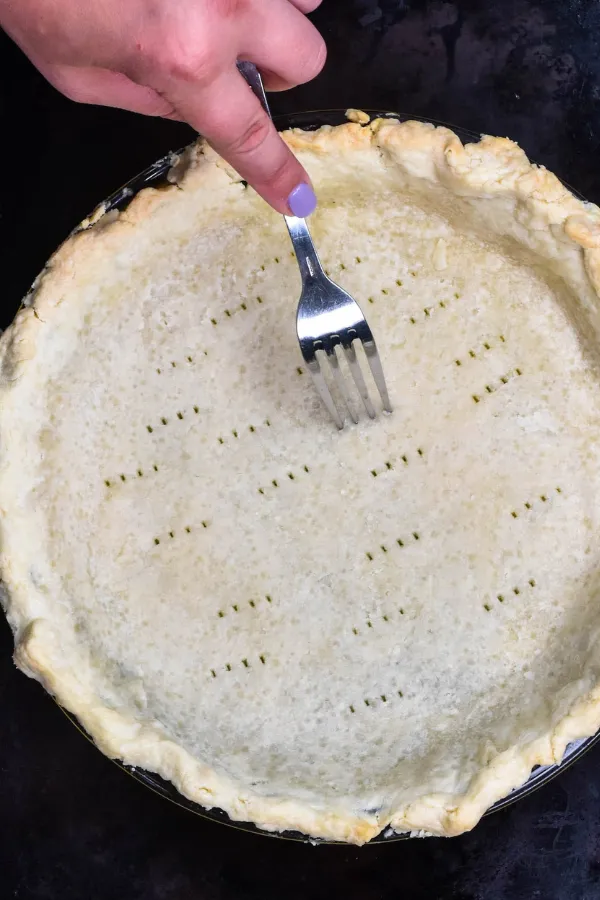
Grab a regular dinner fork and poke it into the bottom of the crust about 15 to 20 times, spacing the holes evenly. This is called docking, and it lets steam escape while the crust bakes so it doesn’t puff up into a dome. Skip this step and you’ll likely open the oven to find your crust ballooned in the middle, with no flat surface left for your filling.
Blind Bake the Crust
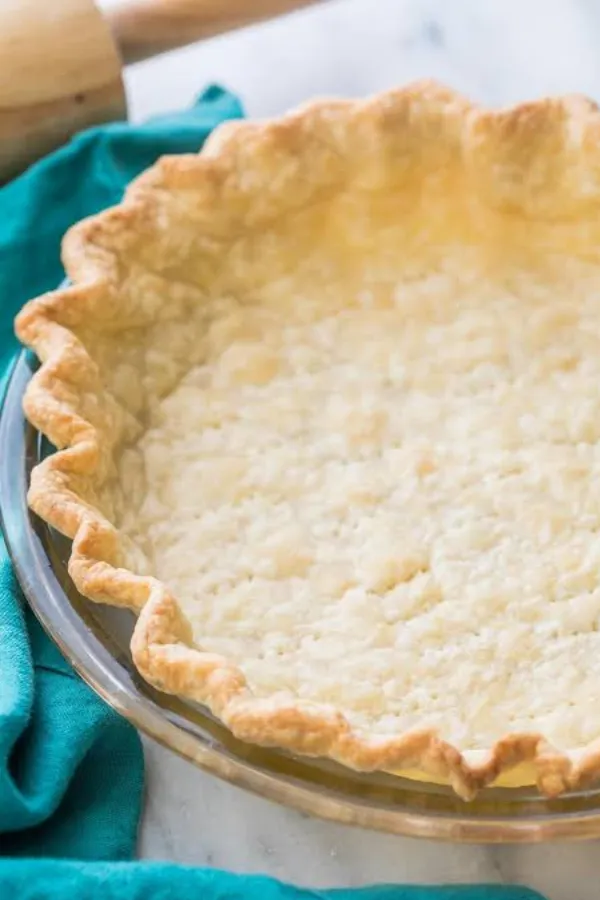
Line the crust with parchment paper, then fill it with pie weights, dried beans, or dry rice all the way to the edges. This weight keeps the sides from sliding down and the bottom from puffing back up, even after docking. Slide it into the oven and bake for 15 minutes. Pull it out, lift away the parchment and weights carefully since they’re hot, then return the crust to the oven, uncovered, for another 5 minutes until the bottom looks dry and just barely golden.
Let the Crust Cool While You Prep the Filling
Ten minutes on the counter is enough for the crust to firm up without going cold. Pouring warm egg filling into a hot crust causes it to start cooking too fast on contact, which leads to uneven texture. Use this waiting time productively instead of standing around watching it — move straight into prepping your tomatoes, basil, and cheese so everything is ready the moment the crust is cool enough to fill.
Chop the Sun Dried Tomatoes and Fresh Basil
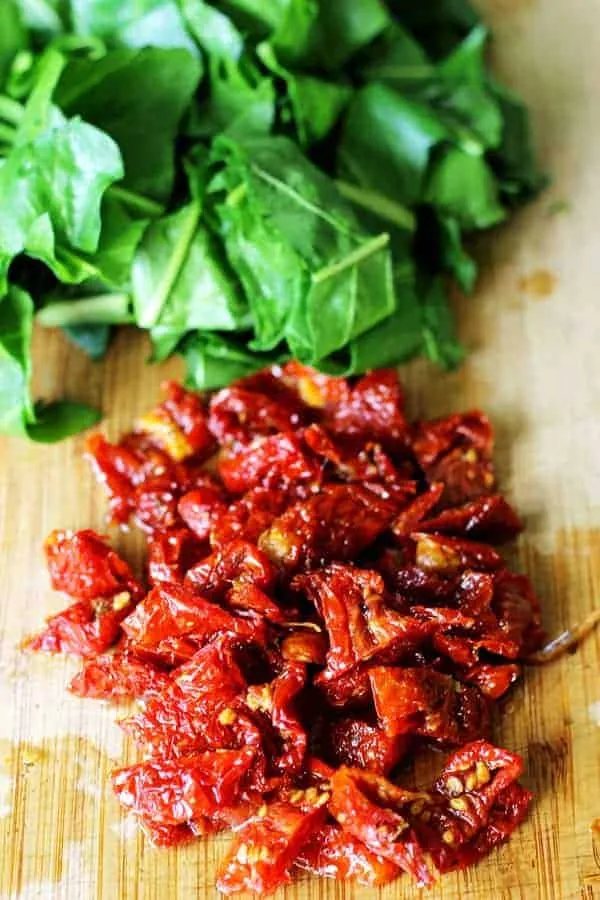
Oil-packed sun dried tomatoes work best here since they’re already softened. Pull them from the jar and set them on a paper towel first to soak up extra oil, then:
- Slice the tomatoes into thin strips, roughly ¼ inch wide
- Stack the basil leaves and roll them into a tight cylinder
- Slice across the roll to create thin ribbons
- Set both aside in separate small bowls
Skipping the paper towel step leaves your filling greasy instead of rich.
Whisk the Eggs and Cream Together
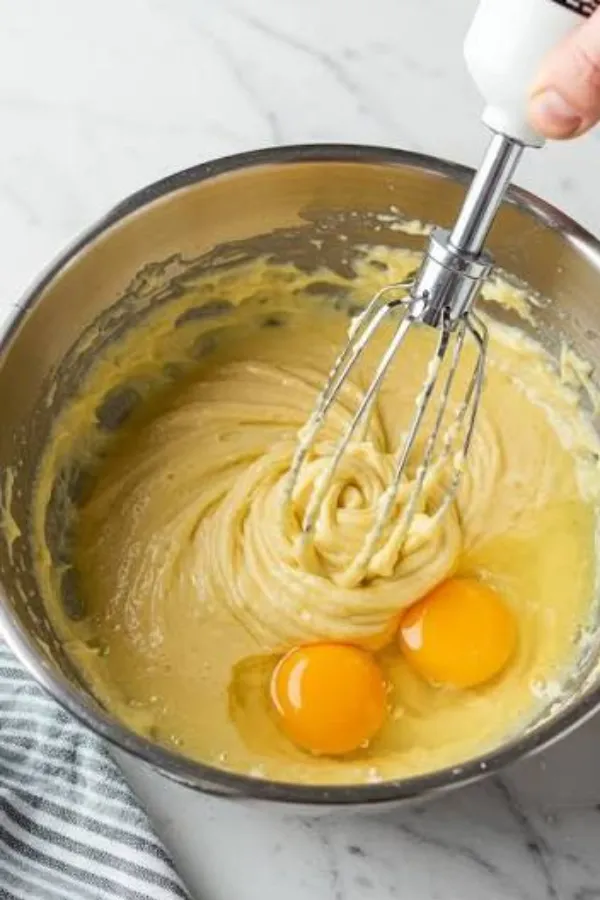
Crack all 6 eggs into a large mixing bowl first, before adding anything else. Beat them lightly until the yolks and whites are just combined, then pour in 1 cup of heavy cream and ½ cup of whole milk. Whisk everything together until the mixture turns a uniform pale yellow with no streaks left. This ratio of eggs to dairy is what gives quiche its silky texture instead of a rubbery, overcooked bite.
Season the Egg Mixture
Add ½ teaspoon of salt, ¼ teaspoon of black pepper, and a small pinch of nutmeg directly into the egg mixture. Whisk again briefly to distribute the seasoning evenly. Nutmeg might seem like an odd addition, but it’s a classic quiche seasoning that rounds out the richness of the cream without tasting like nutmeg itself.
Layer the Cheese, Tomatoes, and Basil in the Crust
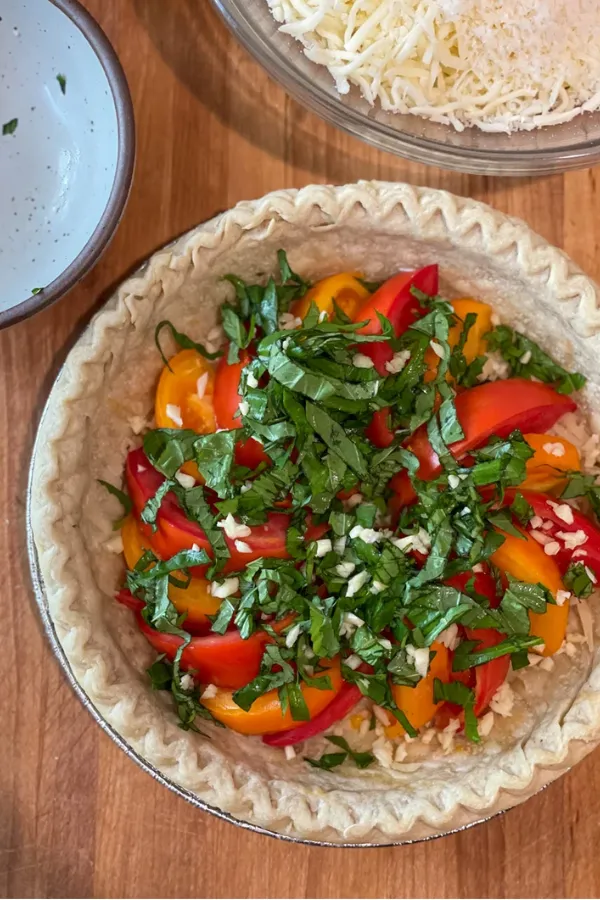
Building the filling in the right order matters more than it seems. Work directly in the cooled crust:
- Scatter half the shredded cheese across the bottom
- Spread the chopped sun dried tomatoes evenly on top
- Sprinkle the basil ribbons over the tomatoes
- Add the remaining cheese as a final layer
Layering the cheese both underneath and on top keeps the tomatoes and basil suspended in the filling instead of sinking to the bottom.
Pour the Egg Mixture Over the Filling
Slowly pour the seasoned egg mixture over the layered filling, moving in a slow circular motion so it settles evenly instead of pooling in one spot. Stop when the liquid reaches just below the crimped edge of the crust, leaving a little room since the filling will puff slightly as it bakes. If you have extra egg mixture left over, don’t force it all in — an overfilled quiche often overflows in the oven.
Bake the Quiche Until Set
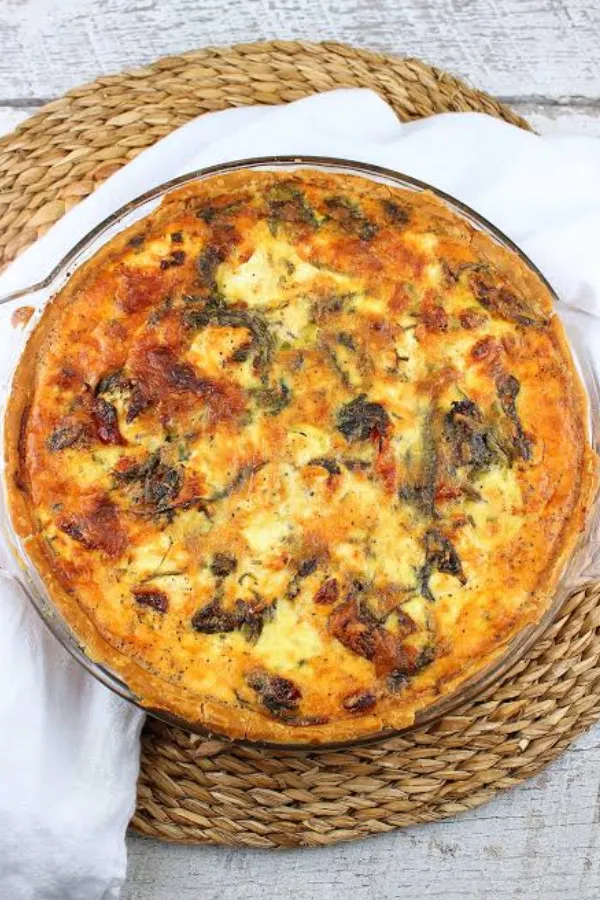
375°F, and the timer starts now. Place the quiche on the middle oven rack and bake for 35 to 40 minutes. The center should have a slight jiggle, similar to Jell-O, while the outer 2 inches look fully set and slightly puffed. A fully liquid center means it needs more time; a completely still center with no jiggle at all usually means it’s already past done.
Let the Quiche Rest Before Slicing
Resist cutting into it right away. Set the quiche on a wire rack or trivet and let it sit for 10 to 15 minutes before slicing. The center is still finishing its cook from residual heat during this time, and it also firms up just enough to hold a clean slice instead of collapsing into the pan. Patience here is the difference between a photo-worthy wedge and a puddle on the plate.
Common Mistakes
Pouring egg filling directly into an unbaked crust guarantees a soggy, undercooked bottom. The crust needs its own head start in the oven before the wet filling goes in.
Excess oil clinging to sun dried tomatoes seeps into the filling and makes it greasy. Blot them on a paper towel before chopping.
Quiche puffs as it bakes. Filling it all the way to the rim almost always leads to overflow and a mess on the oven floor.
Cutting into a quiche straight out of the oven causes the center to run. The **10 to 15 minute** rest is what gives it structure.
Relying only on time instead of checking the jiggle in the center leads to overbaked, rubbery quiche. Ovens vary too much to trust the timer alone.
FAQ
Yes. Just blind bake it the same way, following your dough recipe’s chilling instructions first if it needs one.
Yes. Bake it fully, cool it, then refrigerate for up to **3 days**. Reheat slices in the oven at **300°F** for **10 minutes**.
Cracking usually means it baked a little too long or the oven ran hot. It still tastes fine, but pull it a few minutes earlier next time.
Yes. Feta, goat cheese, or Swiss all work well with the sun dried tomato and basil flavor combination.
Fresh is best for flavor and color. If you only have dried basil, use **1 teaspoon** mixed into the egg mixture instead of layering it in.
Quick Reference Card
What You Need:Pie crust · 6 eggs · 1 cup heavy cream · ½ cup whole milk · ⅔ cup sun dried tomatoes · ¼ cup fresh basil · 1 cup shredded cheese · Salt, pepper, nutmeg · Pie weights
Steps:- Preheat oven to **375°F**, grease pie dish
- Fit crust into dish, crimp edges
- Poke holes across crust bottom
- Blind bake **15 min** covered, **5 min** uncovered
- Cool crust **10 min**
- Chop tomatoes and basil
- Whisk eggs, cream, and milk
- Season with salt, pepper, nutmeg
- Layer cheese, tomatoes, basil in crust
- Pour egg mixture over filling
- Bake **35 to 40 min** until set
- Rest **10 to 15 min** before slicing
Conclusion
You just built a real sun dried tomato and basil quiche from scratch, no soggy bottom, no runny center. The crust held its shape, the filling set clean, and every slice will come out looking like it came from a bakery case.
Next time, try swapping in caramelized onions or spinach once you’re comfortable with the base method. Save this one now so it’s ready for your next brunch or lazy Sunday breakfast.
Sun Dried Tomato and Basil Quiche
Ingredients
Equipment
Method
- Preheat oven to 375°F. Grease a 9-inch pie dish.
- Press the pie crust into the dish and crimp the edges.
- Poke 15-20 holes across the bottom of the crust with a fork.
- Line with parchment and pie weights. Bake 15 minutes covered, then 5 minutes uncovered.
- Let crust cool 10 minutes on the counter.
- Chop sun dried tomatoes and slice basil into ribbons.
- Whisk eggs, heavy cream, and milk together until uniform.
- Season the egg mixture with salt, pepper, and nutmeg.
- Layer half the cheese, then tomatoes and basil, then remaining cheese in the crust.
- Pour the egg mixture over the filling, leaving space below the rim.
- Bake at 375°F for 35-40 minutes until center jiggles slightly.
- Rest 10-15 minutes before slicing.